
The Kentucky Flying Object

KFC India turns a chicken box into a build-it-yourself tech toy. Select boxes for the newly announced Smoky Grilled Wings include the “Kentucky Flying Object,” also called “KFO,” a mini-drone you assemble yourself.

The limited-edition boxes are available in ten selected cities from January 25 to January 26.

If you receive one of the special boxes, you get your wings plus a fully functioning mini-drone, along with assembly instructions online at kfodrone.com.

The real question is whether your packaging can deliver a moment people want to prove, not just a message they can scan.

Why this is packaging-led “tech savvy” marketing

KFC is not adding a QR code or a one-off AR filter. It is putting the message inside the product experience. The packaging becomes the headline. The consumer gets something physical, surprising, and demonstrably “tech,” in the moment of consumption. Because the surprise is physical and immediate, it turns the claim into something people can demonstrate.

Extractable takeaway: “Tech savvy” marketing lands when the proof is inside the product experience, not bolted on as a scan, filter, or claim.

In quick-service restaurant marketing, packaging is often the only owned touchpoint guaranteed to be present at the moment of consumption.

This play is smart only if the object is safe, usable, and instantly explainable without a support ticket.

The behaviour it encourages

This is a meal that extends beyond eating.

  • Assemble.
  • Show someone.
  • Fly it.
  • Share the proof.

The drone is not just a giveaway. It is a social object that creates repeatable conversations, both offline and online. By “social object,” I mean a thing people naturally show, talk about, and pass around.

What to watch if you replicate this play

A high-novelty object inside a food pack raises immediate execution questions.

  • Safety and compliance. Especially around batteries, rotors, and usage guidance.
  • Availability clarity. Limited editions can frustrate if expectations are unclear.
  • Post-purchase support. Instructions, spare parts, and handling issues.

Make the pack the proof

  • Build the behaviour into the pack. If it cannot be assembled and shown in minutes, it will not travel.
  • Design for proof, not impressions. Give people something they can demonstrate, not just describe.
  • Pre-empt the three frictions. Safety guidance, availability clarity, and post-purchase support decide whether the stunt backfires.

A few fast answers before you act

What is the “Kentucky Flying Object”?

A limited-edition KFC India box concept where select Smoky Grilled Wings boxes include a DIY mini-drone.

When and where is it available?

In ten selected cities from January 25 to January 26.

What is the core marketing idea?

Turn packaging into the primary experience, then let the object create shareable proof that travels beyond the store.

Why is this stronger than adding a QR code or AR filter?

Because the “tech” proof is physical and immediate. It is experienced in-hand during consumption, then demonstrated, not just scanned or claimed.

What are the execution risks that decide whether it backfires?

Safety and compliance, availability clarity, and post-purchase support. If any of those fail, novelty turns into frustration.
KLM Connecting Seats

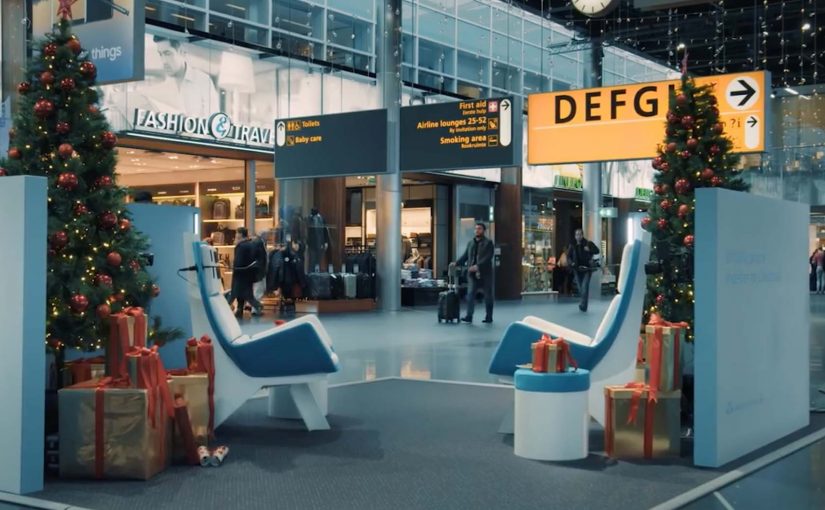
Airports are crowded with people from different backgrounds. This Christmas, KLM brings them together with Connecting Seats. Two seats that translate every language in real time, so people with different cultures, world views, and languages can understand each other.

The experience design move

KLM does not try to tell a holiday message. It creates a small, human interaction in a high-friction environment. You sit down. You speak normally. The barrier between strangers is reduced by the seat itself.

By turning translation into the interface, the seat makes the first move feel low-risk, which is why the interaction reads as human rather than branded.

The real question is how you turn a crowded, anonymous moment into a safe reason for two strangers to interact.

In global travel hubs, social friction, not language, is what keeps strangers from talking.

Why this works as a Christmas idea

Christmas campaigns often rely on film and sentiment. This one uses participation. Here, participation means travelers completing the message by talking with a stranger, not passively watching a story. That is a stronger holiday move than another sentimental film. It makes connection visible and gives the brand a role that feels practical rather than promotional.

Extractable takeaway: If you want a brand to stand for connection, design a micro-interaction that reduces first-move risk, and let participants create the meaning.

The pattern to steal

If you want to create brand meaning in public spaces, this is a strong structure:

  • Start with tension. Pick a real-world tension people already feel (crowded, anonymous, culturally mixed spaces).
  • Add a simple intervention. Introduce a small change that shifts behaviour in the moment.
  • Let interaction carry the message. Let the interaction do the work, not a slogan.

A few fast answers before you act

What are KLM Connecting Seats?

Two seats designed to translate language in real time, so strangers can understand each other.

Where does this idea make sense operationally?

In airports and other transient spaces where people from different backgrounds sit near each other but rarely interact.

What is the core brand outcome?

A memorable, lived proof of “bringing people together,” delivered through an experience rather than a claim.

What makes this different from a typical holiday film?

It shifts the message from storytelling to doing. The brand creates the conditions for connection, then travelers complete the meaning through the interaction.

How can a non-airline brand use the same structure?

Find a public setting where strangers share waiting time, introduce a simple prompt that lowers the first-move risk, and let the interaction carry the message.

Tostitos Party Safe Bag

On Super Bowl Sunday 2017, Tostitos puts safety into the packaging. The limited-edition “Party Safe” bag can detect when you have been drinking, then helps you get home safely from the party.

How the Party Safe bag works

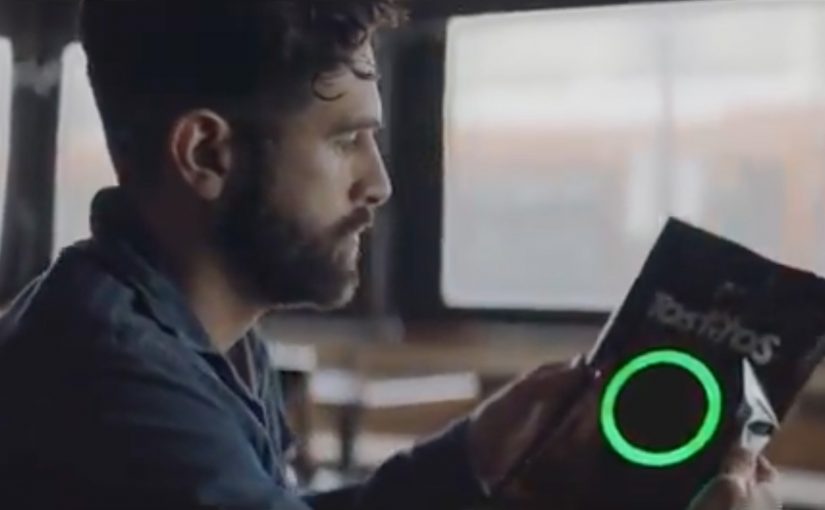
The trigger is built into the bag itself. The bag is created by Goodby Silverstein & Partners and comes equipped with a sensor connected to a microcontroller calibrated to detect traces of alcohol on a person’s breath. If alcohol is detected, the sensor turns red and forms the image of a steering wheel.

Then it turns that moment into action. The bag provides a $10 off Uber code along with a “Don’t drink and drive” message. If you have an NFC-enabled smartphone, you can also tap the bag to call an Uber.

In US mass-market brands, the smartest behaviour design often lives where the decision is made, not where the messaging lives.

Why Tostitos ties this to the Super Bowl

The campaign starts from a hard, uncomfortable statistic. According to the US National Highway Traffic Safety Administration, 45 people are killed in drunk-driving crashes on Super Bowl Sunday 2015, nearly half of all traffic fatalities that day.

Extractable takeaway: When risk peaks at a predictable moment, design the intervention to appear at that exact moment and make the safe choice the easiest next step.

So the “Party Safe” bag frames itself as a practical intervention on the one day when party behaviour and driving risk collide at scale.

This is IoT packaging with a clear behavioural goal

The packaging is not a gimmick for novelty’s sake. It is packaging that nudges a specific decision at the moment it matters most. Do not drive. Call a ride.

By IoT packaging, I mean packaging with sensing and a built-in trigger that can prompt an action without a separate app.

The real question is whether your connected experience can change one specific choice at the moment it is made.

This works because it is a behaviour-change intervention first, and a tech demo second.

The smart detail is the friction reduction. The message is immediate, the code is immediate, and the tap-to-request option removes even more steps. Because detection and the next action live on the bag, the distance from recognition to compliance is intentionally short.

The pattern worth stealing

If you work on connected experiences, the structure is reusable.

  • Put the sensor where the decision happens. Not in a separate app.
  • Translate detection into a single, obvious next action. Make the next step unmissable.
  • Pair the behavioural nudge with a concrete incentive. Give people a reason to comply faster.

A few fast answers before you act

What is the Tostitos Party Safe Bag?

A limited-edition Tostitos bag that detects alcohol on a person’s breath, then prompts a safer way to get home.

How does the bag detect drinking?

A sensor connected to a microcontroller is calibrated to detect traces of alcohol on the breath.

What happens when alcohol is detected?

The sensor turns red and forms a steering-wheel image. The bag provides a $10 off Uber code and a “Don’t drink and drive” message.

How does the Uber action work?

You can use the $10 off code, and NFC-enabled smartphones can tap the bag to call an Uber.