
Mobistar: Basta Call Center Prank

Mobistar: Basta Call Center Prank

Mobistar is long described as one of Belgium’s leading mobile operators and one of the country’s biggest advertisers. Over time, it also becomes known in public conversation for frustrating customer service.

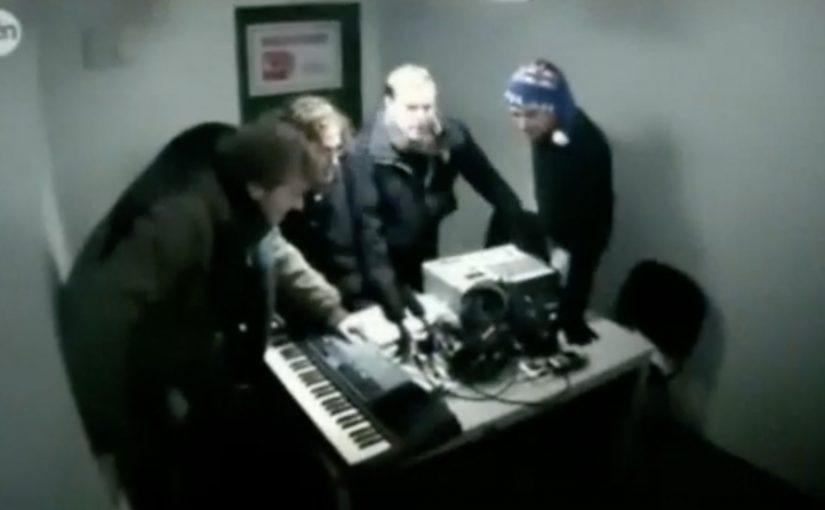
So on January 10, 2011, Belgian TV makers at VRT decide to prank Mobistar, and the segment later airs on their new comedy show, Basta. A Mobistar security guard named Mathieu becomes the unlikely hero, largely because he stays calm and friendly throughout.

The prank that turns “call center pain” into a live experience

The execution is cruelly simple. A physical setup triggers a phone call. That phone call leads into an intentionally endless customer-service loop of transfers, hold music, dead ends, and “let me check with my boss” deflections. The joke is not the person calling. The joke is the system that can trap anyone, even someone trying to do the right thing.

In European telecom markets, customer service reputation can outweigh product features in the public conversation.

Why it lands: it exposes the gap between message and reality

Modern consumers get tired of overpromising brand messages, especially when the lived experience does not match. This prank goes viral because it dramatizes that mismatch without a lecture. You can feel the frustration build, and you recognize it instantly if you have ever battled a helpdesk script.

Extractable takeaway: If your brand invests heavily in advertising but underinvests in service, someone else will eventually tell your story for you. The narrative people remember will be the experience, not the tagline.

The uncomfortable lesson for big advertisers

The real question is whether your marketing is amplifying a service experience worth talking about, or drawing more attention to one people already resent.

The punchline carries a serious point. If brands want trust, they need to fund the product and the service before they fund the promise. Great campaigns amplify a great experience. They cannot replace it for long.

What to steal if you run CX, service, or brand

  • Audit your “moments of truth”: contact centers, chat, returns, and complaints shape reputation faster than brand film.
  • Measure friction, not just satisfaction: transfers, resolution time, and repeat-contact rate are where trust is won or lost.
  • Stop advertising around known pain: fix the root issue first, then scale the promise.
  • Turn service into a brand asset: when service is excellent, it becomes shareable for the right reasons.
  • Protect frontline humans: if your system is broken, your staff and customers suffer together.

A few fast answers before you act

What happened in the Mobistar prank?

A TV team stages a scenario that forces a Mobistar employee into an exaggerated, endless customer-service loop, mirroring the frustrations customers report when they seek help.

Why did Mathieu become the “hero” of the clip?

Because he stays polite and persistent while the system around him becomes increasingly absurd. His demeanor contrasts with the experience the prank is criticizing.

What is the business takeaway for brands?

Advertising cannot sustainably outshine poor service. When the lived experience disappoints, culture and media will surface the truth faster than any campaign can mask it.

How should a telecom brand respond to criticism like this?

Fix operational drivers first: staffing, escalation paths, first-contact resolution, and transparency. Then communicate improvements with proof, not slogans.

What should leaders measure to prevent this kind of reputational damage?

Resolution time, transfer rate, repeat-contact rate, complaint volume by issue, and sentiment in customer conversations. These tend to predict reputation better than awareness metrics.
Volkswagen: Instant Christmas Recycler

Volkswagen: Instant Christmas Recycler

A Christmas recycler that turns responsibility into a reward

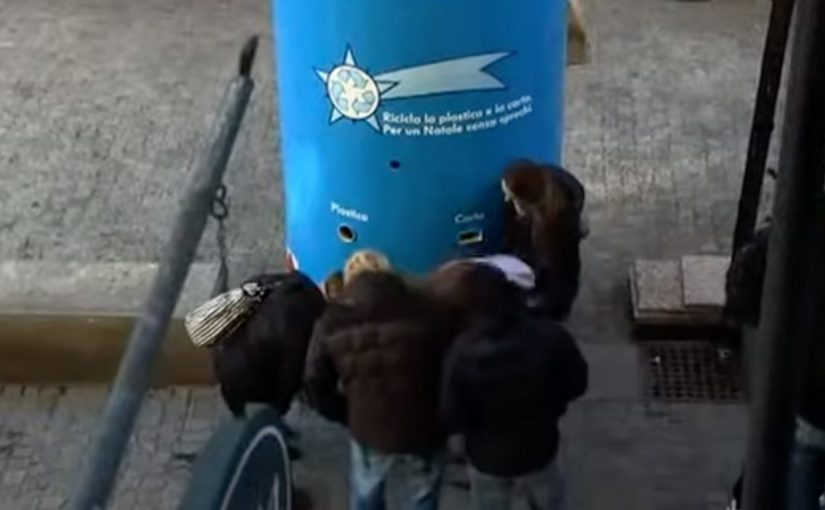
Volkswagen in Italy wanted to convince people to be more responsible towards the environment. So with the help of ad agency Now Available they created an engaging ambient ad called the “Instant Christmas Recycler”.

How the Instant Christmas Recycler works as an ambient activation

The idea is simple: put a recycling station where people are already moving, then make the “right” action feel immediately worthwhile. Here, “ambient activation” means a branded installation in a public setting that invites an on-the-spot action. As described in campaign write-ups, each time someone disposed of rubbish correctly, the machine responded with an instant Christmas-themed reward. That instant feedback is the mechanism. Because the response is immediate, it reinforces the behavior while the motivation is still present.

In retail-adjacent public environments, ambient installations can make sustainability tangible by turning small actions into visible, immediate consequences.

Why it lands: it replaces guilt with a small win

Environmental messaging often asks for sacrifice. This flips the emotional contract. It rewards the behavior on the spot, so the action feels like a game you want to complete rather than a lecture you want to avoid.

Extractable takeaway: If you can turn a “should” into an immediate, visible win, the behavior starts to feel self-propelled instead of imposed.

The Christmas framing matters too. It gives the act of recycling a seasonal “ritual” feel, which makes participation socially acceptable and easy to repeat.

The business intent behind the charm

This is brand reputation building with a behavioral nudge attached. The real question is whether you can design the loop so the sustainable choice feels rewarding in the moment. Reward-based nudges only hold when the payoff is inseparable from the action. Volkswagen gets to show up as a constructive actor in everyday life, while testing a simple truth: if you want people to change behavior, reduce friction and make the payoff immediate.

What to steal for your next sustainability activation

  • Reward the action, not the intention. People follow loops they can feel instantly.
  • Place it where behavior already happens. Footfall beats persuasion.
  • Make the feedback public. Visible participation normalizes the act for bystanders.
  • Keep the rules obvious. One action. One response. No instructions needed.

A few fast answers before you act

What is the “Instant Christmas Recycler”?

It is an ambient activation for Volkswagen in Italy that uses a branded recycling station to encourage responsible disposal by giving immediate feedback and reward.

What is the key mechanism that makes it work?

Instant reinforcement. When someone recycles correctly, the installation responds immediately, making the right behavior feel easy and worth repeating.

Why use an ambient installation for an environmental message?

Because it reaches people in the moment of action. It turns sustainability from a slogan into a behavior you can perform right now.

What should a brand be careful about with reward-based nudges?

If the reward is unclear, delayed, or inconsistent, the loop collapses. The response has to feel reliable and directly tied to the action.

How do you scale an idea like this beyond one location?

Standardize the behavior loop and vary the context. Same simple action and response, different placements and seasonal skins that fit local routines.

McDonald’s: Adult Playland in Sydney

McDonald’s: Adult Playland in Sydney

A Playland built for adults, not kids

In order to awaken the inner child in McDonald’s adult consumers, McDonald’s and DDB Sydney built an adult sized Playland in the middle of Sydney.

Supersizing the familiar to make it feel new again

The mechanism is physical and immediate. Take an icon people associate with childhood, then rebuild it at adult scale and put it directly in the path of commuters. It is not a message about fun. It is fun, placed in public, with no explanation required.

In Australian CBD (central business district) commuter culture, a surprising public installation can interrupt routine and create instant permission to behave differently for a moment.

The real question is whether you can give adults permission to participate without making them feel childish.

Why it lands: it removes the awkwardness of “acting like a kid”

Adults do not need to be convinced that play is enjoyable. They need permission. By making the Playland explicitly adult-sized and placing it in the city centre, the brand turns nostalgia into a socially acceptable break from routine.

Extractable takeaway: When adults hesitate, design the environment so participation feels socially legitimate, not self-conscious.

The business intent: rebuild emotional closeness through participation

This is a reconnection play, meaning it is designed to rebuild emotional closeness through participation rather than persuasion. This is the better move than a nostalgia message when you need adults to act in public. Instead of asking adults to remember McDonald’s, it gives them a shared experience they can literally step into, then ties that memory back to the brand.

Since the time of the launch in March, McDonald’s reported that more than 300 people have taken advantage of this playground on a daily basis and engaged with McDonald’s in a way they had not for years.

Design moves that get adults to play in public

  • Use a recognisable icon. Familiarity lowers the barrier to participation.
  • Change scale to change behaviour. Adult-sizing makes the experience feel legitimate, not childish.
  • Place it where routine is strongest. The contrast is what creates attention and talk value.
  • Make the experience the proof. Participation creates memory faster than any claim can.

A few fast answers before you act

What did McDonald’s build here?

An adult-sized Playland installation in central Sydney, designed to let adults play in a familiar McDonald’s-style playground environment.

What is the core mechanism?

Rebuild a childhood icon at adult scale and place it directly in the path of commuters. The experience is the message, with no explanation required.

Why does it work psychologically?

Adults do not need to be convinced that play is fun. They need permission. Adult-sizing plus public placement makes participation socially acceptable.

What business intent does it serve?

Rebuild emotional closeness through participation. A shared, physical experience creates memory and talk value that a standard campaign claim cannot.

What is the most transferable takeaway?

If you want real engagement, put a recognisable, low-friction action in a high-routine place, and let participation do the persuasion.