
Mercedes-Benz: Golf Ball Catch World Record

Mercedes-Benz: Golf Ball Catch World Record

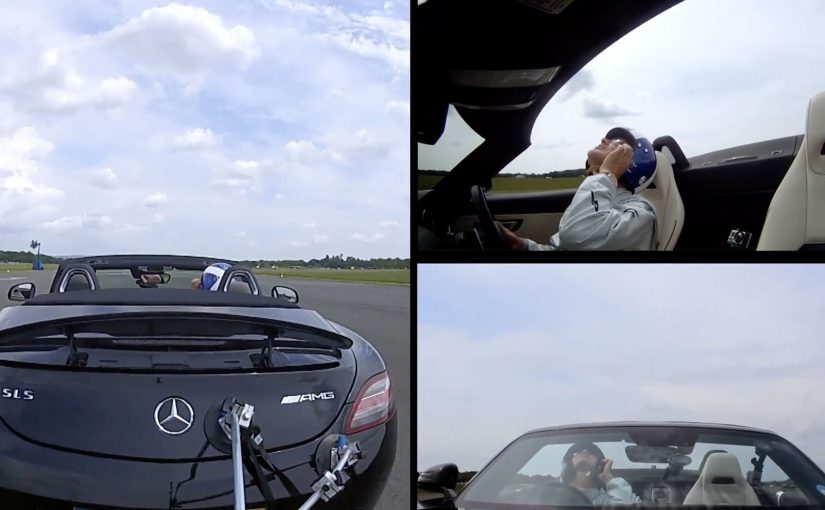
Mercedes-Benz recently uploaded a video of former Formula 1 driver David Coulthard and pro-golfer Jake Shepherd setting a Guinness World Record with a Mercedes-Benz SLS AMG Roadster.

To set the record, Coulthard caught a golf ball hit by Shepherd while driving. The ball was traveling at 178mph and was caught 275 metres from the tee, setting the record for the farthest golf shot caught in a moving car. At the time of posting, the video had already crossed the one-million-view mark within days.

A record attempt built on timing and trust

The mechanism is clean and measurable: a golfer launches a high-speed drive down a runway, a driver accelerates to meet its trajectory, and the open cockpit becomes the “catcher’s mitt”. If the car, speed, and timing are even slightly off, the attempt fails in a very visible way.

In performance-led automotive marketing, certified stunts turn engineering credibility into a piece of entertainment people want to pass on.

The real question is whether your proof is visible enough that the audience can judge it without trusting your narration.

Because you can clearly see whether it worked, the performance claim feels earned rather than explained.

Why it lands

It turns abstract performance into a single, replayable challenge with clear stakes, and then lets Guinness define what “success” means.

Extractable takeaway: World-record style stunts work as marketing when the measurement is simple, the failure mode is obvious, and third-party verification turns spectacle into credible proof.

It makes performance legible. Horsepower and handling are abstract until you attach them to a task with consequences. A moving catch at extreme speed is instantly understood.

It borrows external validation. The Guinness framing gives the clip a built-in reason to exist beyond “brand content”. It signals that this is not just a cool shot, it is a verified attempt with a defined outcome.

It is engineered for replay. The audience watches once for disbelief, then again for mechanics: speed, distance, and the exact moment the ball drops into the car.

Borrowable moves from the record attempt

  • Anchor the story to a number. Distance, speed, and a named record create instant stakes.
  • Make the “proof moment” unmissable. The catch is the single frame people share, and the decisive proof that the claim happened.
  • Use experts as the interface. Specialist talent makes the impossible feel attempted rather than faked.
  • Build the edit around clarity. Viewers should understand what success looks like before it happens.

A few fast answers before you act

What record did Mercedes-Benz, Coulthard, and Shepherd set?

The farthest golf shot caught in a moving car, using a Mercedes-Benz SLS AMG Roadster.

What were the headline numbers?

The drive was clocked at 178mph and was caught 275 metres from the tee.

Why does Guinness World Records matter here?

It provides an external definition of “success” and a trusted validation layer that separates a stunt from a simple brand claim.

What is the business intent behind a stunt like this?

To make vehicle performance feel tangible and memorable, while generating earned reach through a shareable “did you see that?” moment.

What is the most transferable lesson?

If you want proof to travel, wrap it in a single measurable challenge, show the decisive moment clearly, and keep the explanation simple enough to repeat.
EA Sports SSX: SSX Shakes

EA Sports SSX: SSX Shakes

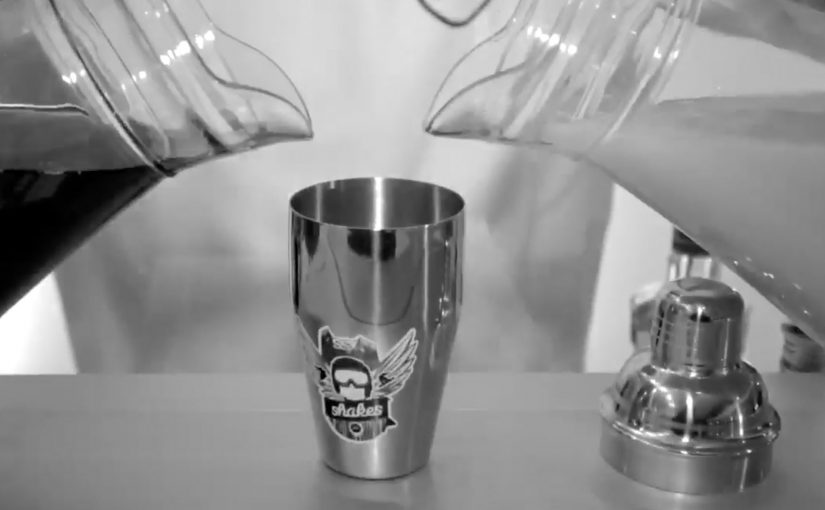
A cocktail order comes in, and a bartender does not reach for the shaker. A pro rider does. The drink gets “shaken” by performing the very snowboard trick it is named after, then handed over fresh to the guest who ordered it.

That is the core of SSX Shakes. A small, invitation-only pre-launch event in Belgium created to generate extra buzz and free press for EA’s SSX extreme snowboarding release on PlayStation and Xbox 360. Duval Guillaume Modem (Antwerp) stages the night around mood and shareability: music, a slope setup, a cocktail bar, riders, and hands-on game play.

How the mechanic turns into media

The mechanism is deliberately tight. Cocktails are named after specific snowboard tricks. Guests choose one. Riders perform the corresponding trick while holding the shaker, then deliver the finished drink. After the event, every blogger and journalist receives a personalised video showing the making of their own SSX shake, packaged for easy sharing with friends, fans, and followers.

In European games marketing where launches depend on earned coverage, the best activations create a photogenic proof point and a ready-to-publish asset for every attendee.

The real question is whether you can hand every attendee a personalised, ready-to-post asset that still feels native to the product story.

Why it lands

It collapses three jobs into one moment. It entertains in the room. It proves the SSX fantasy of trick-driven adrenaline in a physical way. Because the trick is also the “shaker”, the camera captures that fantasy in a single, explainable shot. Then it hands each guest a personalised piece of content that makes sharing feel like showing off a story, not doing a brand a favour.

Extractable takeaway: If your goal is buzz, do not just invite press to watch something. Give them a personalised, category-native moment that can be posted as a complete narrative, without extra editing or explanation. By “category-native”, I mean it uses the category’s own cues and rituals so the story makes sense without context.

What to steal for your next press and influencer activation

  • Build one iconic “single frame”. A rider mid-trick with a cocktail shaker is instantly legible. Your activation needs a moment people can recognise in a second.
  • Make participation the content generator. The guest’s choice determines the trick and the drink. That turns attendees into co-authors of the footage.
  • Personalise the output, not the invitation. The personalised video is the real multiplier. It gives each person a reason to share that is about them, not the brand.
  • Keep the mechanic on-brand. Tricks are not decoration here. They are the core of SSX, translated into a bar ritual.

A few fast answers before you act

What is SSX Shakes in one sentence?

A pre-launch event where SSX-themed cocktails are “shaken” by pro riders performing the matching snowboard trick, followed by personalised recap videos for attendees to share.

Why does the personalised video matter so much?

Because it turns attendance into distribution. Each guest leaves with a finished asset that is already framed for social sharing and blogging.

What is the brand objective behind a concept like this?

To generate earned media and social reach before release by creating a highly visual, retellable moment tied directly to the game’s core fantasy.

How do you adapt this if you cannot produce personalised videos?

Keep the “one guest, one ready-to-share asset” rule, but simplify the output. Capture a short, branded clip or photo that features the guest’s choice and the hero moment, and deliver it to them in a format they can post immediately.

What is the main failure mode if someone copies this format?

If the “hero moment” is not instantly understandable on camera, the event can be fun in-person but produce weak content, and the earned media engine stalls.

Volkswagen Canada: The Great Art Heist

Volkswagen Canada: The Great Art Heist

They say that beauty is in the eye of the beholder. But if Volkswagen Canada has their say, beauty will be in the hands of the person who’s stealing it. That is the idea behind this ambient-meets-social campaign for the Volkswagen Jetta GLI.

Since the beginning of October, agency Red Urban has created a series of pop-up art galleries across major cities in Canada that feature “light paintings” made by the movement of the Volkswagen Jetta. These light paintings are long-exposure photographs that turn headlight and taillight trails into abstract artwork.

While the frames in the exhibits have been hung for all to admire, they have not been hung that securely, allowing more daring admirers to claim the artwork for themselves. The “thieves” are then asked to share their stolen items via Tweets and Facebook posts. Volkswagen Canada’s Facebook page starts receiving photos from fans decorating homes and offices with the imagery.

When out-of-home becomes a participation prompt

The mechanism is a deliberate temptation loop. By that, I mean the setup places something desirable in public and makes acting on that impulse part of the idea. Place desirable objects in public. Make them easy to take. Then turn the taking into the call to action, with social sharing as the proof layer. The “gallery” is the stage. The heist is the interaction. The reposted photos are the distribution.

In automotive launch marketing, giving people something physical to claim and display can turn attention into advocacy faster than conventional ads.

The real question is how to turn a static display into an action people want to repeat and publicize.

Why it lands

This works because it flips the normal rules of outdoor advertising. Instead of “look at this and move on”, the frame invites a decision and a story. The act of taking the artwork creates instant ownership, and ownership makes people far more likely to post, discuss, and keep the brand in the room. The strongest move here is not the gallery format but the permission to take the media home.

Extractable takeaway: If you can transform a passive medium into a “take it, show it” mechanic, you convert exposure into participation. Participation creates proof, and proof drives organic reach.

What to steal from this activation

  • Make the object desirable on its own: if the item is genuinely display-worthy, people will do the promotion for you.
  • Use a single rule: “take it and share it” is easy to understand and easy to repeat.
  • Build for accumulation: the more stolen pieces show up online, the more the campaign feels real and alive.
  • Let the audience finish the media buy: the repost is the real multiplier, not the initial placement.
  • Manage the ethics upfront: the line between playful permission and real theft must be unambiguous in execution.

A few fast answers before you act

What is the “Great Art Heist” idea?

It is a pop-up street gallery of framed “light painting” photos tied to the Volkswagen Jetta GLI, where passersby are implicitly encouraged to take a frame and share it socially.

What are “light paintings” in this campaign?

They are long-exposure photographs capturing the car’s headlight and taillight trails, producing abstract, art-like images.

Why does encouraging people to take the artwork work?

Because it creates ownership and a personal story. Once someone has the piece, sharing becomes natural and the brand becomes part of their environment.

Is this more out-of-home or more social?

Both. Out-of-home provides the physical trigger and scarcity. Social sharing provides proof and scale.

What is the biggest risk with a “steal it” mechanic?

Misinterpretation. If permission is not clear, the idea can feel irresponsible. The execution must make the intended rules obvious to avoid negative backlash.