
Slide to Unlock: Audi and Amnesty iAds

Slide to Unlock: Audi and Amnesty iAds

Audi “Slide to Unlock”

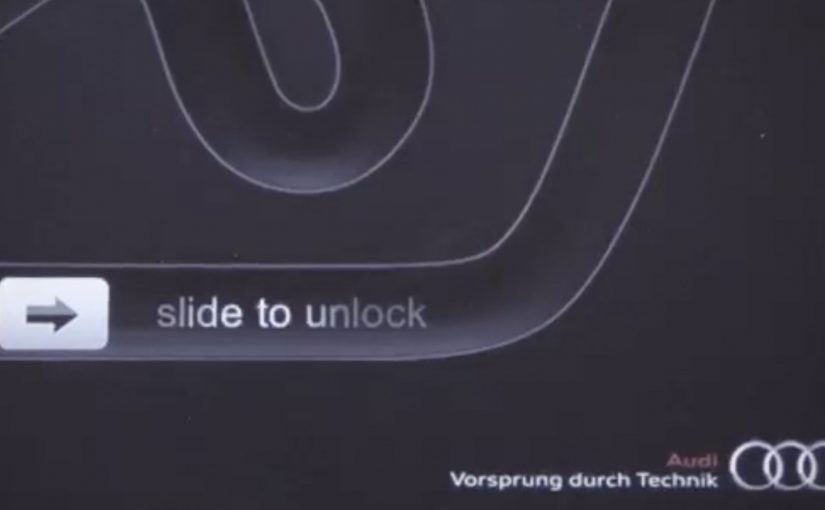
AlmapBBDO Brazil developed a distinctive iAd for the Brazilian Audi Magazine iPad app. Here, “iAd” refers to an interactive in-app ad unit built for iPad publications. The ad appeared in iPad publications and played with Apple’s familiar “Slide to Unlock” gesture to pull people into the experience.

Users instantly recognised the swipe interaction used to unlock Apple devices. After racing their finger around the track, they were rewarded with a free download of the first Audi Magazine issue from the App Store.

Amnesty International “Slide to Unlock the Truth”

Amnesty International ran an iAd in one of Sweden’s largest newspapers, DN, presenting readers with an image of a prison cell and a prisoner inside. The same “Slide to Unlock” gesture opened the cell and revealed a strong invitation to join Amnesty International as an activist.

Mechanic: borrow muscle memory, then repay it with value

Both executions use the same trick. They take an interaction people already know, then remap it to a brand action. In Audi’s case, the swipe becomes a playful mini-game. In Amnesty’s case, the swipe becomes a literal unlock that reveals a call to action.

In iPad-era rich media placements, the fastest engagement comes from interactions that feel native to the device instead of invented for the ad.

The real question is whether the gesture is already learned, so the first second goes to the message instead of the UI.

This approach is worth using when you can deliver a clear payoff within one gesture and one reveal.

Why it lands

The shared win is immediacy. There is no learning curve. The interface is already familiar, so attention goes straight to the message. Audi uses that familiarity to reduce friction on a content reward. Amnesty uses it to make the metaphor physical and emotionally legible.

Extractable takeaway: If you want interaction inside an ad to feel effortless, borrow a gesture people already trust, then make the outcome either instantly rewarding or instantly meaningful.

What to steal from gesture-first iAds

  • Start with a native gesture. Familiar interaction reduces drop-off in the first seconds.
  • Make the mapping obvious. Swipe-to-race and swipe-to-open both explain themselves.
  • Reward immediately. Audi pays the user back with a free issue. Amnesty pays back with a clear reveal and a direct next step.
  • Keep the loop short. One gesture, one transformation, one outcome.
  • Let metaphor do the work. Amnesty’s “unlock” is not decoration. It is the message.

A few fast answers before you act

What is the core idea behind “Slide to Unlock” iAds?

They repurpose a familiar device gesture to trigger a brand action, reducing friction and making interaction feel instinctive.

Why does borrowing a system gesture increase engagement?

Because users already know what to do. That removes instruction time and makes the first interaction feel safe and predictable.

What is the key difference between the Audi and Amnesty uses of the gesture?

Audi uses it for playful interactivity and a content reward. Amnesty uses it as a literal metaphor that reveals a persuasive call to action.

What is the biggest risk when using familiar UI patterns in ads?

If the gesture mapping feels unclear or gimmicky, people feel tricked. The interaction must lead to a payoff that justifies the borrowed familiarity.

What should you measure if you run an interaction-led ad?

Interaction start rate, completion rate, time-to-first-payoff, post-interaction clicks, and whether the interaction improves recall of the message.
World’s Biggest Hug: Christ the Redeemer PSA

World’s Biggest Hug: Christ the Redeemer PSA

A monument-sized gesture

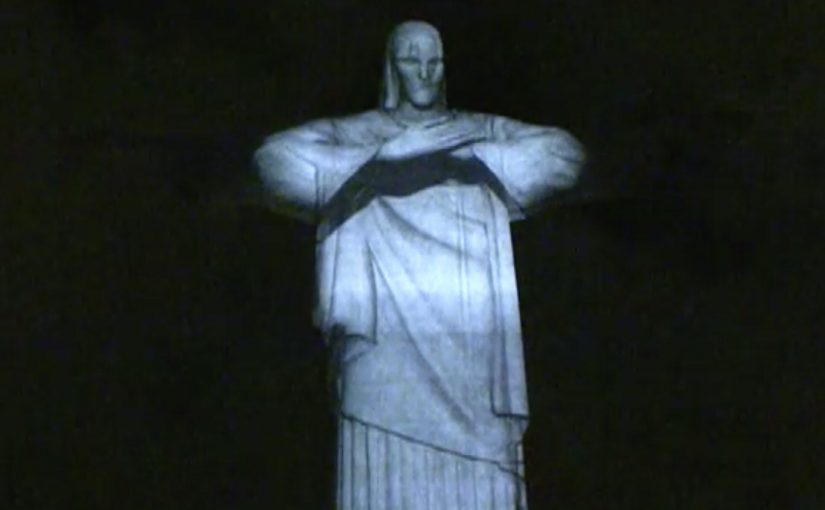
In October 2010, Conselho Nacional do SESI ran a campaign described as the “world’s biggest hug” by using the Christ the Redeemer statue in Rio de Janeiro as the canvas.

Across two nights, the statue’s spotlights were switched off and replaced with projections and 3D imagery that made it look like Christ was closing his arms around the city. The moment linked back to the Carinho de Verdade (“True Affection”) campaign, built to raise awareness of sexual abuse affecting children and teenagers and to promote healthier relationships of trust.

Visualfarm Brazil created the projection using Coolux Germany’s Pandoras Box technology. Below is the recorded footage of the projection itself.

How the illusion works. A quick mechanics recap

The execution combines three things: a landmark people already read as a symbol of protection, a temporary “blackout” that resets attention, and projection mapping that makes a static surface feel alive.

Projection mapping is the practice of aligning video to the exact geometry of a 3D surface so the object appears to change shape, gain depth, or move, even though nothing physical moves.

In global public-awareness communications, landmark-scale stunts work best when the symbolism is instantly legible and the path from emotion to action is frictionless.

Why it lands when it could have been “just a stunt”

The hug is a universal gesture with a clear meaning. It does not need translation, and it carries warmth without feeling like a lecture. Using the Christ the Redeemer silhouette makes that meaning immediate at city scale, then the darkness-to-light reveal gives it a shared “you had to be there” quality that naturally travels by word of mouth and video.

Extractable takeaway: If your message is difficult, start with a human gesture everyone understands, then let the medium amplify it, and only then introduce the cause and the action you want people to take.

The intent behind the hug

This is cause communication that uses emotional clarity as a bridge into a harder conversation. The strongest public-awareness work starts with an emotionally legible act before it asks people to absorb the harder message. The real question is how to turn a monument-scale emotional moment into a cause message people can approach instead of avoid. The job is not only awareness. It is to make the topic speakable, reduce avoidance, and give the public a simple next step that feels aligned with the warmth of the symbol.

What to steal from this for your next public-facing campaign

  • Pick one unmistakable symbol. Use a form people recognize in under a second, then change it in a way that supports the message.
  • Engineer a “collective moment.” Limited time windows create urgency and social proof, especially when the result is visibly shareable.
  • Design for cameras, not just crowds. If it does not read clearly on a phone video, it will not scale beyond the live audience.
  • Keep the CTA emotionally consistent. If you lead with care, the action should feel like care too, not like a hard switch to bureaucracy.

A few fast answers before you act

What was “The World’s Biggest Hug” campaign?

It was a Carinho de Verdade campaign moment in Rio where projections on Christ the Redeemer created the illusion of the statue hugging the city, used to draw attention to child and teen sexual abuse and encourage healthier trust-based relationships.

How did the projection create a “hug” effect?

The statue’s normal lighting was turned off, then mapped visuals were precisely aligned to the statue’s 3D surface so the arms and body appeared to move and close around the city.

Why use a monument instead of a standard ad placement?

A monument compresses meaning. People already attach emotion and identity to it, so the message is understood faster and shared more willingly than a conventional placement.

What role did the campaign site play?

It provided the action path. The public moment created attention and emotion, and the site anchored the message, participation, and follow-through.

What is “projection mapping” in one sentence?

Projection mapping is video projected onto a real-world object with the visuals warped and timed to the object’s geometry so it appears to transform or move.

What is the main transferable principle?

Use a simple, human symbol to earn attention, then make the next step feel effortless and consistent with the emotion you created.

Antarctica: Beer Breathalyzer

Antarctica: Beer Breathalyzer

Drinks giant Ambev aims to reduce drinking and driving in Brazil. Together with agency AlmapBBDO, it brings a unique Antarctica beer “breathalyzer” activation into bars to show young adults how alcohol affects judgement.

A bar experience that turns a warning into a reveal

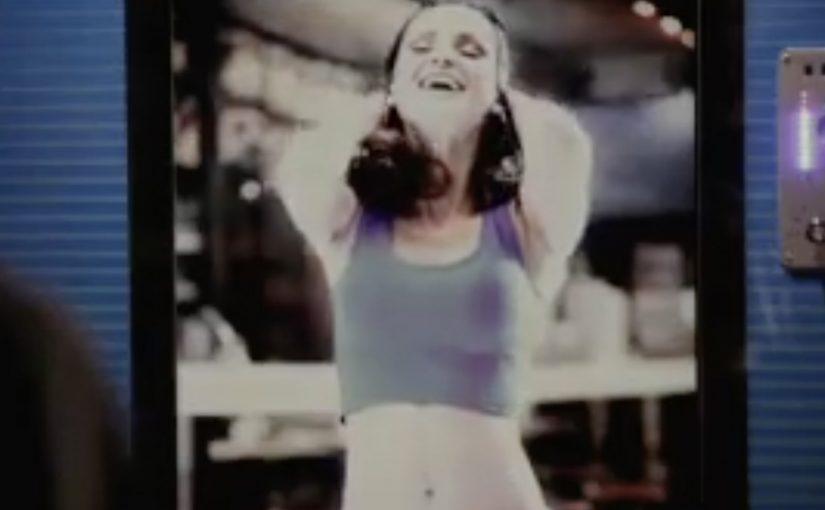
Video screens are placed in bars, and a friendly, normal-looking girl invites customers to take a breath test by breathing into the machine.

If the reading suggests they’re sober enough, the moment ends. If the machine detects alcohol, the on-screen character transforms into a gyrating, seductive “beauty” and the unit prints a discount voucher for a taxi company.

The mechanic: demonstrate impaired judgement, then offer the safer choice

The creative trick is to dramatize the very thing alcohol distorts: perception. By making the “wrong” reaction feel obviously wrong, the campaign turns a safety message into something people feel instantly, not something they are told to remember later.

The real question is how to interrupt the decision before someone leaves the bar thinking they are still fine to drive.

In nightlife contexts, responsible-drinking work is strongest when the safer alternative is offered at the exact decision point.

Why it lands: it replaces lecturing with a moment of self-recognition

Most anti-drink-driving communication relies on fear or shame. This execution uses surprise and self-awareness, then nudges the next best action without moralizing.

Extractable takeaway: For high-friction behavior change, pair a fast “mirror moment” (show me I’m not fit to decide) with an immediate off-ramp (make the safer option easy, discounted, and right there).

What to steal for your own safety or responsibility campaign

  • Put the intervention where the decision happens: bars, venues, exits, car parks, pickup points.
  • Make the insight experiential: one surprising reveal beats ten lines of copy.
  • Offer the alternative instantly: the voucher is the conversion mechanism, not a side benefit.
  • Keep the interaction short: fast participation increases uptake and social watching.
  • Design for talk value: if people describe it easily, it spreads beyond the venue.

A few fast answers before you act

What is the Antarctica Breathalyzer activation?

It is a bar-installed breath test experience that uses an on-screen transformation to illustrate impaired judgement, then prints a discounted taxi voucher when alcohol is detected.

Why does a taxi voucher matter in this context?

Because it converts awareness into action. The campaign does not just warn you. It gives you a practical way to avoid driving right now.

What is the behavioral insight behind the “transformation”?

Alcohol can distort perception and decision-making. The exaggerated change on screen is a fast metaphor designed to make that distortion obvious and memorable.

What’s the biggest risk in copying this idea?

Tone. If the execution feels mocking, sexist, or unsafe, it can backfire. The experience needs to motivate safer choices without humiliating participants.

How do you measure success for this kind of activation?

Participation rate per venue, voucher redemption rate, uplift in taxi usage during activation windows, and any local incident or enforcement indicators you can ethically and legally access.