
Pepsi Max: Unbelievable Bus Shelter

Pepsi Max for its new ‘Unbelievable’ campaign rigged an ordinary bus shelter in London, to perform tricks on unsuspecting travellers.

Using a custom see-through digital display, people waiting at the bus shelter were made to believe that they were actually seeing things like hovering alien ships, a loose tiger, a giant robot with laser beam eyes and so on.

The reactions to these ‘unbelievable’ scenarios were then captured and put in the below viral video.

Why this works. Even before you talk about “tech”

The technology is impressive, but the mechanic is simple. Here, “mechanic” means the repeatable audience interaction pattern, not the underlying tech. It takes an everyday moment. It inserts a believable layer of impossible. Then it lets people do the rest. React, laugh, point, film, share. Because the impossible is framed inside a familiar “window”, disbelief lands fast and reactions become the content. In high-footfall urban out-of-home environments, a brand moment has to work wordlessly, in seconds, for strangers who did not opt in.

Extractable takeaway: If you can turn passive waiting time into a personally witnessed story, you get emotion, proof and distribution before you spend on media.

That is the real move. It transforms passive waiting time into a story that feels personally witnessed.

The bus shelter as a “media product”

This activation treats the bus shelter like a product interface, not just a placement. It has inputs and outputs. Here, “activation” means a physical installation that creates a live brand experience in public space.

  • Input. People arrive with low expectations and spare attention.
  • System. A “window” that looks like reality, then breaks it in a controlled way.
  • Output. Instant emotion, social proof from nearby strangers, and a camera-ready moment.

In other words, it is not only out-of-home. It is an experience designed to be recorded and re-distributed.

The real question is whether your experience turns bystanders into witnesses, and witnesses into voluntary distribution.

What makes it shareable. And why the video is the second product

The live moment is the first product. The viral video is the second product. The second product extends the reach far beyond the street corner.

Tech is optional. If the premise is not instantly legible, it will not travel.

  • High signal in seconds. You understand what is happening instantly.
  • Escalation. Each new “unbelievable” scene raises the stakes and keeps attention.
  • Human faces. The reactions are the content. The brand stays present but not intrusive.
  • Social permission. If others are reacting, you react too. Then you share.

What to take from this if you build brand experiences

  • Design the moment first. The best “viral videos” start as real-world moments people want to show others.
  • Keep the premise instantly legible. If it needs explanation, it loses momentum.
  • Make capture a feature. If people will film it, stage it so the footage works.
  • Build a repeatable format. One idea, multiple scenarios, consistent payoff.
  • Let the audience star. The most believable proof is human reaction, not brand claims.

A few fast answers before you act

What is Pepsi Max “Unbelievable” in one sentence?

It is a London bus shelter activation that used a see-through digital display to create impossible scenes, then turned real public reactions into a viral video.

Is this augmented reality?

It functions like augmented reality for the audience, because it overlays illusions onto what looks like a real street view, even though the experience is delivered through a physical digital screen.

Why do people share this kind of content?

Because it triggers instant emotion and disbelief, and it is easy to explain visually. People share it to pass on the surprise.

What is the key design principle behind the activation?

Make the better story happen in the real world. Then make it easy for the story to travel as video.

What is the practical takeaway for marketers?

When you create a moment that people genuinely want to record, distribution becomes an outcome of the experience, not a separate media plan.
Duracell Moments of Warmth: Heated bus shelter

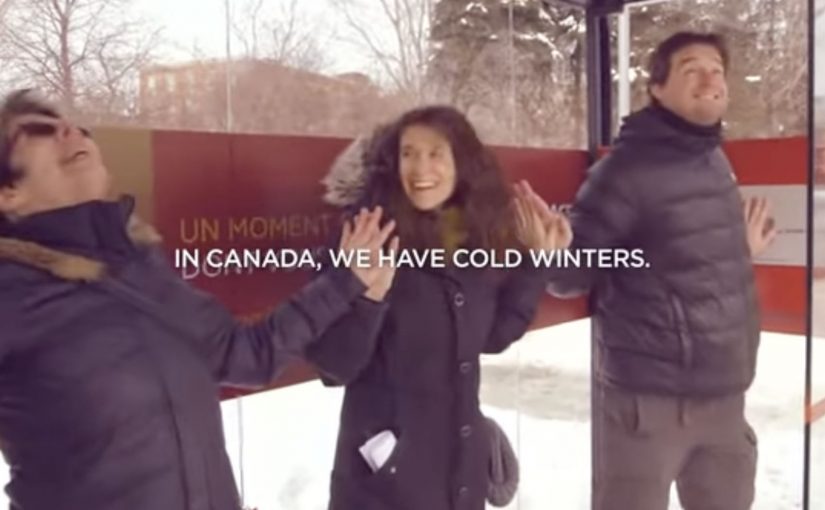
In a winter of ice storms and a polar vortex, moments of warmth are few and far between. So to change that, Duracell Quantum batteries in Canada retrofit a bus shelter with heaters, but the only way to get the heat to work is through a human connection, people joining their hands.

The shelter is set up so warmth only kicks in when two or more commuters complete a simple circuit by touching the contact points and holding hands in the middle.

Why “warmth you earn together” is the right mechanism

This idea works because the product promise is experienced, not explained. Because the heaters only turn on when strangers complete the circuit together, “power” turns into instant relief you can literally feel while you wait. This is the right pattern when you can prove your claim with a sensory payoff in under a minute.

Extractable takeaway: An ambient activation, meaning a brand experience built into the environment, lands fastest when the reward is physical and only unlocks through simple cooperation.

In cold-weather urban transit, small prompts that reward cooperation can turn waiting time into a shared moment, and into a brand story.

The real question is whether your interaction rule makes strangers coordinate in seconds without a staffer, a screen tutorial, or a social script.

What makes the interaction memorable

  • Clear rule in seconds. No app, no signup, no instructions beyond the physical cues.
  • Instant feedback. The reward is heat, right now, right where you are standing.
  • Social proof built in. Every new person who walks up sees the behavior and understands what to do.

Steal the cooperation trigger

  • Make the benefit tangible. If your claim is about performance, choose an output people can sense.
  • Use a cooperative trigger. Shared actions create a story people retell without prompting.
  • Keep the loop short. If it takes more than one minute to understand, street attention disappears.
  • Let the environment do the explaining. Physical design beats copy when you only have a few seconds.

A few fast answers before you act

What is “Duracell Moments of Warmth”?

It is an ambient bus shelter activation where heaters only activate when commuters connect physically, turning “power” into a felt experience.

How does the bus shelter get activated?

Two or more people complete a simple circuit by touching the shelter’s contact points while joining hands, which triggers the heating system.

Why does the hand-holding mechanic matter?

Because it forces cooperation. The brand benefit is delivered through a human moment, which makes the warmth feel earned and memorable.

What is the brand message in one sentence?

In cold winters you need power, and sometimes the best power comes from connecting with other people.

What is the main lesson for experiential marketing?

If you want people to remember a claim, make them participate in a mechanism that behaves like the claim.

Coca-Cola Happiness Machine #ReasonsToBelieve

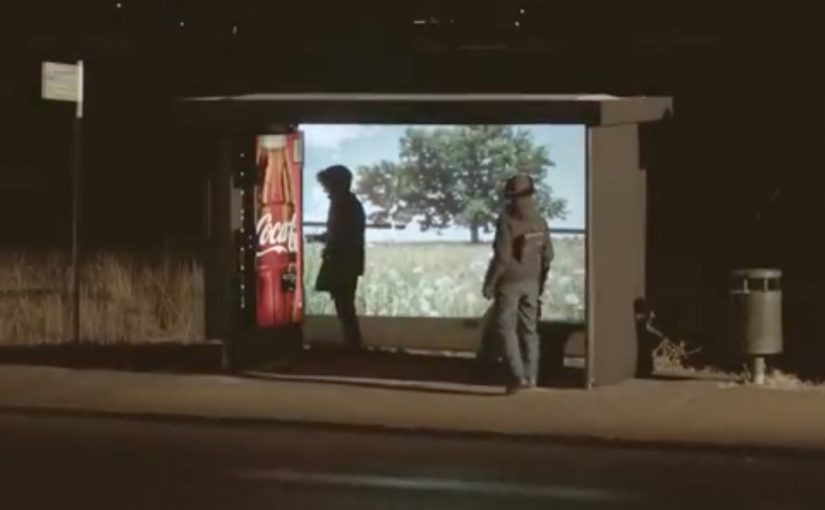
Coca-Cola is at it again, this time unleashing happiness in Sweden. A special Coke machine sits at a bus stop to spread some summer happiness in the middle of the cold and dark Nordic winter. The results…

Why the bus stop is the perfect stage

A bus stop is pure waiting time. That makes it a natural canvas for surprise, generosity, and shared reactions. When the environment is grey and cold, the contrast of “summer happiness” lands even harder, because it flips the mood of the moment instantly.

Extractable takeaway: Waiting time is a pre-built attention state. Pair it with a simple, generous interruption and you get a shared reaction people want to retell.

What this activation proves in one simple move

You do not need a complex mechanic to create a strong brand experience. Here, “mechanic” simply means the one interaction rule that triggers the surprise. Put the idea in the right place, at the right time, and make the reward feel unmistakably human. Because the moment is public and immediate, people experience it together, and that is why it spreads on its own.

In European cities, transit touchpoints like bus stops are one of the few places where strangers reliably share the same small moment of time.

The real question is whether your idea turns that routine pause into a shared reaction people will retell.

This kind of work wins when simplicity and placement do the heavy lifting, not explanation.

Stealable patterns from a bus-stop surprise

  • Borrow “waiting time” as attention. Start where people are already paused and open to distraction.
  • Design for contrast. Put warmth and play into a cold, routine context so the shift is instantly legible.
  • Keep the rule simple. A single, human-feeling reward beats a complicated interaction people have to learn.

Click here to see other Coca-Cola Happiness campaigns from around the world.


A few fast answers before you act

What is the Coca-Cola Happiness Machine concept?

It is a series of experiential campaigns where a Coca-Cola machine behaves unexpectedly, giving people a surprise that feels generous and shareable in public.

Why does placing it at a bus stop work so well?

Because waiting amplifies attention. People are already paused, watching, and open to distraction. The setting turns a small surprise into a social moment.

What makes “happiness” activations feel authentic instead of gimmicky?

The reward has to be simple, immediate, and emotionally clear. If the moment reads as kindness or delight first, the branding can stay light and still win.

What is the main design lesson here?

Engineer contrast. Put warmth where people expect cold. Put play where people expect routine. That is how a short interaction becomes a memorable story.