
Coca-Cola: Slurp and Crunch Cinema Spots

Cinema etiquette, packaged as entertainment

Coca-Cola, with the help of Saatchi & Saatchi Denmark and M2Film, created a two-spot public service campaign that highlighted the annoyance of noisy slurps and crunching of refreshments during public viewing at the cinema.

Coca-Cola Gangster

Coca-Cola Stableboy

The move: make the sound the villain

Everyone knows the noise. The spots take that tiny irritation and push it to the foreground, so the whole room shares the same reaction at the same time.

Why it works where it plays

Because it runs in the cinema. The reminder lands in the exact environment where people can immediately correct themselves. It feels like a social cue, not a rule.

The behavioral job

Highlight how slurps and crunching can ruin public cinema viewing, and nudge people toward better behavior without preaching.

Steal the nudge

  • Pick a universal micro-irritation and dramatize it fast.
  • Deliver the message in-context, where relevance is unavoidable.
  • Use story and character so behavior change stays watchable.

A few fast answers before you act

What was this Coca-Cola cinema campaign?

A two-spot campaign designed to highlight how loud slurping and crunchy snacking can annoy other people during a movie.

Who created the campaign?

The post credits Saatchi & Saatchi Denmark and M2Film alongside Coca-Cola.

How many spots were there and what were they called?

Two spots. “Coca-Cola Gangster” and “Coca-Cola Stableboy.”

Where was this intended to run?

In a cinema context, aimed at audiences during public film viewing.
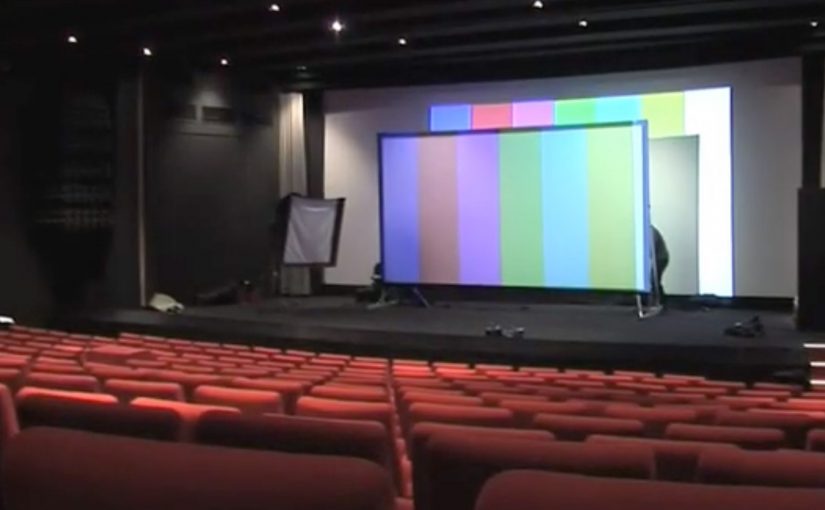
BMW Motorrad: Flash Projection

German ad agency Serviceplan was given the challenge to turn young potential motorbikers into fans of BMW Motorrad by staging the brand in an unseen and fascinating way.

So they came up with the first cinema commercial that does not use a directly visible logo. During an exciting Superbike commercial they illuminated the BMW logo with a harmless photo flash onto the audience’s eyes. When the audience was asked to close their eyes at the end of the ad, they were surprised to see the BMW logo as an after image. With this BMW literally got inside people’s heads, involving them instead of boring them.

People who visited the movie shows were fascinated by this innovative performance. BMW Motorrad got a lot of positive feedback, especially excited comments on various biker blogs. Even film critics wrote about the event in their reviews. And of course there were several reports on TV.

At the pre-season opening of BMW Motorrad a significant number of younger people asked for information material about Ruben Xaus and his Superbike, the BMW S 1000 RR. The S 1000 RR then went on to be sold out till September 2010. A huge success in midst of a declining bike market.

Why this works

  • The stunt is the branding. The logo is not “shown”. It is experienced, and that experience is hard to forget.
  • Perfect context. Cinema is built for attention and darkness. Both amplify an after-image effect.
  • Talk value is baked in. People leave the room with a story they can only explain by reenacting it.

What to take from it

This is proof that you can create memorability without plastering a logo everywhere. If you can design a moment that the audience physically experiences, the brand recall can become stronger than with a conventional end frame.


A few fast answers before you act

What did BMW Motorrad do in this cinema activation?

They used a controlled photo-flash to create a BMW logo after-image in viewers’ vision during a Superbike-themed commercial, so the branding appeared when people closed their eyes.

Why is the “no visible logo” idea powerful?

Because the audience becomes the medium. The logo lives in their perception, which can feel more personal and more memorable than seeing it on screen.

What made it spread beyond the cinema?

The effect triggered strong word of mouth and coverage. People talked, bloggers reacted, critics mentioned it, and TV reported on it.

What is the reusable pattern for brands?

Create one clear sensory moment that is only possible in a specific context, then let that experience carry the brand into conversation afterwards.