
Coca-Cola: Personal Road

Coca-Cola: Personal Road

Coca-Cola has an ongoing global campaign that allows consumers to personalise bottles and cans…

The real question is how you extend a personalization promise beyond the package without turning it into a gimmick.
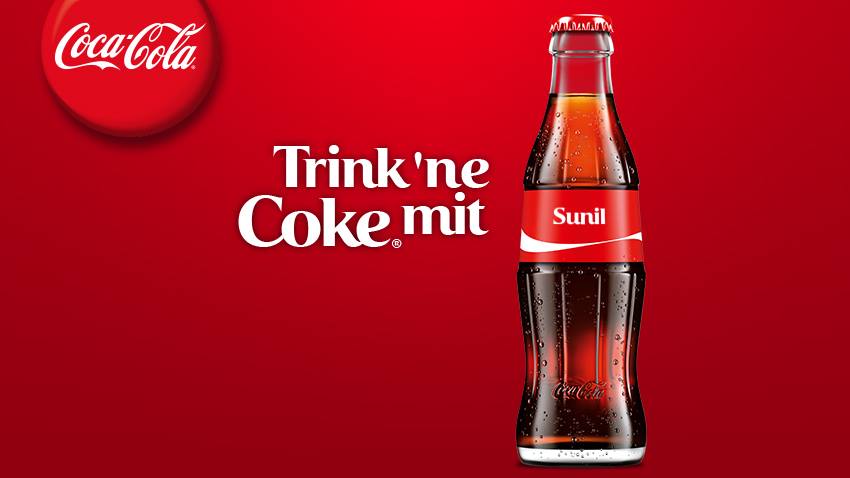
Enjoy a Coke with Sunil

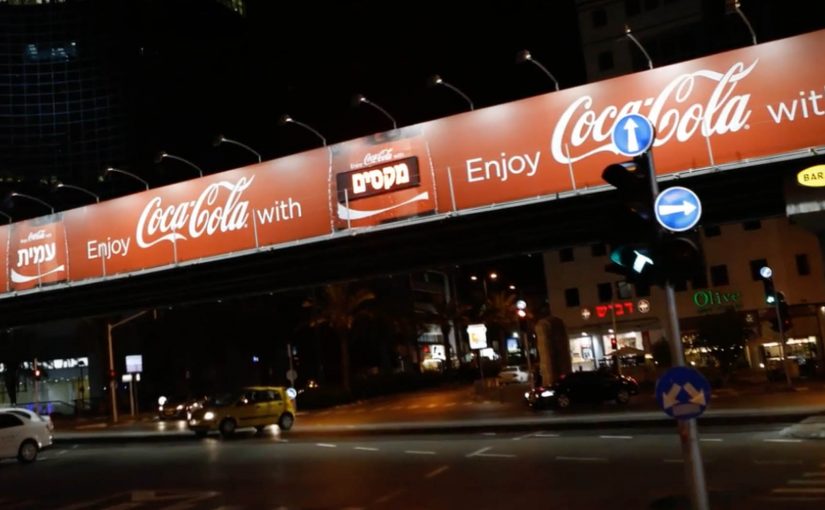
Building on the success of this campaign Coca-Cola Israel decided to take the idea further with personalised billboards.

A mobile app was developed where consumers could enter their name. Then using geo-fence technology, the Coca-Cola billboard displayed the name when it was approached. Geofencing here means the app detects when you enter a defined area around the billboard. The same trigger also sends a phone message, which is what makes the public moment feel personal and easy to share.

In global consumer brands running mass-personalization campaigns, this kind of simple, location-triggered reveal is a clean way to turn a name into a real-world moment.

Since its launch the app has reached 100,000 downloads and is currently ranked #1 in Israel’s app store.

Why this extension makes sense

It keeps the original “Share a Coke” promise intact, then amplifies it with one visible surprise that is immediately confirmed on the device you are already holding.

Extractable takeaway: If you want personalization to stick, pair one unmistakably personal output people can see with one immediate confirmation they can keep.

  • It keeps the personalization promise. The name is not only on the package. It shows up in the world around you.
  • Location makes it feel “for me”. The moment you approach the billboard, the experience becomes uniquely yours.
  • Mobile closes the loop. The phone notification confirms the moment and turns it into something you can share.

The reusable pattern

Start with a personalization mechanic people already understand. Then add a single “surprise and confirm” moment in the real world, powered by location and a simple mobile action.

  • Keep the input tiny. Ask for one thing, like a name, and make it obvious what happens next.
  • Make the output public and specific. Put the person’s name somewhere they cannot miss in the real world.
  • Confirm on mobile. Send a message at the same moment so the experience is memorable and shareable.

A few fast answers before you act

What is Coca-Cola “Personal Road”?

It is a Coca-Cola Israel extension of the personalised-name campaign that uses a mobile app and geofencing so a billboard displays your name as you approach, and your phone notifies you.

How does the billboard know when to show a name?

The app uses geo-fence technology to detect proximity, then triggers the personalised billboard moment when the user approaches.

Why pair the billboard moment with a smartphone message?

The message confirms what just happened and makes it easy for the consumer to capture and share the experience.

What is the key takeaway for location-based campaigns?

Make the rule simple and the payoff instant: one input from the consumer, one visible personalised output, and one mobile confirmation that seals the memory.

Pepsi Like Machine

Pepsi Like Machine

You walk up to the Pepsi’s “Like Machine”, tap “Like” for Pepsi on Facebook using your smartphone or the machine’s touchscreen, and it dispenses a soda. Simple rule. Instant reward.

The Like Machine mechanic

Coca-Cola has created a whole bunch of innovative vending machines over the last couple of years. Pepsi, on the other hand, created only a couple. Now to add to that collection, Pepsi piloted its latest vending machine. Dubbed the “Like Machine”, it was programmed to dispense soda to fans who “Like” the brand on Facebook via their smartphone or via the touchscreen on the machine.

For brands using event-led FMCG activations, the value of this mechanic is that it turns a familiar digital action into a visible physical conversion point.

The business logic is clear: tie a low-friction social action directly to a branded product moment.

Where did Pepsi pilot it

Pepsi piloted the machine at a Beyonce concert in Antwerp, Belgium and received a good response. So do not be surprised if you see more of them popping up nearby.

Why “Like” works as currency here

The exchange is clear. A lightweight social action becomes the trigger for a real-world payoff. The behaviour is familiar, the barrier is low, and the moment is easy to understand even in a noisy live-event setting. The real question is whether the action feels effortless enough to be worth doing on the spot. This is a smart activation rule because it converts a familiar digital gesture into an immediate physical reward, which reduces hesitation and lifts participation.

Extractable takeaway: When a brand uses a familiar low-friction action as the price of entry, more people complete the interaction because they understand the trade instantly.

What to steal from a like-for-reward mechanic

  • Make the exchange instantly legible. One action. One reward. No interpretation required.
  • Use a behaviour people already do. “Like” is familiar, so the barrier to participation stays low in a live setting.
  • Keep the payoff immediate. The shorter the gap between action and reward, the higher the completion rate.
  • Measure conversion, not just buzz. Track attempts, successful dispenses, and incremental social lift during the activation window.

A few fast answers before you act

What is the Pepsi Like Machine?

It is a vending machine that dispenses a Pepsi to people who like the Pepsi brand on Facebook, either via their phone or on the machine touchscreen.

Why test this at a concert?

Concert crowds are already in a high-energy mindset and open to quick interactions. That makes participation fast and visible, which boosts word of mouth.

Why does this mechanic work so quickly?

Because the rule is easy to grasp and the reward is immediate. People do not need extra explanation to decide whether to participate.

What is the simplest lesson to copy?

Make the rule obvious, the action effortless, and the reward immediate. If any one of those is slow or unclear, participation drops.

What should you measure?

Participation rate per hour, completion rate (start to dispense), and the incremental social lift tied to the activation window.

Coca-Cola: Sharing Can That Splits in Two

Coca-Cola: Sharing Can That Splits in Two

When “share” is built into the can

With summer coming up and an ice cold soda in your hand, people around you are bound to hope that you will share the soda with them. The normal way of doing so would be to sip from the same opening.

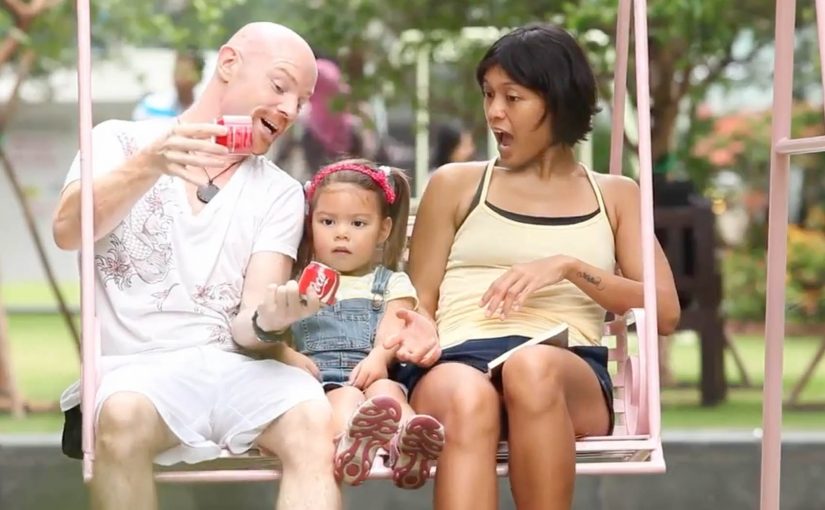
Now in an attempt to create another way of sharing happiness, Coca-Cola teamed up with Ogilvy in Singapore and France to create a shareable can of Coke that splits into two and creates two half pints. The results.

The packaging hack: one can becomes two

The can does not just contain the drink. It choreographs the moment. Split it. Hand one half over. The product becomes the gesture.

In global FMCG brands, packaging is often the fastest way to turn “share” from a line of copy into a behavior.

If the behavior matters, design it into the object. Because the can physically divides into two drinkable halves, the social negotiation disappears and the gesture becomes obvious.

Why it changes the social moment

The post nails the truth. People want a sip. This design turns that awkward micro-negotiation into a simple ritual that feels natural in the moment. Here, “ritual” means a tiny repeatable sequence anyone can copy. Split, hand one half over, drink.

Extractable takeaway: When the friction lives in a shared micro-moment, redesign the object so the desired behavior is the default, not a negotiation.

The job it solves

Create another way of sharing happiness in summer, without two people sipping from the same opening. Here, “sharing happiness” is not abstract. It is one can producing two separate openings, so two people can drink without swapping sips.

The real question is how to make sharing feel effortless and hygienic at the exact moment someone is holding the drink.

Steal the split-and-share ritual

  • Encode the behavior: If the behavior matters, build it into the object, not only the message.
  • Remove micro-friction: Design for the real scenario, then remove friction inside that moment.
  • Make the ritual portable: Create a repeatable ritual. The best ones travel without explanation.

A few fast answers before you act

What is the “sharing can” concept?

A Coke can engineered to split into two drinkable halves, creating two half pints from one can.

Who was involved?

Coca-Cola partnered with Ogilvy. The post associates the work with Singapore and France.

What moment does it target?

The everyday situation where someone has a cold drink and others around them hope they will share it.

What is the core creative move?

Turning “sharing happiness” into a physical product feature rather than a line of copy.