
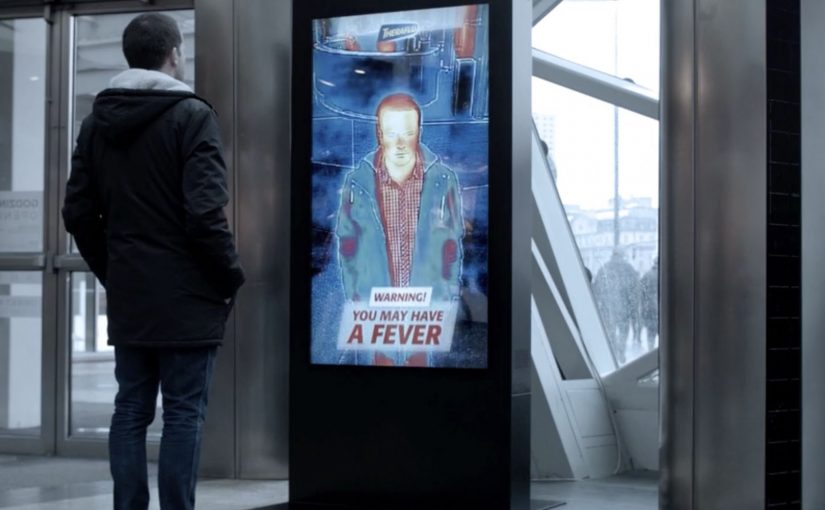
Theraflu: Thermoscanner

With the start of flu season, Theraflu in Poland wants to create a tool that lets passersby check if they have a fever without interrupting their daily commute.

So Saatchi & Saatchi develops what is billed as the world’s first outdoor ad with a live thermo-scanner camera, able to check the body temperature of the person standing next to it in real time.

The thermo-ad also lets people take a thermo-selfie, which here means a thermal-style image of themselves, download it via a microsite or QR code, and share it using the hashtag #TherafluThermoscanner, or send it by email to their boss as an explanation for absence.

Turning a symptom into an instant public check

The mechanism is a simple swap. Thermal cameras are usually associated with controlled environments like airports or clinics. Here, that same visual language is put into a familiar citylight so the “should I worry?” moment can happen on the street, in seconds. That shift matters because it turns a clinical signal into a low-friction commuter interaction, which is why the idea feels immediately useful instead of purely theatrical.

In European commuter cities, out-of-home works best when it adds utility without forcing people to break stride.

Why it lands

This works because it respects the reality of flu season behavior. Many people keep moving even when they feel off. The installation meets them where they already are, makes the result legible at a glance, and gives them an immediately shareable artifact that doubles as social proof and practical communication.

Extractable takeaway: If your message is health-related and time-sensitive, design a public utility that produces a clear personal output. Then make that output easy to reuse in the next real decision the person has to make.

What Theraflu is really buying

Beyond awareness, the ad builds a reason to act early. It reframes “flu medicine” from a product you remember later into a category you prepare for now, while the viewer is still in the mindset of assessing symptoms and deciding what to do next. The real question is how to make symptom checking feel immediate enough to trigger action before people default to pushing through the day. The stronger play here is utility-led brand framing, not spectacle for its own sake.

What to steal from the Thermoscanner

  • Embed the benefit inside the medium. If the media unit demonstrates the promise, the claim needs less persuasion.
  • Make the result portable. A shareable scan turns one interaction into many impressions.
  • Design for the commute. Fast, glanceable, and low-effort beats “immersive” when people are in motion.
  • Give sharing a job. Social posting is optional. Emailing a boss is a real utility hook.

A few fast answers before you act

What is the Theraflu Thermoscanner?

It is an interactive outdoor ad that uses a live thermal camera to estimate body temperature in real time and indicate whether a passerby may have a fever.

Why put a thermo-scanner in an outdoor ad?

It makes fever detection feel instant and accessible during daily routines, and it turns a brand message into a practical tool.

What is a thermo-selfie here?

It is a thermal-style image generated from the scan that people can download and share, or send as a message to explain they may be unwell.

What makes this more than a gimmick?

It is tied to a real, time-sensitive decision. “Do I have a fever?” and it delivers an output that can be reused immediately.

How can other brands apply the pattern?

Find a high-friction question people avoid answering, then build a quick public utility that returns a clear personal result and a shareable artifact.
Herta Knacki FootBall: The Football Machine

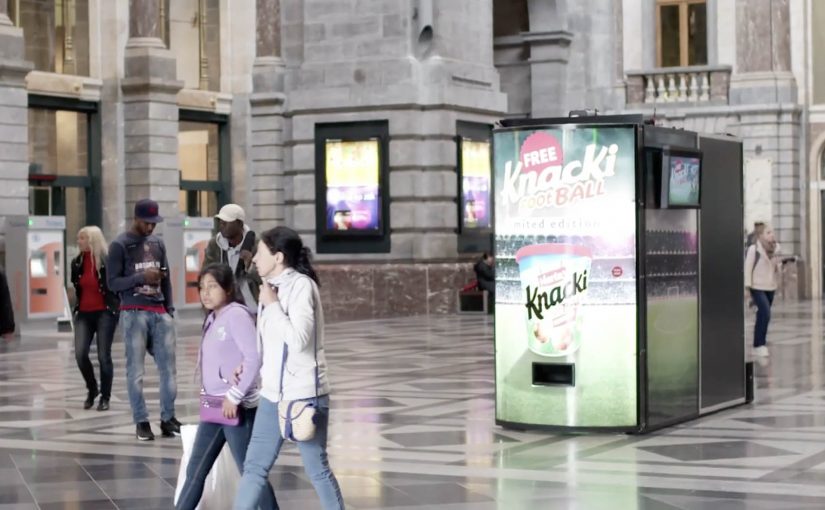
Herta, described as a Nestlé brand in Belgium, launched Knacki FootBall. Small meatballs designed to look like footballs. Instead of relying on standard sampling, the brand and BBDO Brussels turned a train-station moment into a game people could not ignore.

At Antwerp Central Station, a vending machine offered the product for free. Then came the twist. Press the button and the machine opened into a miniature football pitch, with Belgian football legend Leo Van Der Elst waiting inside. To walk away with the snack, you had to score.

Free is easy. Earning it is memorable.

The mechanic is deliberately unfair in the right way. People approach expecting a quick handout. The reveal forces a choice. Walk away, or step in and play. That decision point creates tension, and tension creates attention. In high-traffic commuter environments, the best sampling ideas turn “free” into a short challenge with a story-worthy payoff. The real question is whether your sampling moment earns attention before it earns a bite.

Extractable takeaway: Sampling gets retold when it includes a moment of risk or effort. The product becomes a trophy, not a giveaway.

A vending machine that behaves like a stadium

The physical design does most of the communication. The moment the door opens, everyone nearby understands what is happening. It becomes a spectator event, which is crucial in a station setting where most people do not want to stop unless something is already happening.

Why the celebrity opponent matters

Leo Van Der Elst is not a generic “host.” He is the difficulty setting. His presence turns the activation into a genuine duel, and that makes the outcome feel earned whether you win or lose. It also gives the content a built-in headline when the story travels online.

What the brand is really reinforcing

Knacki FootBall is a novelty product, so the job is not deep education. It is instant association. Football. Fun. A quick bite. The machine makes those associations physical, then anchors them to a specific place and moment people remember.

How to copy The Football Machine

  • Build a single, obvious action. Press the button. The rest happens to you.
  • Make the reveal legible from 10 meters away. If bystanders cannot decode it fast, you lose the crowd effect.
  • Turn sampling into a challenge. Effort increases perceived value and shareability.
  • Use a real “difficulty signal.” A credible opponent or constraint makes the game feel legitimate.
  • Design the exit. Winning should end with a clear reward and a clean photo moment.

A few fast answers before you act

What is Herta Knacki FootBall “The Football Machine”?

It is a vending machine activation where commuters expecting a free sample discover a miniature football pitch inside, and must score a goal to win Knacki FootBall.

Where did the activation run?

It is described as being installed at Antwerp Central Station in Belgium.

Why use a vending machine for a food launch?

Because it creates a familiar expectation. Then you can subvert it. That contrast generates surprise, crowd attention, and strong word of mouth while still delivering the product sample.

What makes this work in a train station specifically?

Stations are full of people who are time-poor. A reveal that is instantly understandable, plus a short game loop, one attempt that takes seconds, can stop people without requiring explanation.

What is the biggest operational risk with this kind of live activation?

Throughput and safety. If the game takes too long, queues become friction. If the experience feels unsafe or embarrassing, people avoid participation and the crowd effect collapses.

Sky Go: The Talking Window

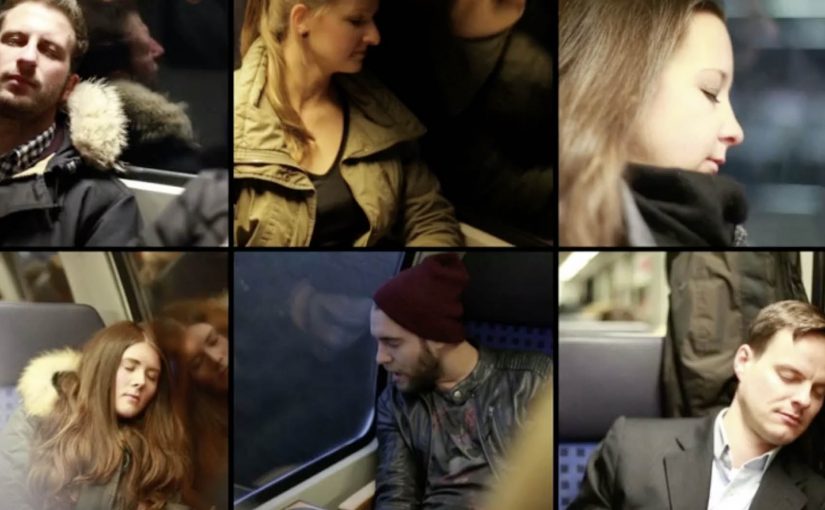
Train passengers who get bored during travel often lean their head against the window. Sky Go uses that exact micro-moment as an attention trigger, without asking anyone to look up from their seat.

BBDO Germany, together with Audiva, a bone conduction specialist, developed a small transmitter that attaches to the train window and delivers an audio message in a way that feels oddly personal. Bone conduction means transmitting sound to the inner ear through skull vibrations rather than through the air into the ear canal.

How the window “talks”

The transmitter emits an inaudible, high-frequency vibration through the glass. When a passenger rests their head against the window, those vibrations travel through the bones of the skull to the inner ear. The brain interprets the vibration as sound, so the person leaning on the window hears the message while nearby passengers hear nothing.

Bone conduction is the conduction of sound to the inner ear through skull vibrations, rather than through the air into the ear canal.

In public transport advertising, tying a message to a predictable body posture can create “only I can hear this” intimacy without turning the whole carriage into noise.

Why this lands

This works because it is activated by a natural behavior, not by a request. There is no screen to seek, no QR code to scan, no app to open in the moment. The novelty is also self-explaining. The passenger experiences the medium first, then understands the message.

Extractable takeaway: If you want attention in a distraction-heavy environment, design an opt-in trigger that happens through normal movement, and deliver the payload as a private experience rather than a public interruption.

What the campaign is really testing

The real question is where clever intimacy stops and intrusion starts in ambient media.

This format is strongest when the trigger feels voluntary and the message stays restrained. It is not audio quality being tested as much as tolerance. This kind of “whisper only to you” media explores how far ambient advertising can go before it feels intrusive, and where the line sits between clever targeting and unwanted interruption.

What ambient media can borrow from this

  • Exploit a reliable posture. Build around something people already do on autopilot.
  • Make the medium the headline. A new delivery mechanism earns attention before the message even lands.
  • Keep it private. Personal sound beats shared noise in confined public spaces.
  • Design for instant comprehension. If someone needs an explainer to “get it,” the ambient magic collapses.

A few fast answers before you act

What is the Sky Go “Talking Window”?

It is a train-window activation that delivers an audio message only to people who lean their head against the glass, using bone conduction vibration.

Why can only one person hear it?

The sound is carried through the glass and into the listener’s skull when they make contact. People not touching the window do not receive the vibration path.

Is this facial recognition or tracking?

No. The described trigger is physical contact with the window, not identity detection.

What is bone conduction in plain terms?

It is hearing sound through skull vibrations, where the vibration reaches the inner ear without traveling through the air into the ear canal.

What is the main risk of this format?

If it startles people or feels unavoidable, it can be perceived as invasive. The creative and frequency need restraint.