AKQA has taken Xbox Lips digital with the “Lips Jukebox” on Facebook, which enables users to transform their photos into music videos, in a bid to promote the new game “Lips Number One Hits”.
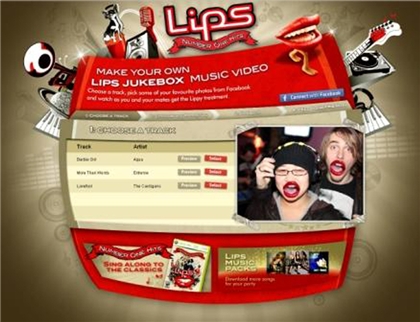
The application is hosted at the Xbox website, and uses a combination of facial recognition technology and Facebook Connect functionality to enable people to choose a song and the photos they want to adapt from their profile before adding singing “Lips” to the faces and then creating the animated, personalized music video.
For social experience design, the winning pattern is simple: let people reuse what they already have, then return a share-ready artifact that feels personal without requiring effort.
Why this idea lands
This is a clean example of “personalisation as entertainment”, meaning it turns something people already have, their photos, into something people want to show, a personalised music video.
Extractable takeaway: If the input is already in the user’s profile and the output looks like finished entertainment, participation becomes a default choice rather than a deliberate one.
The real question is whether your experience returns something people are proud to share, not whether the underlying tech is impressive.
- Low friction input. Your Facebook photos are already there.
- High novelty output. Seeing faces “sing” creates instant curiosity and share value.
- Product-fit promotion. A singing video experience naturally aligns with a music game.
Facial recognition as a feature, not a headline
The facial recognition is not presented as “tech for tech’s sake”. It is simply the enabling layer that makes the result feel surprisingly accurate and personal. Because the facial recognition runs behind the scenes, the experience feels effortless and personal, which makes people more likely to finish the flow and share the output.
This is the right way to use facial recognition in marketing: as invisible plumbing that serves the payoff.
In consumer product launches that rely on social sharing, remixing existing profile media into a finished asset is often the fastest path to reach without asking for extra effort.
What to take from this if you build social experiences
- Turn existing assets into new value. Users are more likely to participate when they can reuse what they already have.
- Make the output share-ready. The “end product” should be something people naturally want to post.
- Keep creation steps short. Selection, preview, publish. The loop should feel quick.
- Align the experience with the product promise. A music game promoted through a music-video maker feels coherent.
A few fast answers before you act
What is the Xbox Lips Jukebox?
It is a Facebook-connected experience that lets users transform their photos into animated, personalised music videos to promote “Lips Number One Hits”.
What technologies does it use?
It combines facial recognition with Facebook Connect so users can select songs and photos, then apply singing “Lips” to faces and generate a video.
Where is the application hosted?
It is hosted on the Xbox website.
Why does this work as game marketing?
It creates a playful, shareable output that matches the core theme of the game. Music and performance.
What is the transferable lesson?
When you can turn user content into entertainment with minimal effort, you can earn both engagement time and social sharing without heavy persuasion.