
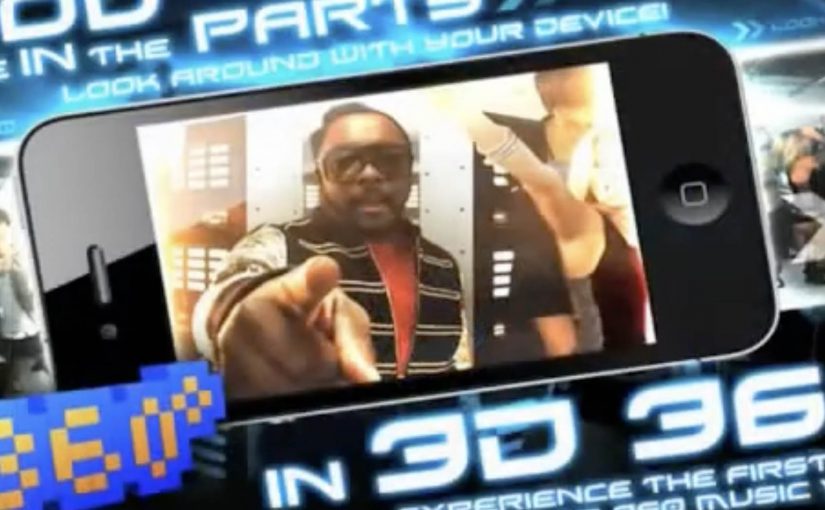
Black Eyed Peas: BEP360 AR music video

The smartest artists in 2011 are starting to behave like brands. Not only by releasing content, but by building experiences around it that fans can actually play with.

BEP360 is a strong example of that thinking. It packages a 360-degree, motion-controlled music video experience around The Black Eyed Peas, designed for iPhone, iPad, and iPod touch.

The core mechanic is simple. You move your device, and the camera view moves with you, giving you viewer control inside the scene. Viewer control here means you choose the camera angle in real time by moving the device. On top of that, BEP360 includes an augmented reality layer triggered by pointing the iPhone camera at the album cover for The Beginning, plus a virtual photo session feature that lets fans stage shots with the band and share them.

In global entertainment marketing, app-based experiences are becoming a practical way to deepen fandom between releases and justify paid content with participation.

The real question is whether you are building a replayable interaction fans control, or just dressing up a single-view clip with novelty features.

It is also an early signal of where “music video” can go when it is treated as a product experience rather than a clip you watch once. The app is billed as a first-of-its-kind 360-degree mobile music video, built under will.i.am’s will.i.apps banner, with augmented reality support via Metaio and 3D360 video technology referenced in early coverage.

Why this is more than a promo gimmick

The best part is the shift from passive viewing to participation. A 360-degree experience creates a reason to replay, because you cannot see everything at once. That replay value is what standard video launches rarely earn.

Extractable takeaway: If the experience gives people control over what they see, replay becomes the point, and that repeat engagement is what turns a launch into something that feels like a product.

What the AR layer adds, and what it does not

The AR trigger is not the main event. It is a novelty layer that extends the universe into the physical world, using the album cover as the marker. The real value is the combination of interactive video plus social output. Fans can create something and share it, which keeps the campaign alive without requiring more media spend.

Fan-first interactive video playbook

  • Give people viewer control. Control creates replay value.
  • Bundle features around one hero action. Here the hero action is “step inside the video”. Everything else supports that.
  • Use AR as an on-ramp, not the whole product. A quick wow moment is fine, but the experience must hold attention afterwards.
  • Design for sharing outputs. Photo sessions and remixable moments extend reach organically.

A few fast answers before you act

What is BEP360?

BEP360 is a Black Eyed Peas iOS app that turns a music video into an interactive 360-degree experience controlled by moving your device, with an added augmented reality layer triggered by the album cover.

What makes the music video “360-degree” in this case?

The camera perspective changes as you rotate or swing the phone, giving you control over where you look inside the scene while the track continues.

How does the augmented reality part work?

You point your iPhone camera at the The Beginning album cover, and the app overlays animated BEP characters and related content on screen.

Why does an app make sense for music marketing?

Because it can bundle interaction, social sharing, and ongoing fan content into one place. It gives people a reason to pay for the experience, not only consume a free clip.

What is the main risk with app-based fan experiences?

Friction. If downloads, device compatibility, or onboarding are annoying, the idea collapses. The experience has to deliver value within seconds.

The Expendables: YouTube Takeover

This is the latest campaign element for the launch of The Expendables movie. A YouTube takeover that plays like an “interrupted interview” with Sylvester Stallone, where the film breaks into the page and turns the platform itself into part of the spectacle. In campaign terms, a YouTube takeover is a custom page experience that changes how the video and surrounding interface behave, so the platform becomes part of the creative, not just the player.

The fun is in the escalation. What starts like a normal promo interview quickly flips into a chaotic on-page moment, with the surrounding YouTube environment becoming the canvas for the film’s tone. It is not just a trailer. It is a takeover that behaves like a scene.

When the page is the stage

The mechanic is simple to understand and hard to ignore. The interview drives the narrative, but the “takeover” is the real payload. The experience makes YouTube feel temporarily owned by the movie, which is exactly what you want on launch week when everything competes for attention.

It also sidesteps the usual ad fatigue problem. People do not feel like they are being “served” something. They feel like they discovered a disruption, and discovery is what drives sharing.

In blockbuster entertainment marketing, interactive takeovers work best when they turn passive viewing into a moment of viewer control that still feels native to the platform.

Why interruption works better than interruption marketing

Most pre-roll is an interruption that people resent. This is an interruption that people watch because it is designed as entertainment first. The twist is that the platform is part of the joke, so the format is the message. It also gives viewers a clean decision point. Keep watching because it is funny. Close it because you are not interested. Either way, the brand moment is delivered fast.

Extractable takeaway: If you must interrupt, make the interruption itself entertaining and easy to exit, so attention feels chosen instead of imposed.

What the studio is really buying

The business intent is talkability at scale. A standard trailer competes with every other trailer. A takeover creates a story about the trailer. That distinction is what earns press pickup and social forwarding without requiring extra explanation.

The real question is whether your launch asset creates a platform-native story people can retell in one sentence, not just another piece of media to skip.

For a short, noisy launch window, a platform-native takeover is the stronger play than adding more standard trailer impressions.

Short-window launch moves to copy

  • Make the format do the selling. If the medium changes, people lean in.
  • Build a one-sentence retell. “Stallone destroys YouTube during an interview” is easy to repeat.
  • Use escalation. Surprise, then bigger surprise, then payoff.
  • Stay platform-native. The takeover should feel like it belongs on that site, not pasted onto it.

A few fast answers before you act

What is a “YouTube takeover” in campaign terms?

It is a custom YouTube page experience that changes how the video and surrounding interface behave, so the platform itself becomes part of the creative, not just the player.

Why does the “interrupted interview” trope work so well?

Because it starts in a familiar format, then breaks the rules quickly. The contrast creates surprise, and surprise is the fastest path to attention and sharing.

What is the main advantage over running a normal trailer?

A normal trailer is content. A takeover is content plus a story about the content, which increases earned pickup and social forwarding.

What is the biggest risk with platform takeovers?

Annoyance. If the takeover feels forced, slow, or hard to exit, people turn against it. The experience needs to be quick, optional, and satisfying.

What should you measure for a takeover?

Completion rate, replay rate, and earned mentions. If people describe the mechanic accurately when they share it, the concept is working.

NOFF: Casting Tape

A trailer disguised as something you should not be watching

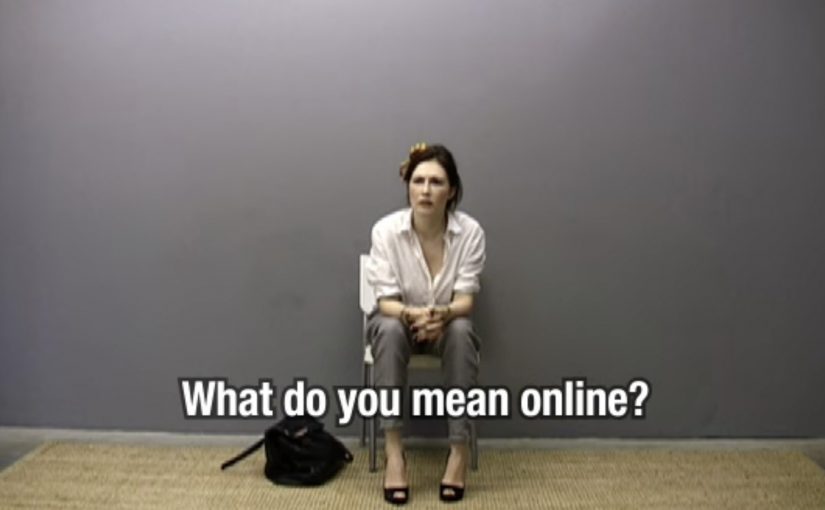
This video is presented as a “casting tape”. A raw, behind-the-scenes style clip featuring Carice van Houten that plays like a leak rather than a polished promo. The format does the heavy lifting, because it invites curiosity first and “what is this for” second.

How the mechanism pulls attention

Instead of explaining the festival with a standard trailer structure, the campaign uses a familiar industry artifact: the audition tape. It pushes it far enough into performance that viewers keep watching to see where it goes. Subtitles widen shareability across audiences who do not speak the original language, and the “found footage” tone lowers the viewer’s ad resistance.

In digital film and festival promotion, simulated behind-the-scenes footage can convert passive viewing into social forwarding because it feels like insider access.

Why it lands

It lands because it borrows the emotional contract of gossip. You are not “watching an ad”. You are watching something you might forward to someone else with a short message like “watch this”. That is the distribution advantage. The entertainment value sits in the format, not in a list of festival benefits. The real question is how to make a broad cultural offer feel like a must-watch artifact instead of a calendar listing. For a festival, this is a stronger opening move than a standard highlights reel because it sells intrigue before information.

Extractable takeaway: If your content offer is broad (a catalogue, a festival, a platform), lead with one irresistible artifact that feels like insider access. One artifact can outperform a perfectly edited overview.

What festival marketers can lift from this

  • Choose a format with built-in curiosity. Auditions, rehearsals, tests, and “first takes” invite completion.
  • Make it feel native to the category. A film festival using casting language is instantly credible.
  • Design for forwardability. A single clip people can share without explanation beats a multi-part explainer.
  • Use subtitles as reach infrastructure. They improve completion and sharing across borders.

A few fast answers before you act

What is this video promoting?

It is positioned as a promo asset for the Nederlands Online Film Festival, using a “casting tape” format to attract attention.

Why use a casting tape instead of a normal trailer?

Because casting tapes carry an “insider” feel. That makes people watch longer and share more readily than they would with an overt trailer.

What role do subtitles play here?

They make the clip understandable outside its native language and increase the odds that viewers will finish and forward it.

What makes this approach risky?

If the “leaked” framing feels deceptive rather than playful, the audience can reject it as manipulation.

How could a smaller festival apply the same idea?

Create one standout “artifact” clip (audition, rehearsal, jury-room moment) that feels like privileged access, then let it act as the entry point to your broader programme.