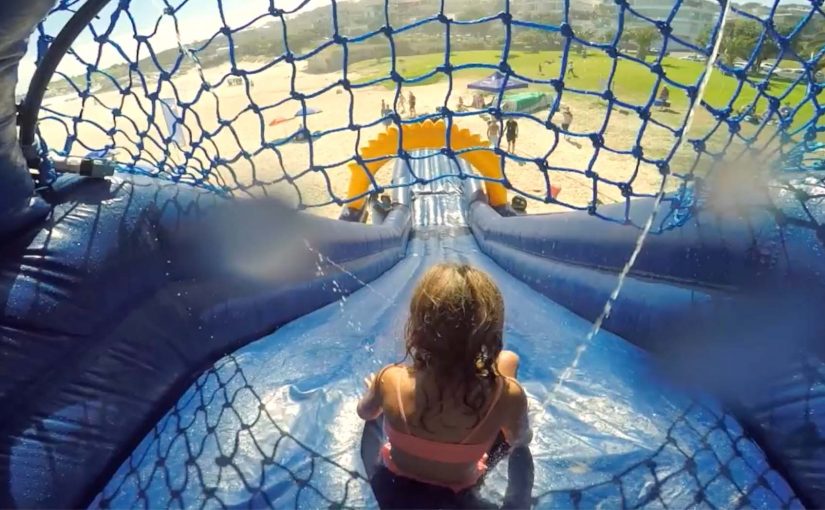
Kids are at the beach. They want to run, swim, and slide for hours. Parents want one thing first: sunscreen. That usually means a negotiation. Nivea flips the dynamic by turning sun protection into the game itself. It builds a slip-and-slide that sprays water-resistant SPF 50+ as kids go down. One ride applies the sunblock. The line is simple and strong: the “funnest” way to apply sunscreen. The claim is even better because it is measurable: one slide covers about 100 kids per hour.
The core move
Remove the biggest friction in kids’ sun protection by embedding sunscreen into something they already want to do.
The real problem it solves
Parents do not struggle with intent. They struggle with compliance.
Kids do not resist sunscreen because they hate protection. They resist because applying it interrupts fun.
The real question is how you make sun protection happen without making kids stop the fun.
SunSlide is a behavioral design solution. By behavioral design, I mean shaping the environment so the desired action happens as the default. It makes the protected action the entertaining action.
What gets built
A physical slide that sprays sunscreen as part of the ride. The experience does not ask kids to pause. It rewards them for participating. By turning application into the ride, it removes the interruption that triggers resistance.
In some coverage, the wider campaign context frames this against South Africa’s high skin-cancer risk and the heightened vulnerability of children, which is why “make protection automatic” becomes the creative strategy.
Why it works as brand experience
It works because the product promise is delivered as a moment of play, not a lecture.
Extractable takeaway: If you can embed a protective behavior into something people already want to do, adoption feels like participation and the brand earns trust through utility.
Utility is the message
The campaign does not tell you to protect your kids. It shows a mechanism that does it.
The product truth is delivered through physics
Water-resistant SPF is not a claim on a pack. It is the substance literally flowing through the experience.
The story is instantly repeatable
“A slide that applies sunscreen” is a one-sentence idea that travels without explanation.
The deeper point
Brand experience works best when it earns attention by being useful. This is what brand-led innovation looks like when it is honest. It takes a genuine consumer pain point, removes friction with a physical design, and makes the brand feel helpful rather than preachy.
What to borrow if you design activations
- Find the one moment people always skip. Do not start with awareness. Start with the behavioral gap. Here, it is the interruption moment.
- Convert interruption into participation. If the solution feels like a rule, people resist. If it feels like play, they opt in.
- Make the benefit visible and countable. “100 kids per hour” makes the idea feel real. It turns a stunt into a scalable concept.
A few fast answers before you act
What is SunSlide?
A slip-and-slide that sprays water-resistant SPF 50+ sunscreen onto kids as they ride, making sun protection automatic.
What problem does it solve?
It removes the recurring “stop and apply sunscreen” interruption that kids resist and parents dread.
Why is it effective as marketing?
Because the product benefit is experienced, not explained. The activation becomes the proof.
What is the key behavior design lesson?
If you can embed the desired behavior into something people already enjoy, compliance becomes participation.
What is the biggest risk with this kind of idea?
If the experience feels unsafe, messy, or untrustworthy, parents opt out immediately. The execution must feel controlled, clean, and credible.