This year, charity and human rights organization Amnesty International France turns its signatures petition drive at www.marathondessignatures.com into a musical “hymn to freedom” with Paris-based agency La Chose.
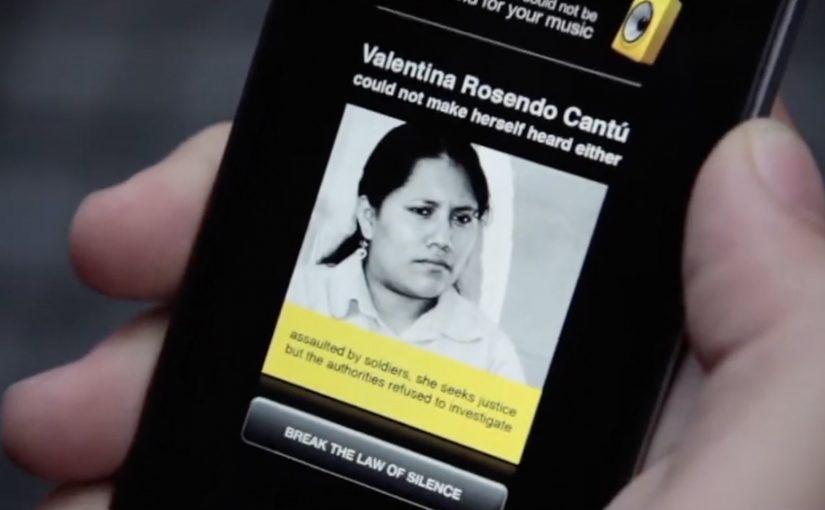
The campaign behaves like a normal petition drive, with one twist: every digital signature releases the next note of an exclusively written song, “The Sound of Amnesty”. To push the idea further, Shazam is used as a distribution channel. When Shazam fails to recognise a song, the app displays a call-to-action message alongside a case story, including: “Valentina Rosendo Cantu could not make herself heard either. Assaulted by soldiers, she asked for justice but the authorities refused to investigate”.
Why the “next note” mechanic works
Most petitions are emotionally important but mechanically flat: sign, share, done. Here, the signature becomes a trigger with immediate feedback. The song becomes a living progress indicator, and every participant can feel they are adding something tangible, not just adding their name to a counter. Because each signature produces an instant, shared “next note” payoff, participation feels consequential, which makes repeat shares and completion more likely.
This is a stronger petition pattern than a static signature counter because it turns support into a felt moment of progress.
Why Shazam is the clever amplifier
Shazam normally appears when you are already paying attention to music. By placing the petition inside the “recognition failed” moment, meaning when the app cannot match a track, the campaign catches people at a point of curiosity and mild frustration. The message reframes that friction as a metaphor for unheard voices, then gives users something concrete to do.
Extractable takeaway: Borrow an existing attention ritual, then use the moment’s friction to make the cause legible and the next action immediate.
In digital petition drives, tying each signature to a shared artifact that literally progresses can turn passive support into collective anticipation.
The real question is whether your petition makes progress feel personal, or just counts people.
Results and escalation
Reportedly, the campaign collected 150,000 signatures, described as a 500% increase from the previous year. The track was also produced on CD and sent to Amnesty’s targeted authorities, turning digital participation into a physical advocacy artifact.
Patterns to copy in petition drives
- Give every action an immediate consequence. “You unlocked the next note” beats “thanks for signing”.
- Use an existing habit. Hijacking a familiar moment inside a popular app can outperform building a new destination experience.
- Make progress audible or visible. A petition counter is abstract. A song evolving over time is memorable.
- Connect the mechanic to the meaning. The “not recognised” moment mirrors the core human-rights theme: not being heard.
A few fast answers before you act
What is “The Sound of Amnesty” in one line?
A petition drive where each signature unlocks the next note of an original song, turning advocacy into a progressively revealed “hymn to freedom”.
How is Shazam used in the campaign?
When Shazam cannot recognise a song, it displays an Amnesty message and invitation to sign, using the failure moment as a metaphor for silenced voices.
Why does the “unlock the next note” mechanic increase participation?
It adds instant feedback and a shared sense of progress, making signatures feel like contributions to a collective outcome.
Do you need Shazam to replicate the pattern?
No. The transferable move is to piggyback on an existing user habit and turn an ordinary support action into a small, satisfying reveal that people want to share.
What is the most transferable lesson?
If you want more signatures, do not only ask for support. Turn the act of signing into a small experience people can feel and share.