
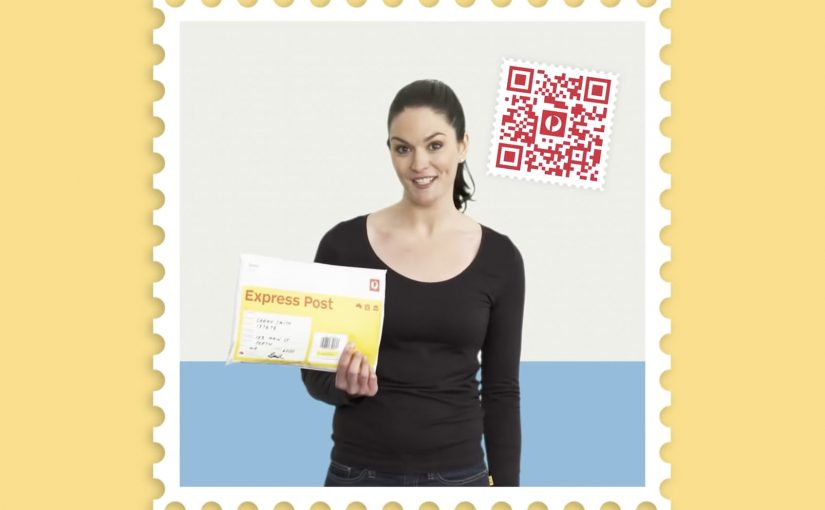
Australia Post: Video Stamps

Unpacking a parcel can feel a bit like unpacking a gift. Australia Post builds on that instinct with a “video stamp” that lets senders add a personal message to a package.

The mechanic is straightforward. A QR code stamp is linked to a custom video message, so the recipient scans the stamp and watches a personal clip as part of the unboxing moment.

How the video stamp works

The value sits in the linkage between physical and digital. The parcel carries a QR stamp, the QR routes to a hosted video message, and the message becomes part of the delivery experience without changing the logistics underneath.

In holiday postal services and gifting moments, a simple personalization layer can increase perceived value without changing the core delivery product.

Why this lands

This works because it upgrades a utilitarian service into an emotional ritual. The postal service delivers the object, but the sender delivers the moment. The QR stamp is also a clean trigger because it is familiar, fast, and naturally placed where attention already goes during unboxing.

Extractable takeaway: If your product is operational by nature, add a lightweight digital layer that attaches to a physical touchpoint, so the experience gains meaning without adding friction to the core process.

The idea in context

Linking codes to personal messages is a proven pattern. J.C. Penney linked QR codes to voice messages in their Santa Tags sticker campaign in 2011. There was also a concept video circulating about a similar DHL-style Christmas video packet service. The notable part here is the step from concept and retail experiments into a postal service implementation.

The real question is not whether a QR code can play a video, but whether a postal service can make a routine delivery feel personal without complicating the service.

This is a smart service-layer idea because it adds emotion without asking the postal operation to become something else.

What postal and gifting teams can reuse

  • Attach meaning to a routine moment. Unboxing is already emotional. Add a trigger there.
  • Use a familiar bridge. QR is low-explaining and low-friction.
  • Let the sender create the content. Personalization scales when users do the work willingly.
  • Keep it additive. The digital layer should not interfere with delivery, tracking, or operations.

A few fast answers before you act

What is an Australia Post video stamp?

It is a QR code stamp on a parcel that links to a custom video message, so the recipient can scan and watch a personal clip.

Why does this work especially well at Christmas?

Because parcels are already treated like gifts. A video message makes the delivery feel more personal and intentional.

Is this a new idea or a new implementation?

The underlying concept has existed in other forms, but the notable move is a postal service implementing it as a practical consumer feature.

What’s the main UX requirement for this to succeed?

Instant playback with minimal steps. If scanning leads to friction, the emotional moment disappears.

What’s the easiest way to copy the pattern?

Identify a physical touchpoint people already look at, then attach a scannable trigger that opens a personal message or content layer immediately.

LEGO: Happy Holiplay

Holiday attention built from imagination

The most effective holiday campaigns often turn the audience into the media. LEGO’s execution is a clean example of that approach.

To create positive attention around the LEGO brand, a global digital social campaign challenged people to take their imagination with the well-known LEGO bricks one step further and share the results via digital media.

The campaign was dubbed Happy Holiplay and was run for three weeks. LEGO fans from 119 countries participated actively and uploaded pictures to www.happyholiplay.lego.com.

How Happy Holiplay worked in practice

The mechanism was community-powered. LEGO provided a clear prompt and a simple submission behavior. Build something imaginative with bricks, capture it, and share it digitally.

The campaign site acted as the collection point. The internet did the distribution. Every upload became both participation and promotion.

That loop matters because the content and the invitation travel together. Each creation nudges the next person to build and share.

In global consumer brands with strong fan communities, seasonal social campaigns work best when the participation loop is already native to the product and culture.

Why it landed for a global fan base

LEGO was naturally suited to participatory storytelling. The product already trained people to invent, remix, and share. Happy Holiplay did not try to manufacture behavior. It amplified what the community already loved doing.

Extractable takeaway: When your product teaches a repeatable creative habit, your job is to frame it with a simple prompt and a visible gallery, not to over-produce the story.

The holiday timing mattered too. December is a period when people are already in “make and share” mode, and when families have more reasons to create together.

The business intent behind Happy Holiplay

The goal was to generate positive brand attention during a competitive seasonal window by turning the community into the main media channel.

The real question is whether you can turn a seasonal moment into a repeatable participation loop, not whether you can publish more holiday content.

Rather than paying for attention, LEGO earned it by creating a platform for fan creativity, and by making participation feel like a celebration instead of a promotion.

If the behavior is not already native, a participation push will feel like work and the content will not compound.

What to steal for your next social campaign

  • Use a behavior that is already native to the brand. If the audience already creates, design the campaign around creation.
  • Keep the action simple. Build, capture, share. Low friction increases global participation.
  • Give the community a home base. A clear destination makes participation feel official and collectible.
  • Let contributors be the content engine. User-generated content (UGC) scales faster than brand-made assets when the prompt is right.

A few fast answers before you act

What was LEGO’s Happy Holiplay?

A global digital social campaign that invited fans to create imaginative LEGO builds and share them online.

How long did the campaign run?

It ran for three weeks.

How many countries participated?

LEGO fans from 119 countries took part and uploaded pictures to the campaign site.

Why did the campaign work so well for LEGO?

Because it amplified a natural LEGO behavior. Building and sharing creations. It aligned with the community’s existing motivations.

What is the key takeaway for other brands?

Design participation around an audience behavior you already own, then make sharing simple enough to scale globally.