A window performance built for radio
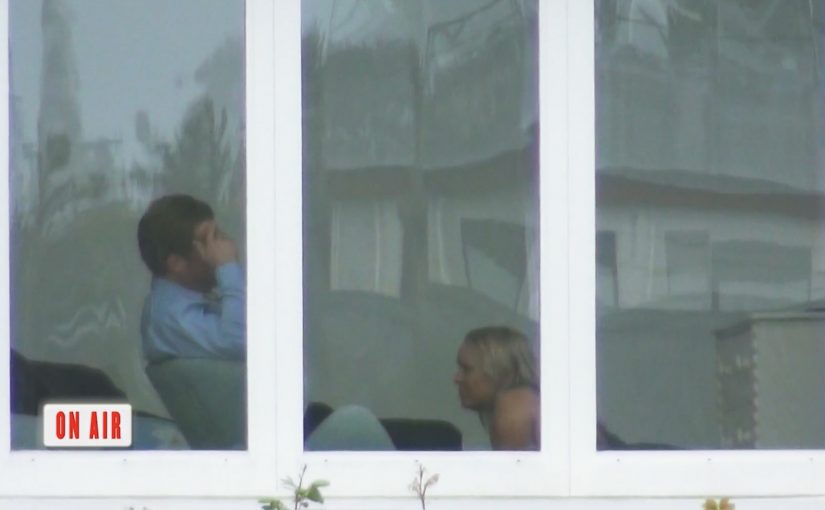
To launch the British TV drama Secret Diary of a Call Girl in New Zealand, DraftFCB staged a simple provocation. An “actress” displayed call girl-like behavior in a house window directly opposite a top radio station for three successive nights.
As expected, the scene caught the attention of the local DJ, who began broadcasting his observations on air. Other DJs around the country reportedly picked up the story, keeping it in circulation for roughly 72 hours. On the final night, with public interest at its peak, the actress closed the blinds to reveal the show message and the reason for the spectacle.
The mechanic: hijacking live commentary as distribution
The campaign is engineered to be “irresistible to narrate.” Put a curiosity trigger within line-of-sight of people whose job is filling airtime with observations, then let their real-time commentary do the heavy lifting. The multi-night schedule matters because it turns a one-off sighting into an unfolding story that listeners can return to, and that other shows can reference without needing new material.
In entertainment launches, live conversation often outperforms polished promos because the audience feels like they are overhearing something that is happening, not being sold something.
In broadcast-led markets, earned attention compounds fastest when the story is physically proximate to a microphone and structured to renew itself across multiple days.
Why it lands
It uses a classic public curiosity loop. People see something ambiguous, hear someone validate it on air, then share it socially to compare interpretations. Because the DJs are reacting in the moment, the “is this real?” tension stays alive long enough to travel, and the final-night reveal provides closure that feels like a payoff rather than a disclosure.
Extractable takeaway: If you want sustained buzz, design a repeatable public trigger that creates daily new angles for commentators, then hold the brand reveal until attention has clearly peaked.
What the launch is really optimizing for
The goal is not just reach. It is talk time, repetition, and social spillover. A premiere wins when it becomes the thing people reference without being prompted, and when the message arrives as the resolution of a story people have already been following.
The real question is whether the setup can turn observation into repeated on-air narration before the reveal arrives.
What to steal from this radio-first stunt
- Choose a “natural broadcaster.” Put the trigger near people whose incentive is to describe what they see.
- Make it episodic. Multi-night structure creates freshness and gives people a reason to check back.
- Design ambiguity, then control the release. Let curiosity build, but ensure the reveal is clean and unmistakable.
- Plan the social overflow. Seed a format that is easy to retell in one line, so listeners can amplify it without context.
A few fast answers before you act
What did DraftFCB do to promote Secret Diary of a Call Girl in New Zealand?
They staged an actress behaving like a call girl in a bedroom window opposite a radio station for three nights, prompting DJs to discuss it on air until a final-night reveal connected it to the TV premiere.
Why does placing the stunt opposite a radio studio matter?
Because DJs are paid to narrate interesting observations. Physical proximity to the studio turns the environment into live content.
What is the core distribution mechanic?
Earned media through live commentary. The stunt creates something discussable, and the on-air conversation becomes the ad.
Why run it across multiple nights?
Repeat nights transform a sighting into a story arc, increase the chance of pickup across stations, and create a natural moment for a final reveal.
What is the biggest risk with this kind of tactic?
If the reveal is unclear or the tone feels exploitative, the conversation can flip. The payoff must land cleanly and fast.