

Dentsu: iButterfly Location-Based Coupons

Coupons with wings: iButterfly turns deals into a mobile hunt

Here is a great example of Online, Mobile and Shopper Marketing converging with Augmented Reality (AR), where the phone camera view becomes the backdrop while digital objects are overlaid and tied to location signals like GPS. Integrated Marketing literally put into the hands of the people.

Japanese ad agency Dentsu has started this experimental coupon download platform called iButterfly on the iPhone. The free iPhone app transforms the habit of collecting coupons into a fun little game using AR and the device’s GPS.

The mechanic: catch a butterfly, unlock a coupon

The app tasks its users with catching virtual butterflies that are flying around, each representing one or more coupons. You can even share “butterflies” with your friends via Bluetooth.

In this context, the phone camera view becomes the backdrop, while digital objects, here butterflies, are overlaid and tied to location signals like GPS.

In retail and FMCG shopper marketing, the value of this approach is that promotions become a location-linked experience, not a passive download.

Why this format works for targeted promotions

The key shift is motivation. People are not “clipping” coupons. They are playing a simple collecting game, and the reward is a deal that feels earned. That feeling is why the offer holds attention long enough to drive action.

Extractable takeaway: When an offer is packaged as a collectible tied to place and moment, it feels context-aware rather than generic. Treat location as part of the experience, and keep the capture-to-redemption path short so the “find” turns into a real reward.

What Dentsu is really prototyping here

This is less about novelty AR and more about a new distribution behavior. Turning offers into collectible objects changes how often users open the app, how long they stay in it, and how naturally they talk about it with friends.

The real question is whether your promotion can create a repeat habit, not just a one-time redemption.

This format is worth copying when you can tie the reward to a real place and keep redemption friction near zero.

It is also a rare example where “share with a friend” is not a marketing CTA. It is a gameplay action that carries the promotion with it.

Shopper activation moves to copy from iButterfly

  • Make the reward immediate. Catch. Unlock. Redeem. Long funnels kill the game loop, the simple repeat cycle of catch, unlock, redeem.
  • Use location as a story, not a filter. Place rewards where people already go, so the map feels meaningful.
  • Let sharing be part of the mechanic. A tradable object beats a generic “share this” button.
  • Keep the collection simple. If users need a manual, they will not hunt.

A few fast answers before you act

What is iButterfly?

iButterfly is a mobile coupon platform that turns deal collection into a location-based AR game. Users catch virtual butterflies on their phone and unlock coupons as rewards.

How does the AR coupon mechanic work?

Users view the real world through the phone camera. Virtual butterflies appear and can be “caught”. Each butterfly contains one or more offers, which unlock after capture.

Why is this relevant for shopper marketing?

It shifts promotions from passive browsing to active discovery. Location and gameplay increase attention, repeat usage, and the likelihood of in-the-moment redemption.

What makes it feel targeted rather than random?

Butterflies can be tied to locations and contexts via GPS. That links the offer to where the shopper is, not just who they are.

What is the biggest execution risk?

If redemption is hard or the rewards feel weak, the novelty wears off fast. The game loop only survives when the payoff is clear and friction stays low.
Norms Restaurants: Social Media Above-the-Line

A TV spot that treats social as the main stage

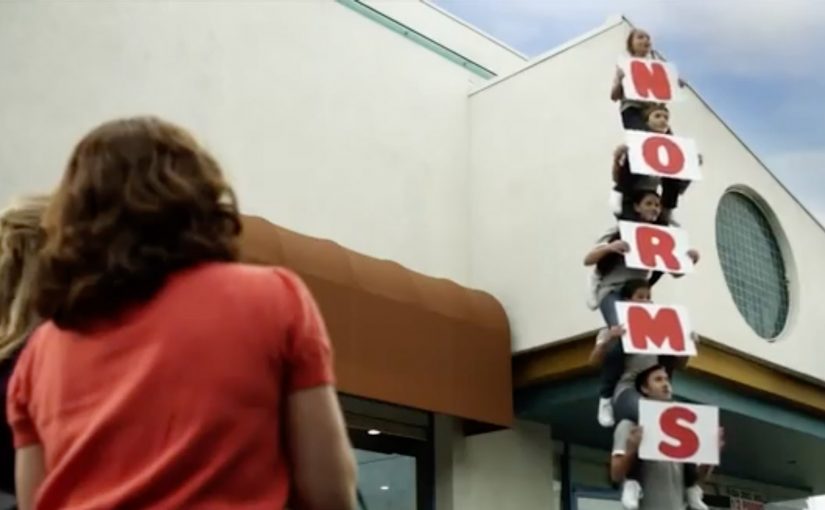
Here is a new TV spot promoting the NORMS Restaurants Facebook page. It does something different. The commercial is grounded in social media rather than simply being an add-on.

How it works: the channel is the creative, not the CTA

The mechanism is straightforward. Instead of telling you to “go to Facebook”, the spot behaves like social. It borrows the language, pacing, and cultural cues of the feed, then uses TV as the amplifier. By “social-native”, I mean it is structured like something you would actually scroll past in a feed. This works because viewers recognize that grammar instantly, so the follow action feels like continuing the same experience.

In US regional restaurant brands, social channels can function as a 24/7 extension of the dining room: service, deals, personality, and community in real time.

The real question is whether your mass media can behave like the channel you want people to adopt, rather than merely pointing at it.

Why it lands: the message and the operating model match

Just as social media never sleeps, NORMS Restaurants also never closes. They are open 24 hours a day. That alignment matters. The spot is not trying to look modern. It is connecting a true operational differentiator to a behaviour that is always on.

Extractable takeaway: When an “always-on” message is backed by something operationally true, the creative reads as utility instead of theatre.

The intent: make “follow us” feel like utility

The point is not only awareness. It is habit formation. If the brand is always open, then the social presence can be positioned as always available too, with updates that feel useful, timely, and worth checking. This is what it looks like to put social “above the line”, treating it as the primary experience and not a supporting channel. Here, “above the line” means the social presence is the main stage, while TV is used mainly to accelerate adoption. If you want social to matter, design mass media as an on-ramp to a repeatable social habit, not as a separate campaign.

Early results the brand shared at the time

This family owned business shared the following success within 10 days of the TV commercials:

  • Gained 1,000 fans on Facebook
  • Gained 150 followers on Twitter

Moves to put social above the line

  • Make the channel the idea. If you lead with social, the creative has to feel native to how social behaves.
  • Anchor the message in something operationally true. “Always on” lands when the business actually is.
  • Give people a reason to follow, not just a reason to notice. Utility beats slogans for repeat behaviour.
  • Measure fast, then iterate. If the goal is followers and engagement, build feedback loops early.

A few fast answers before you act

What is different about this NORMS TV spot?

It is built around social media as the core creative idea, not as a last-second add-on call-to-action.

What is the main mechanism that makes it work?

TV is used as the reach layer, while the creative language is intentionally social-native, so the handoff to Facebook and Twitter feels natural.

Why does the “social never sleeps” line fit NORMS?

Because NORMS is positioned as open 24 hours a day, so the always-on idea matches the operating model instead of feeling like marketing theatre.

What is the business goal behind grounding a TV spot in social?

To turn awareness into ongoing follow behaviour, so the brand gains a direct channel for repeat visits, offers, and relationship building.

What is the most transferable takeaway?

If you want social to sit above the line, treat it as the product experience, then use mass media only to accelerate adoption.