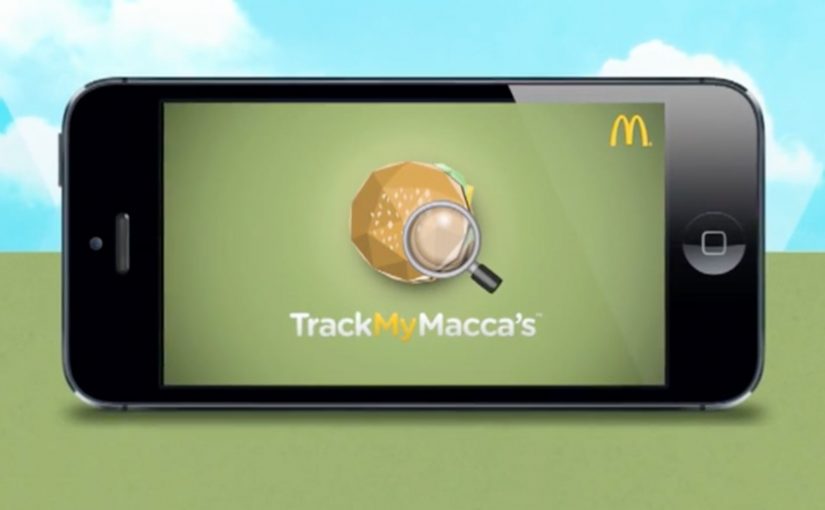
McDonald’s in Australia decided to use technology to tackle one of its biggest problems, the disbelief that its ingredients are fresh, locally sourced and of decent quality. So with image recognition, GPS, augmented reality and some serious integration with its supply chain, they put together a full story behind every ingredient people came across while buying food at McDonald’s.
The real challenge: trust, not awareness
This is not a campaign built to shout louder. It is built to answer the skeptical question that sits in the customer’s head at the moment of choice: “Is this actually fresh, and where did it come from”.
Instead of responding with claims, it responds with traceable context. Ingredient by ingredient.
Why the tech stack matters only if it is integrated
Image recognition, GPS, and augmented reality are the attention layer. The credibility layer is the supply chain integration. Without that, the experience would be a glossy story. With it, the experience becomes proof.
- Image recognition. Identify what the customer is looking at or buying.
- GPS. Connect the experience to location and local sourcing claims.
- Augmented reality. Make information feel immediate and tangible in the buying moment.
- Supply chain integration. Ensure the “story” maps to real sourcing and logistics data.
What makes this a strong model for brand transparency
Transparency only works when it is easy. People will not dig through PDFs or corporate sustainability pages while they are ordering lunch.
This approach brings the information to the moment and to the object. It reduces friction and increases believability.
What to take from this if you run CX, MarTech, or operations
- Start with the objection. The customer’s doubt defines the experience.
- Proof beats promise. If you want trust, show traceability, not slogans.
- Integrate the system of record. Experiences that depend on trust must connect to operational data.
- Design for the moment of choice. The best transparency is delivered exactly when people need it.
A few fast answers before you act
What is “Track My Macca’s”?
It is a McDonald’s Australia initiative that uses mobile technology to show a story behind ingredients, aiming to build trust in freshness, local sourcing, and quality.
Which technologies were used?
Image recognition, GPS, augmented reality, and strong integration with McDonald’s supply chain to connect the experience to real sourcing and logistics.
Why is supply chain integration the critical piece?
Because the experience depends on credibility. Without operational data behind it, the story would feel like marketing. With it, it can function as proof.
What customer problem does this solve?
It addresses disbelief about ingredient freshness and quality by making provenance and context visible at the point of purchase.
What is the transferable lesson for other brands?
If trust is your barrier, design transparency into the customer journey and connect it to your systems of record, so the experience can stand up to scrutiny.