
Radio Tel Aviv 102FM: The City Number Hack

Turn the city’s own numbering system into media

There are many radio stations in Tel Aviv, but only one is called “Radio Tel Aviv”. It broadcasts on 102FM. The task is simple. Make the city associate Tel Aviv with the station.

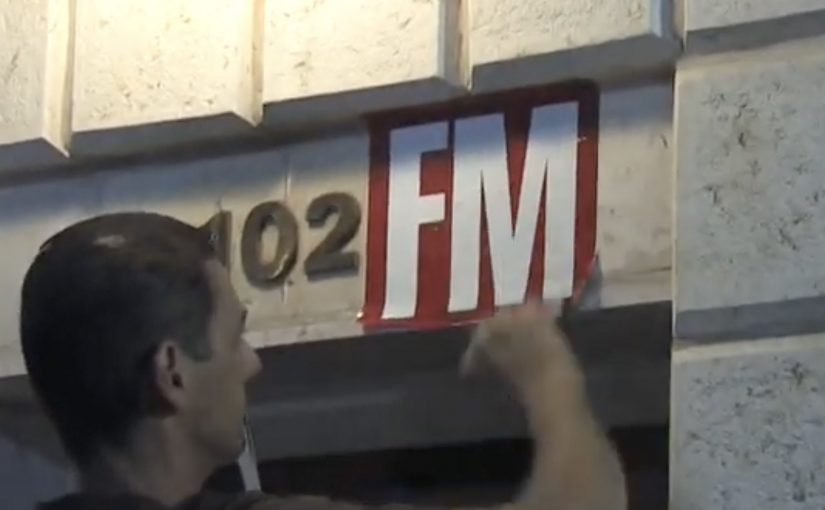
Saatchi & Saatchi Tel Aviv finds a native hook. Major streets in Tel Aviv have building numbers, and “102” appears all over the city. One night, the agency transforms every building number “102” into an ad. Stickers are affixed so “102” becomes “102FM”, complete with the station’s logo and tagline.

The mechanic: hijack an existing cognitive shortcut

People already scan building numbers without thinking. They are part of navigation, deliveries, meeting points, and everyday orientation. By converting “102” into “102FM”, the campaign piggybacks on a habit the city already has and turns it into repeated brand encoding.

In local media branding, the strongest growth lever is often not “more messages”. It is embedding the frequency into a pattern people naturally repeat. The real question is how to make a station identifier feel like part of the city, not just part of the media plan.

Why it lands

It feels clever because it is discovered, not announced. The brand does not interrupt you. It meets you where your eyes already go. And because it is scattered across real places, the idea creates the impression that the station is everywhere, even if the media spend is tiny.

Extractable takeaway: If you want people to remember a frequency, number, or short identifier, graft it onto an existing urban pattern that people already read dozens of times a day.

What radio marketers can steal from 102FM

  • Use native infrastructure. Wayfinding, numbering, and signage are pre-existing attention systems.
  • Keep the modification minimal. The smallest change that flips meaning is often the most elegant.
  • Optimize for repetition. Memory is built through repeated micro-exposures, not one big shout.
  • Make it feel like a city inside-joke. “Spotted it” is a powerful driver of organic talk.

A few fast answers before you act

What did Radio Tel Aviv do with “102” building numbers?

They added stickers so building numbers reading “102” became “102FM”, turning everyday street numbering into repeated reminders of the station frequency.

What is the core creative mechanic?

It hijacks an existing behavior. People already scan building numbers, so the campaign repurposes that habit into brand recall.

Why does this work better than traditional posters for frequency recall?

Because it appears in places people already look, and it repeats naturally across the city, creating many small memory anchors.

What’s the transferable lesson for other brands?

Find a pattern the environment already supplies, then attach your identifier to it in the smallest possible way.

What is the main risk with this tactic?

If it is perceived as vandalism or causes confusion for residents, backlash can override the cleverness. Location choice and execution quality matter.

Facebook integration at the Coca Cola Village

A teenager enters Coca Cola Village in Israel wearing a wristband that carries their Facebook credentials. Each time they swipe at an attraction, their Facebook status updates instantly with what they are doing. The village behaves like a live social feed, powered by real-world actions.

The activation. Turning an event into a live Facebook layer

Publicis (E-dologic) and Promarket develop an experiential event for Coca Cola Israel that syncs everyone who participates with their friends on Facebook in real time.

Here, “integration” means the event turns real-world actions into predictable Facebook posts and photo tags.

The real question is whether you can turn on-site participation into shareable proof without asking people to stop and post.

This pattern beats “share this” prompts because publishing becomes the default outcome of participation.

How entry works. Caps plus friends

The Coca Cola Village 2010 event runs through Facebook. Teenagers collect 10 Coca Cola caps, plus eight friends who do the same. After registering online through Facebook, they receive exclusive entry.

How the wristband works. Swipe to post, shoot to tag

At the Coca Cola Village, participants set up a special wristband designed to securely hold their Facebook login and password. In practice, it is a scannable wristband that identifies the participant at event touchpoints. Every swipe triggers an immediate status update about what they are doing at the event, keeping friends up to date as it happens. The wristband also enables automatic tagging of photos taken at the village.

In youth-focused FMCG activations, the win is to make sharing a byproduct of participation, not a separate task.

The scale effect. When participation becomes publishing

The event holds 650 teenagers a day. With seamless Facebook integration, they generate 35,000+ posts per day across three days, totaling 100,000+ posts for the event.

Why this works. Social actions move from screen to space

This is what “integration” looks like when it is not a logo on a wall. The social network becomes a behavior layer inside the event. Because the swipe is the trigger, posting becomes as easy as participating. The wristband reduces friction, the swipe makes publishing physical, and the photo tagging closes the loop by spreading proof of participation back into the feed.

Extractable takeaway: If you want social scale from an experience, bind sharing to a simple physical ritual people repeat, not to a “remember to post” moment.

Design moves worth copying

  • Credential once. Do the setup up front, then let participation drive sharing automatically.
  • Make the trigger physical. Tie posting to a repeatable on-site action (the swipe), not a manual step.
  • Close the proof loop. Auto-tagging turns attendance into visible evidence that travels beyond the venue.
  • Design for repetition. The easier the ritual is to repeat, the more output you get without extra prompting.

A few fast answers before you act

What is Facebook integration at the Coca Cola Village?

An experiential event in Israel where an RFID-style wristband connects on-site actions to real time Facebook posting and photo tagging.

How do people get access?

By collecting 10 Coca Cola caps and eight friends who do the same, then registering through Facebook for entry.

What does the wristband do?

It securely holds Facebook login details and posts instant status updates whenever participants swipe at attractions. It also enables automatic photo tagging.

What is the reported scale of social output?

650 teenagers per day, generating 35,000+ posts per day across three days for 100,000+ total posts.

What is the transferable pattern for brands?

Make social sharing an outcome of physical participation, not a separate step. Reduce friction and tie posting to clear, repeatable actions.

TwentyThree vs Alex Bogusky: The 1% Ransom

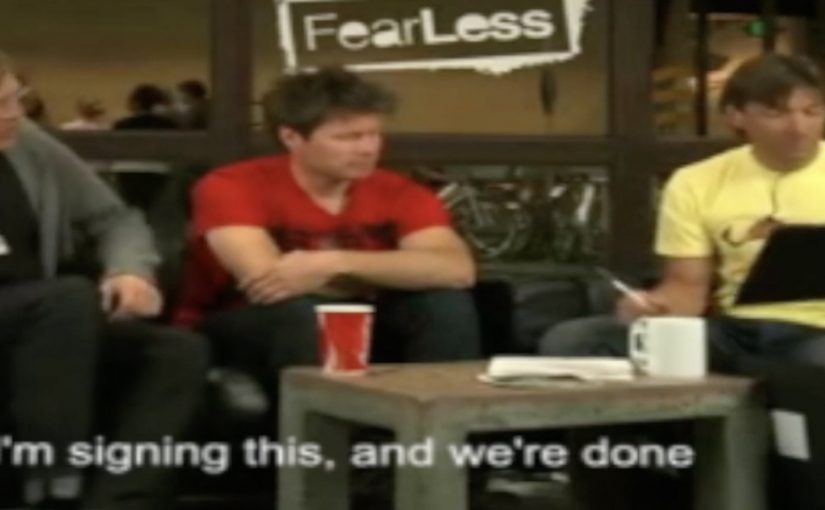
TwentyThree is a new advertising shop out of Tel Aviv, and its first Cannes case film is not built on a traditional client brief. It is built on a provocation aimed directly at Alex Bogusky.

The case story describes a “kidnapped” Facebook presence and a ransom-style video with a single demand. Bogusky should buy 1% of the agency. The stunt then becomes the work.

How the stunt works as a Cannes-ready case

The mechanics are blunt and easy to retell. Insert a famous name, create a public pressure point on a social platform, and package the payoff into a short case video that can travel on its own. A Cannes case film is a short explainer that compresses the idea, the build, and the effect into a judge-friendly narrative.

In global advertising and brand teams, self-promotional stunts like this are often less about the stunt itself and more about converting attention into credibility during award and new-business cycles.

Why it lands

It borrows the logic of “hacking” without requiring the audience to understand any technical detail. A recognisable target and a simple, specific ask make the story sticky. Because the platform is familiar and the ask is weirdly concrete, people can summarise it in one sentence and pass it on.

Extractable takeaway: If you want a self-promotional idea to spread, make the plot summarizable, make the stakes specific, and make the proof portable. Then ensure the case video can explain the whole thing without extra context.

What TwentyThree is really buying

The real currency here is not the 1% demand. It is the borrowed spotlight. By pulling a well-known creative leader into the narrative, the agency effectively rents fame long enough to be noticed, discussed, and remembered, and then uses that momentum to justify a Cannes entry.

The real question is whether borrowed fame creates durable credibility or just a burst of noise. This kind of stunt works best as a visibility lever, not as a substitute for substance.

What to borrow from the 1% ransom

  • Design for retellability. If the idea cannot be repeated cleanly in a sentence, it will not travel far.
  • Make the “ask” tangible. Specific stakes beat vague provocations every time.
  • Ship a proof asset early. A tight case video or demo clip becomes the distribution unit.
  • Separate drama from damage. If your concept relies on impersonation, hijacking, or unauthorised access, the risk profile changes fast.

A few fast answers before you act

What is the core idea in this case?

Turn a self-promotional stunt into a story with a famous named character, then package it as a case film suitable for award consideration.

Why does a “ransom” framing spread so easily?

It creates a clear conflict, a single demand, and a built-in “what happens next” hook. Those are the ingredients people instinctively share.

What makes something feel Cannes-ready even when it is self-promo?

A clean mechanic, visible proof, and a narrative that signals craft and intent. Judges still need clarity on what happened and why it mattered.

Should a self-promotional stunt always involve a famous target?

No. A famous target helps compress the story fast, but the more durable advantage is a recognisable tension people can retell without explanation.

What is the biggest practical risk with this style of stunt?

Anything that resembles hijacking or unauthorised access can trigger platform action, legal exposure, or reputational blowback. The upside is attention. The downside can be permanent.