
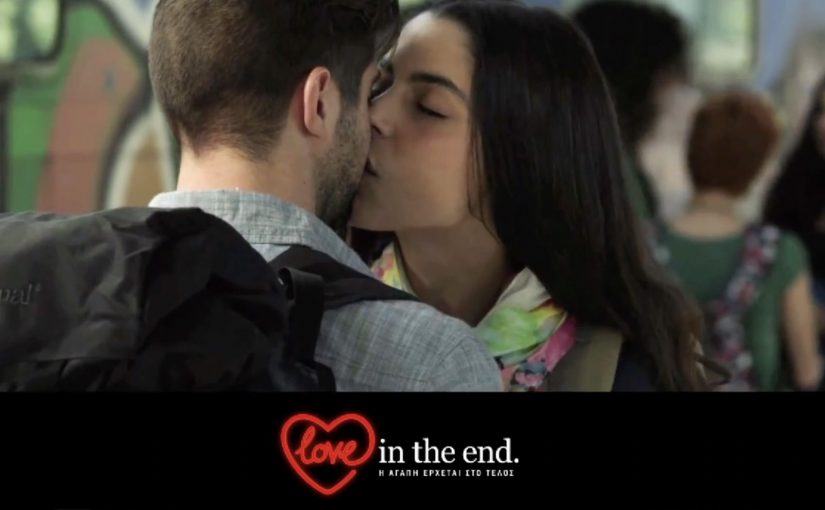
Lacta: Love in the End

Lacta, a leading chocolate brand in Greece, has been creating innovative film content since 2009 around its strategy of being a symbol for the sweetness of love.

For this installment, Lacta invited fans to submit their stories of unfulfilled love, with the promise to give them the happy end they never had. On the cinema screen.

Finally three stories formed the basis of a film screenplay, entitled “Love in the end”, that was released on Valentine’s Day 2013. A transmedia campaign promoted the film and it became a big hit with audiences in Greece. Here, transmedia means connected teasers and social storytelling across channels that all build anticipation for the same release.

From real stories to a cinema-screen happy end

The mechanism is an audience-to-cinema pipeline. Collect true stories of unfulfilled love, select a small number that can carry a broader narrative, adapt them into a screenplay, then build anticipation through connected channels so the audience feels ownership before opening night. The real question is whether a brand can turn private emotion into a public release without draining it of authenticity. That structure works because early participation creates emotional investment before release, so the opening feels like a shared payoff rather than a pushed campaign.

In European FMCG branded entertainment, this kind of storytelling works best when participation is a source of meaning, not just a source of reach.

Why this lands

This works because it makes the brand the enabler, not the author. The stronger strategic move is to let audience truth carry the emotion and keep the brand in the enabling role. Lacta does not just “tell a love story”. It invites vulnerability, then pays it back with a public resolution in a culturally heavyweight format. The cinema.

Extractable takeaway: If you want a branded film to feel earned, start with real human input, curate hard, and give the audience a clear public moment to rally around, so anticipation becomes part of the product.

The results the campaign reported

Campaign reporting stated that 17% of the Greek internet population saw the online teasers, generating 700,000 views and hundreds of rave comments.

Reported social momentum was also strong. Lacta’s Facebook fans increased by 100,000, making its Facebook page the biggest for any brand in Greece at the time, with 650,000 fans.

On release, the film was described as having the biggest opening night for any Greek movie in the last five years, with more than 75% of all movie tickets being sold for it.

Here are the past film based campaigns

What to borrow from Lacta’s film playbook

  • Use a human intake. Real stories create emotional permission that scripted copy rarely earns.
  • Curate into a single release. Selection and adaptation turn raw submissions into a coherent film people can anticipate.
  • Build anticipation with episodic crumbs. Teasers and social updates make a film feel like a season.
  • Anchor to a calendar moment. Valentine’s Day creates a natural reason to care now.

A few fast answers before you act

What is “Love in the end”?

It’s a Lacta branded-entertainment film built from fan-submitted stories of unfulfilled love, adapted into a screenplay and released on Valentine’s Day 2013.

What does “transmedia campaign” mean in this case?

It means the film was promoted through multiple connected channels using teasers and social storytelling to build anticipation before the main release.

What results were reported for the online teasers?

Reported results said 17% of the Greek internet population saw the teasers, producing 700,000 views and hundreds of positive comments.

What results were reported for Facebook growth?

Reported results said Lacta gained 100,000 new fans, reaching 650,000 fans and becoming the biggest brand page in Greece at the time.

What was reported about opening night?

The film was described as the biggest opening night for a Greek movie in the last five years, with more than 75% of all movie tickets sold for it.
Lacta: Love Messages on Real Bars

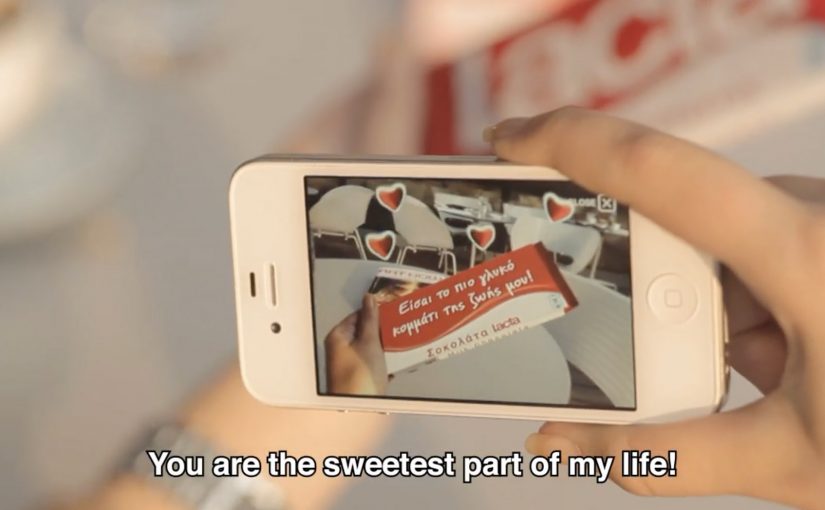
OgilvyOne Athens created another innovative campaign for Lacta Chocolate. This time, people write their own love messages and see them appear on real Lacta bars through an augmented reality mobile app.

The twist is that the message is not “published” online first. It is revealed on the physical product when the receiver scans the wrapper with the app, which turns a simple bar of chocolate into a personalized moment.

Click here to view some of the past Lacta Chocolate campaigns that are equally innovative.

How the AR message reveal works

The mechanism is a clean three-step loop. The sender composes a message in the app and chooses who it is for. The receiver is prompted to use the app too, then scans a Lacta bar to reveal the hidden message in augmented reality. Because the reveal depends on scanning the product, the experience is designed to connect emotion and purchase in the same gesture.

In FMCG gifting categories where love and ritual drive preference, adding a personal reveal layer can create differentiation without changing the core product.

Why it lands

It modernizes a familiar behavior, writing something personal on a gift, without losing the physicality of giving chocolate. The message feels private and earned because it only appears when the recipient holds a real bar in their hands and chooses to reveal it. That makes the brand’s role feel like an enabler of intimacy, not an interruption. That works because the product scan turns anticipation into part of the gift, which makes the interaction feel more meaningful than a standard message.

Extractable takeaway: If you want personalization to drive both attention and sales, tie the reveal to a physical trigger. Make the digital layer unlockable only through the product, so the magic moment and the transaction reinforce each other.

What Lacta is really optimizing for

The real question is how to make personalization pull product demand instead of floating as a nice digital extra.

This is built to turn gifting into repeatable behavior. One person sends a message, another person downloads the app, then the product becomes the key that unlocks the experience. That creates a loop that can scale through relationships rather than through media weight alone.

The strongest strategic choice here is keeping the chocolate bar as the gate to the experience, not just the branded wrapper around it.

What to steal for your own packaging-led digital work

  • Use the pack as the trigger. If the wrapper is the marker, the product stays central.
  • Make the reveal the reward. The moment of discovery is what people remember and retell.
  • Keep the steps simple. Create, send, scan. Anything more complex reduces participation.
  • Design for reciprocity. The best gifting mechanics invite the receiver to respond, not just consume.

A few fast answers before you act

What is the core idea of this Lacta campaign?

An AR mobile app that lets people write a love message that only appears when the recipient scans a real Lacta chocolate bar.

Why does tying the reveal to the physical bar matter?

It keeps the product as the gateway to the experience, so personalization supports purchase rather than replacing it.

What is the main emotional benefit versus a normal digital message?

The message feels more intimate because it is hidden and revealed in a physical moment, not broadcast in a feed.

Why not publish the message online first and then link to the product?

Because that would make the product secondary. Here, the chocolate bar is the access point, so the physical gift remains central to the experience.

What is the biggest execution risk with AR-on-pack ideas?

Friction. If install, scanning, or recognition is unreliable, the magic becomes disappointment. The reveal has to work fast and consistently.

Lacta Chocolate Facebook App

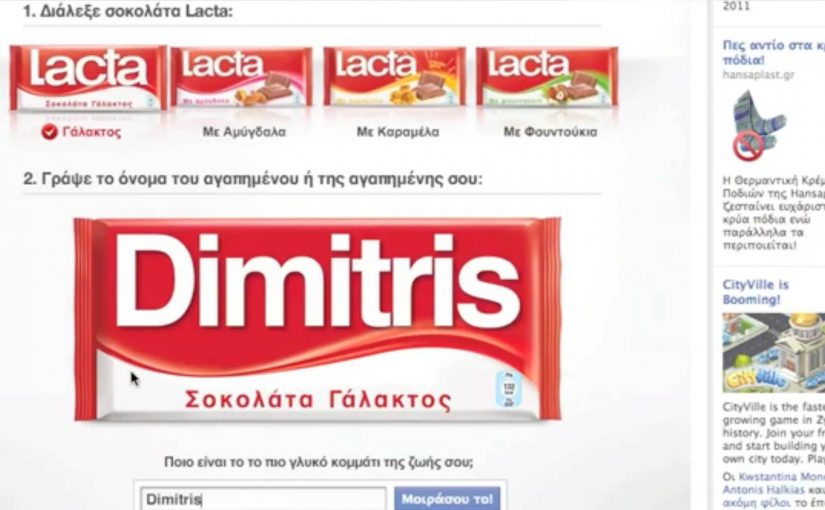
You open the Lacta Chocolate Facebook app, type your loved one’s name, and customise a Lacta wrapper around them. The app matches them to a Lacta flavour, then you push it out as a wall-to-wall post, meaning a highly visible Facebook share that others can see, react to, and copy. In seconds, your “love message” becomes something your friends can respond to and replicate.

The app idea. Turn affection into something people want to publish

The app is built around a simple insight. People naturally compare their loved ones with chocolates. Lacta turns that behaviour into a lightweight creation tool, so the output is personal, visual, and instantly shareable. This works because the branded asset carries the user’s own relationship signal, so posting it feels expressive rather than promotional.

Why some Facebook apps explode while others flop

Plenty of Facebook apps chase scale and get nothing. The real question is why anyone would want to publish the result in the first place. The strongest social tools do not ask people to share a campaign. They give people something about themselves worth sharing.

Extractable takeaway: Social tools spread when the output helps people express identity or affection in public, because the brand travels inside a social signal the user already wants to send.

1) Simplicity

A couple of clicks to get to the app and to the point of action.

2) Shareability

All the standard sharing features that make it easy to spread.

3) Insight

Something a fan might actually use, comment on, and share.

Who builds it, and what the traction looks like

Once again OgilvyOne Athens gets into action and creates an app that lets people customise a Lacta chocolate wrapper in their loved one’s name and compare them to a particular Lacta flavour, before using the wall-to-wall post feature to get the message across.

For Lacta, the business intent is clear. Turn private affection into branded public visibility that fans distribute for free.

In consumer brands using social platforms as lightweight participation channels, this matters because the strongest ideas convert self-expression into distribution without adding friction.

In just over a month the app generates over 150,000+ fans, with thousands using personalised chocolate wrappers as profile pics.

What to steal if you build shareable social tools

  • Make the output the share. The personalised wrapper is the thing people want to publish, not a link to the app.
  • Keep the creation flow brutally short. Name input plus one decision is enough to get to a finished artefact.
  • Use a familiar emotional trigger. Affection and gifting makes the action feel socially safe, not promotional.
  • Design for copying behaviour. Seeing someone else’s personalised wrapper naturally prompts “make mine”.

A few fast answers before you act

What is the Lacta Chocolate Facebook app in one sentence?

It is a simple Facebook app that lets you personalise a Lacta wrapper with a loved one’s name, match them to a flavour, and share it as a wall-to-wall post.

Why does this app spread?

Because the output is personal and visual, the creation flow is fast, and the sharing mechanic is built into the final step.

What are the three success factors highlighted here?

Simplicity, shareability, and a real insight that people actually want to express publicly.

What is the business value behind the interaction?

It turns a private affection signal into branded public visibility, so distribution happens through what users already want to share.

What is the key execution lesson to copy?

Make the “thing people share” the natural end product of the interaction, not an optional add-on after the fact.