
McDonald’s: Adult Playland in Sydney

A Playland built for adults, not kids

In order to awaken the inner child in McDonald’s adult consumers, McDonald’s and DDB Sydney built an adult sized Playland in the middle of Sydney.

Supersizing the familiar to make it feel new again

The mechanism is physical and immediate. Take an icon people associate with childhood, then rebuild it at adult scale and put it directly in the path of commuters. It is not a message about fun. It is fun, placed in public, with no explanation required.

In Australian CBD (central business district) commuter culture, a surprising public installation can interrupt routine and create instant permission to behave differently for a moment.

The real question is whether you can give adults permission to participate without making them feel childish.

Why it lands: it removes the awkwardness of “acting like a kid”

Adults do not need to be convinced that play is enjoyable. They need permission. By making the Playland explicitly adult-sized and placing it in the city centre, the brand turns nostalgia into a socially acceptable break from routine.

Extractable takeaway: When adults hesitate, design the environment so participation feels socially legitimate, not self-conscious.

The business intent: rebuild emotional closeness through participation

This is a reconnection play, meaning it is designed to rebuild emotional closeness through participation rather than persuasion. This is the better move than a nostalgia message when you need adults to act in public. Instead of asking adults to remember McDonald’s, it gives them a shared experience they can literally step into, then ties that memory back to the brand.

Since the time of the launch in March, McDonald’s reported that more than 300 people have taken advantage of this playground on a daily basis and engaged with McDonald’s in a way they had not for years.

Design moves that get adults to play in public

  • Use a recognisable icon. Familiarity lowers the barrier to participation.
  • Change scale to change behaviour. Adult-sizing makes the experience feel legitimate, not childish.
  • Place it where routine is strongest. The contrast is what creates attention and talk value.
  • Make the experience the proof. Participation creates memory faster than any claim can.

A few fast answers before you act

What did McDonald’s build here?

An adult-sized Playland installation in central Sydney, designed to let adults play in a familiar McDonald’s-style playground environment.

What is the core mechanism?

Rebuild a childhood icon at adult scale and place it directly in the path of commuters. The experience is the message, with no explanation required.

Why does it work psychologically?

Adults do not need to be convinced that play is fun. They need permission. Adult-sizing plus public placement makes participation socially acceptable.

What business intent does it serve?

Rebuild emotional closeness through participation. A shared, physical experience creates memory and talk value that a standard campaign claim cannot.

What is the most transferable takeaway?

If you want real engagement, put a recognisable, low-friction action in a high-routine place, and let participation do the persuasion.
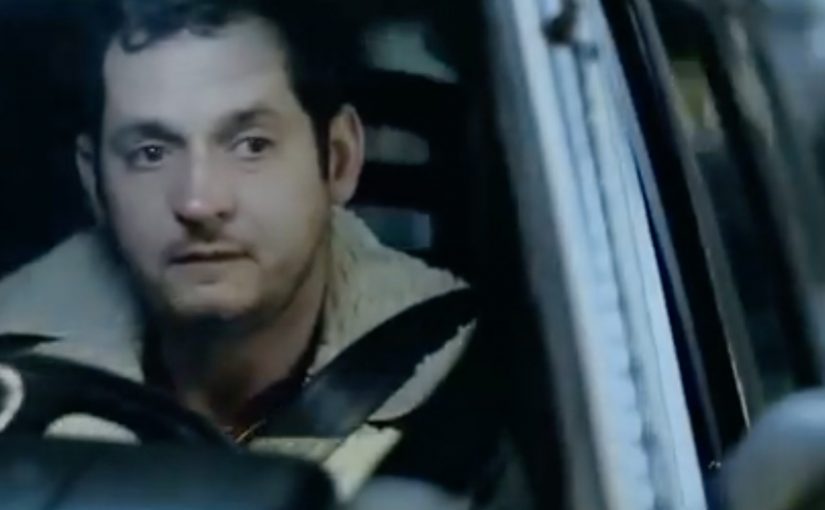
McDonald’s: Sleeping Baby

Exhausted new fathers count on McDonald’s and they will appreciate this nicely crafted McDonald’s spot by TBWA\Chiat\Day.

How the spot works

The real question is how you make the brand feel helpful in a fragile moment, without turning the scene into an ad.

The mechanism is a single, quiet objective. Keep the baby asleep. Every beat protects that constraint, which is why the brand can show up as the solution without needing to explain itself. This is strong work because it keeps the human tension in charge and makes the brand the enabler, not the headline. By “disciplined” execution, I mean no extra jokes, no explaining, and no sudden volume spikes that break the reality of the moment.

In mass-market consumer categories, small “life moment” stories like this can make a brand feel dependable without shouting.

Why this spot lands

The premise is instantly recognizable, and the execution stays disciplined. It leans on a real-life tension. Keep the baby asleep. Get what you need. Do not make a sound. That restraint is exactly what makes the humor feel earned instead of forced.

Extractable takeaway: When the audience already understands the tension, your job is to protect it. Hold back the message, and the brand benefit will feel discovered, not delivered.

  • Relatable truth first. The situation does the storytelling heavy lifting.
  • Craft over noise. The pacing and detail make the moment feel real.
  • Brand as helpful, not loud. McDonald’s shows up as the dependable solution in a small life moment.

What to take from it

If you can anchor the story in a lived-in human moment, you do not need to over-explain the product role. The viewer connects the dots, and the brand benefit feels natural rather than “sold”.

  • Pick one objective. Build every beat around a single constraint your audience instantly feels.
  • Let the brand enable. Show the brand solving the moment, not narrating its value.
  • Use restraint deliberately. Less copy and fewer “extra” jokes can increase believability and replay value.

A few fast answers before you act

What is the “McDonald’s: Sleeping Baby” spot?

It is a McDonald’s commercial credited to TBWA\Chiat\Day, built around the reality of exhausted fathers and the tension of not waking a sleeping baby.

Why is it effective advertising?

It starts from a universal situation and keeps the execution restrained, so the humor feels authentic and the brand role feels earned.

What is the transferable lesson?

Find one human truth your audience instantly recognizes, then let craft and timing deliver the payoff instead of relying on heavy messaging.

How does the brand show up without being intrusive?

By acting as the reliable enabler of a small win in the viewer’s day, rather than forcing a big claim or a loud punchline.

Who created the spot?

It is credited to TBWA\Chiat\Day.

McDonald’s digital billboard game

Menu items bounce and fly through a digital billboard screen. If you are quick enough to capture one in a cell-phone picture, it is yours for free at the nearest McDonald’s.

The idea. Speed turns attention into reward

DDB Stockholm creates a clever and simple interactive billboard game for McDonald’s that turns a familiar format, the outdoor ad, into a real-time challenge with a tangible payoff.

Here, “interactive” means the challenge happens on the billboard itself and the phone is only the capture tool.

The real question is how you turn a two-second glance at out-of-home into an action people will actually complete.

This is the right kind of interactivity for out-of-home: visible, no-download, and tied to local redemption.

How it works. Capture the moment

  • Menu items animate across the billboard screen.
  • People try to “catch” an item by snapping it with their phone camera at the right moment.
  • The captured item becomes the proof that unlocks the free product at the nearest McDonald’s.

In high-traffic urban environments, out-of-home works best when the interaction is obvious in seconds and the reward is immediately redeemable nearby.

Why it works. A physical moment that feels earned

The mechanic is immediate and legible from a distance. It is also fair in a way people understand. If you are fast, you win. That converts passive viewing into active participation without asking anyone to download an app or learn a new interface.

Extractable takeaway: If the challenge is visible from a distance and the payoff is local and immediate, people will opt into participation without onboarding.

Moves to borrow for your next OOH play

  • Make the rule self-explanatory. Someone walking by should understand how to win without instruction.
  • Use the phone as proof, not as the product. No app, no setup, no learning curve.
  • Close the loop locally. Tie the win to a nearby redemption so the moment turns into footfall.

A few fast answers before you act

What is McDonald’s digital billboard game?

An interactive billboard activation where animated menu items move across the screen and people try to capture one with a phone photo to win it.

What do you have to do to win?

Take a cell-phone picture fast enough to capture a flying menu item on the billboard.

What do you get if you succeed?

The captured item is redeemed for free at the nearest McDonald’s.

Who creates the activation?

DDB Stockholm.

What is the transferable pattern?

Turn a high-reach format into a simple, visible challenge. Then reward the behavior with an immediate, local redemption loop.