McDonald’s Happy Table

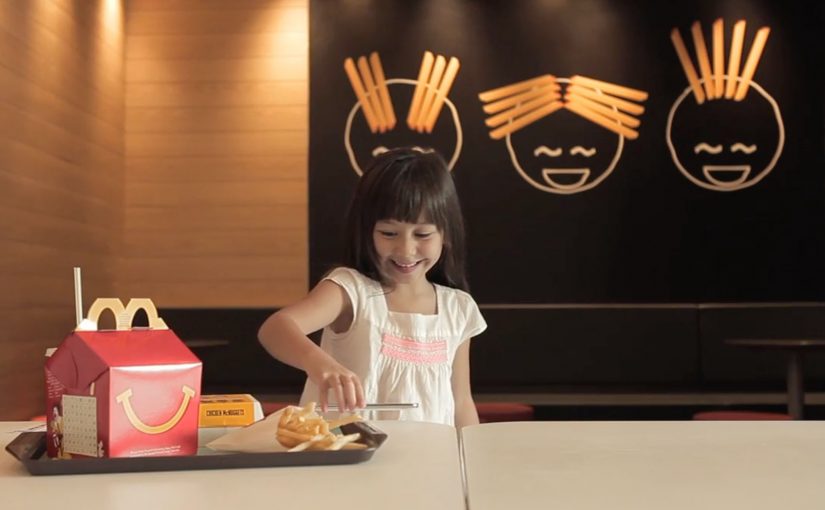
A child sits down in a McDonald’s Singapore restaurant, opens the McParty Run app on an NFC-enabled smartphone, and places the phone on a marked spot on the table. The tabletop immediately becomes the playfield. A McDonaldLand-style racing track appears around the phone, and the whole table turns into a shared game surface.

The idea. Turning a restaurant table into play

McDonald’s Singapore introduces Happy Table as an interactive dining concept that converts an ordinary in-store table into a digital playground for kids. Instead of handing out a traditional toy, the experience uses mobile technology to project a short, location-based game onto the table itself.

How it works. McParty Run plus NFC

The mechanic is simple and deliberately physical:

  • Customers download the McParty Run mobile app.
  • The phone needs to be NFC-enabled.
  • The customer places the phone on a designated table inside the outlet.
  • Once the table detects the device, the tabletop becomes a virtual racing track, with animated characters and objects appearing around the surface.

Kids move around the table to control the game, racing to collect burgers and fries while avoiding familiar McDonald’s characters like the Hamburglar and Captain Crook. The table is the center of interaction, so the gameplay is naturally shared and social.

Why this is interesting in-store

Happy Table shifts the experience away from passive, individual screen time and towards a shared activity that fits the restaurant context. The game is anchored to the location and to a physical object. The table. It is a small but meaningful change in how digital play shows up in a family meal. The table becomes the “device,” and the phone becomes the trigger.

What brands can take from this pattern

A few practical takeaways that translate beyond fast food:

  • Make the physical environment do the work. When the venue becomes the interface, the digital layer feels less like an add-on.
  • Design for group behavior, not solo attention. A shared surface encourages participation and reduces the “everyone disappears into their own screen” effect.
  • Keep it short and contextual. A quick, playful moment that fits waiting time is more natural than a long-form experience that competes with eating.
  • Use familiar brand assets in motion. McDonald’s characters and food cues make the experience instantly legible to kids.

Happy Table is created by the DDB Group and runs as a pilot at select outlets across Singapore.


A few fast answers before you act

What is McDonald’s Happy Table?
An interactive dining concept in McDonald’s Singapore that turns an in-store table into a digital game surface for kids.

What do you need to use it?
The McParty Run app and an NFC-enabled smartphone, placed on a designated table inside the outlet.

What is the gameplay?
A McDonaldLand-style racing experience where kids move around the table to collect burgers and fries while avoiding characters such as the Hamburglar and Captain Crook.

What makes it different from a typical mobile game?
The table is the shared interface. The experience is designed to be physical and social, centered on a real-world location and group play.

Where is it running?
As a pilot in select McDonald’s outlets across Singapore.

Coca-Cola: Personal Road

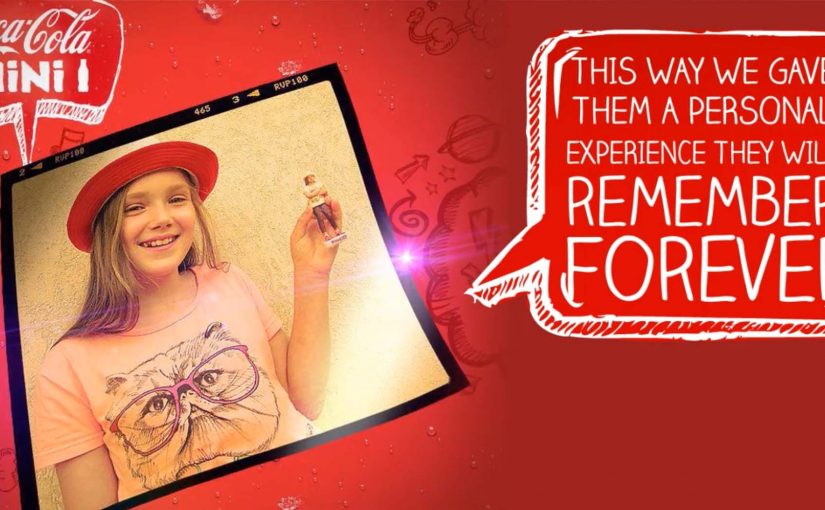
Coca-Cola has an ongoing global campaign that allows consumers to personalise bottles and cans…

Enjoy a Coke with Sunil

Building on the success of this campaign Coca-Cola Israel decided to take the idea further with personalised billboards.

A mobile app was developed where consumers could enter their name. Then using geo-fence technology, the Coca-Cola billboard displayed the name when it was approached. The consumer at the same moment also received a message on their smartphone notifying them that their name was up there.

Since its launch the app has reached 100,000 downloads and is currently ranked #1 in Israel’s app store.

Why this extension makes sense

  • It keeps the personalization promise. The name is not only on the package. It shows up in the world around you.
  • Location makes it feel “for me”. The moment you approach the billboard, the experience becomes uniquely yours.
  • Mobile closes the loop. The phone notification confirms the moment and turns it into something you can share.

The reusable pattern

Start with a personalization mechanic people already understand. Then add a single “surprise and confirm” moment in the real world, powered by location and a simple mobile action.


A few fast answers before you act

What is Coca-Cola “Personal Road”?

It is a Coca-Cola Israel extension of the personalised-name campaign that uses a mobile app and geofencing so a billboard displays your name as you approach, and your phone notifies you.

How does the billboard know when to show a name?

The app uses geo-fence technology to detect proximity, then triggers the personalised billboard moment when the user approaches.

Why pair the billboard moment with a smartphone message?

The message confirms what just happened and makes it easy for the consumer to capture and share the experience.

What is the key takeaway for location-based campaigns?

Make the rule simple and the payoff instant: one input from the consumer, one visible personalised output, and one mobile confirmation that seals the memory.

Coca-Cola: Chok Chok

Mobile and creative thinking can come together to create really compelling marketing campaigns. In this example, Coca-Cola Hong Kong created a “Chok Chok” mobile app that turned the viewer’s smartphone into a remote control for their TV ad.

To collect the Coca-Cola bottle caps that appeared on the TV screen, viewers had to swing their phones when the ad came on. Those who successfully managed to swing and collect were instantly rewarded with prizes that included cars, sports apparel, credit card spend value, travel coupons and movie tickets.

As a result the campaign was seen by 9 million people and the app got over 380,000 downloads.

For those wondering, the bottle cap collection was enabled through the audio signal of the ad, which triggered the application and synced the user’s motion with the ad. The accelerometer in the phone was also used to assess the quality of the motion. Together they were used to catch the bottle caps virtually.

However as far as I know, Honda in the UK was the first to pioneer this kind of an interactive TV ad, even though it did not receive results like Coca-Cola.

Why this works so well

  • Viewer control is the hook. The ad is not just watched. It is “played” through a simple physical action.
  • Timing creates urgency. You have to act when the ad is live, which turns media time into a moment of participation.
  • Feedback is immediate. You swing, you collect, you win. The loop is easy to understand and easy to repeat.

The reusable pattern

Start with a single, unmistakable behavior the viewer can do in one second. Then use a reliable synchronization trigger (here, the ad’s audio) and a sensor input (here, the accelerometer) to connect the phone action to what happens on screen.


A few fast answers before you act

What is Coca-Cola “Chok Chok”?

It is a Coca-Cola Hong Kong mobile app that synchronizes with a TV ad and lets viewers swing their phones to collect on-screen bottle caps for prizes.

How did the app sync with the TV ad?

The app used the audio signal of the ad as the trigger, then aligned the on-screen moments with the user’s motion so “collection” happened at the right time.

What role did the accelerometer play?

The accelerometer assessed the quality of the swinging motion, helping determine whether the viewer “caught” the bottle caps virtually.

What is the main takeaway for interactive TV and second-screen work?

Make participation effortless, tie it to a tight timing window, and reward the action immediately so the viewer feels impact in the moment.