
T-Mobile ‘Tell Me Why’: The Live-Retail Play

T-Mobile ‘Tell Me Why’: The Live-Retail Play

A boy-band button in Times Square. And a very deliberate question

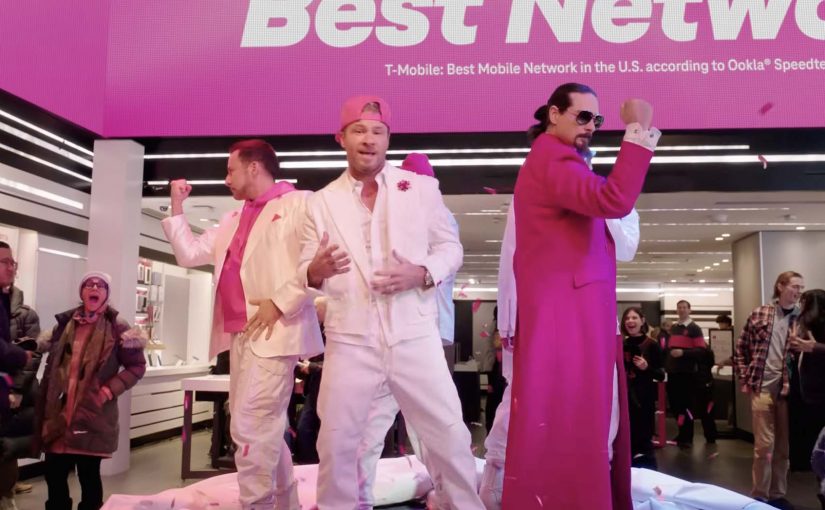
T-Mobile’s Super Bowl LX spot opens inside its Times Square Signature Store, surrounded by real customers, with a plain prompt on-screen: “Why is it better over here?” Then someone hits a big red button, the Backstreet Boys appear, and the “answer” arrives as a reimagined performance of I Want It That Way, with cameos from Druski, mgk (Machine Gun Kelly: Colson Baker) and Pierson Fodé. The commercial is credited to Panay Films and was slated to run as a :60 in the second quarter of the February 8, 2026 Big Game broadcast.

What matters is not the celebrity stack. It is the structural move: a telecom brand turning a comparison claim into a moment people can watch happening to other people.

How “Tell me why” turns a service claim into a stageable event

The core mechanic is simple on purpose. A single question frames the ad like a customer challenge, not a brand monologue. A physical trigger, the button, converts messaging into cause and effect. A live performance inside a real retail space supplies social proof because the audience is already there and reacting in-frame.

You can call this retail-as-stage. By retail-as-stage, I mean a physical store that functions as content set, event venue, and credibility engine at the same time.

When you turn a service comparison into a witnessed moment in a real store, with real reactions, belief shifts from “do I trust this claim?” to “I just saw why it’s true.”

The real question is how you make an invisible network promise feel provable in the moment, not just plausible in a chart.

The fastest path to belief is to turn an invisible network promise into a shared, watchable moment.

In telecom marketing, most value is felt after purchase, so “proof” has to be engineered before the contract is signed.

Why the nostalgia remix works, and why it is not just “a pop-culture hook”

Yes, it is familiar. But the stronger psychological play is fluency. A chorus people can finish in their head reduces processing effort, then that freed-up attention gets spent on the new lyric payload. The button adds perceived transparency. When a brand invites “why,” then stages an immediate “answer,” it signals it can withstand scrutiny.

Extractable takeaway: If your offering is hard to evaluate because it is invisible, abstract, or overloaded with fine print, stop trying to explain it better. Engineer a moment where the audience can watch someone else receive the answer in real time, because observed reactions become the credibility layer your claims cannot earn on their own.

Rewritten lyrics are inherently risky because they can feel like a jingle wearing a costume. This spot reduces that risk by grounding the musical in a real place, with real customers, and a visible trigger that creates a story arc worth retelling.

What T-Mobile is really trying to shift in 60 seconds

Look past the network line and you see a category-level repositioning attempt.

What makes this commercially interesting is that the live-store moment only becomes a scalable growth move when it connects to offer architecture, CRM follow-up, owned-channel reuse, and measurement across retail, social, and conversion.

  • From coverage to a value stack. The ad frames the carrier choice as network plus bundled value plus experience, not just bars and price.
  • From switching pain to switching ease. The broader message is “make it easy to reconsider,” while the spot’s job is to create emotional permission to do so.
  • From brand assertion to customer interrogation. Opening with “why” signals the brand is answering scrutiny, which is a more credible posture in a high-skepticism category.

The Europe echo: making a network promise watchable

It should feel familiar. This “make connection visible” move has shown up before, by turning a network promise into a shared public moment you can actually witness.

Back in 2011, Deutsche Telekom executed a multi-city Christmas activation where Mariah Carey appeared as a hologram simultaneously across five European countries, with audiences linked across cities to experience the same performance at once.

The shared mechanic across both campaigns is consistent.

The real enterprise challenge is not staging one spectacular moment. It is building a repeatable format that local markets, retail teams, and channel owners can deploy without reinventing the proof mechanism each time.

  • Make the promise tangible by creating a collective moment that can only exist because connection exists.
  • Use a universally recognizable song layer to synchronize emotion across audiences.
  • Build a reveal structure so the audience has a story arc worth retelling.

For the full Germany case, see Deutsche Telekom’s hologram Christmas surprise.

Steal the retail-as-stage operating pattern for hard-to-prove categories

  • Start with a question the customer would actually ask. Not a tagline. A test.
  • Build one physical trigger. Buttons, switches, taps, scans. One action that says “watch this.”
  • Make the audience part of the evidence, then instrument it. Capture the proof moment so it can be redistributed across owned and paid channels, and tied to downstream conversion or switching intent.
  • Use music as memory infrastructure, not decoration. A familiar melody can carry new meaning fast.
  • Design for retellability. If it is easy to summarize, it is easier to spread.

A few fast answers before you act

What is the big idea behind “Tell Me Why” in one line?

It turns a telecom comparison claim into a witnessed moment in a real retail setting, using a familiar chorus and real-customer reactions to make “why” feel observed rather than asserted.

What is the core mechanic that makes it work?

A single customer-style question plus a physical trigger, the button, that immediately produces the “answer” as a performance, with the crowd reaction acting as the credibility layer.

Why does the Backstreet Boys remix outperform a normal benefits list?

Because audiences already encode the melody automatically. The rewritten chorus becomes a fast memory container for new information, and the live-style staging reduces skepticism.

What is the strategic intent beyond awareness?

To shift evaluation from “coverage and price” toward “network plus value plus experience,” and to lower switching resistance by making reconsideration feel emotionally safe.

What is the transferable lesson from the Deutsche Telekom hologram example?

If your product promise is invisible, create a synchronized public moment that can only exist because your promise exists, then let the shared reaction do the persuasion work.
Netflix: The Friendly Pre-Roll Campaign

Netflix: The Friendly Pre-Roll Campaign

How do you make a sitcom like Friends, which went off the air 12 years ago, a year before YouTube even existed, seem relevant to online video viewers today.

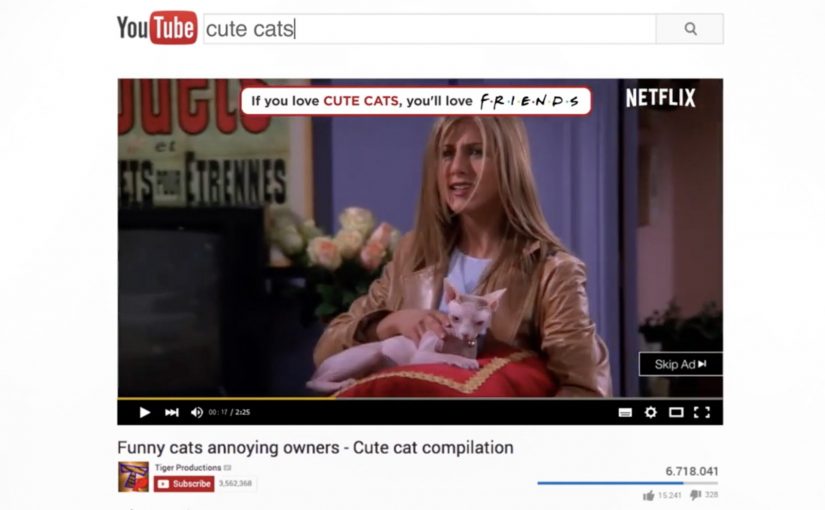
To promote the ability to stream all 10 seasons, Netflix launched a nostalgic pre-roll campaign built on a simple insight: no matter what you search for or watch, there is almost always a Friends moment that relates to it. The execution was described as tagging thousands of videos so that the pre-roll you see matches the context of what you are about to watch.

Contextual nostalgia, delivered as a punchline

The mechanism is a library-plus-matching system. Take a deep archive of instantly recognizable scenes. Build a mapping between common viewing contexts and a specific Friends clip that “fits”. Then serve those clips as short pre-rolls in front of the videos people already watch, so the relevance lands before the viewer has time to skip.

In subscription streaming marketing, making older catalog content feel culturally current often depends on matching the show to what people already care about in the moment.

The real question is whether older catalog content can feel native to what the viewer is already doing right now. The stronger strategic move here is the match, not the memory.

Why it lands

This works because it flips pre-roll from interruption into payoff. Instead of asking viewers to care about Friends, it proves the show’s range by meeting them inside their existing interests. The result feels like the platform “gets you”, and the show feels less like nostalgia and more like a living reference library.

Extractable takeaway: If you can match your IP to the viewer’s current context fast and accurately, you turn targeting into entertainment. Entertainment earns attention where generic pre-roll loses it.

What this teaches about contextual catalog promotion

  • Build a mapping, not a montage: relevance comes from one perfect clip, not from throwing many at the viewer.
  • Exploit depth as a feature: long-running shows have breadth. Treat that breadth like a targeting asset.
  • Design for the skip button: the first seconds must communicate “this is for you” immediately.
  • Let the idea do the explaining: the best contextual ads are self-evident without a voiceover.
  • Use nostalgia as utility: the memory hit matters, but the contextual “fit” is what makes it feel current.

A few fast answers before you act

What is “The Friendly Pre-Roll Campaign”?

It is a Netflix campaign that uses short Friends scenes as pre-roll ads, matched to the context of what people are searching for or about to watch.

Why use Friends for this?

Because the show has a huge library of recognizable moments across everyday topics, which makes contextual matching feel natural rather than forced.

What makes this different from uploading clips to a channel?

The value is in placement and matching. The clip appears where the viewer already is, and it relates to what they are doing right now.

What is the core marketing job it solves?

It makes older content feel current by connecting it to today’s viewing contexts, instead of relying on “remember this” nostalgia alone.

What is the biggest execution risk?

Bad matching. If the clip feels irrelevant, the magic collapses and the pre-roll becomes just another interruption.

Chevrolet: Then & Now

Chevrolet: Then & Now

As a way to celebrate turning 100, Chevy creates a spot titled “Then & Now” that shows people staying connected to iconic moments, locations, and Chevrolet vehicles as if those moments are with them right there, right now.

A simple device that does the heavy lifting

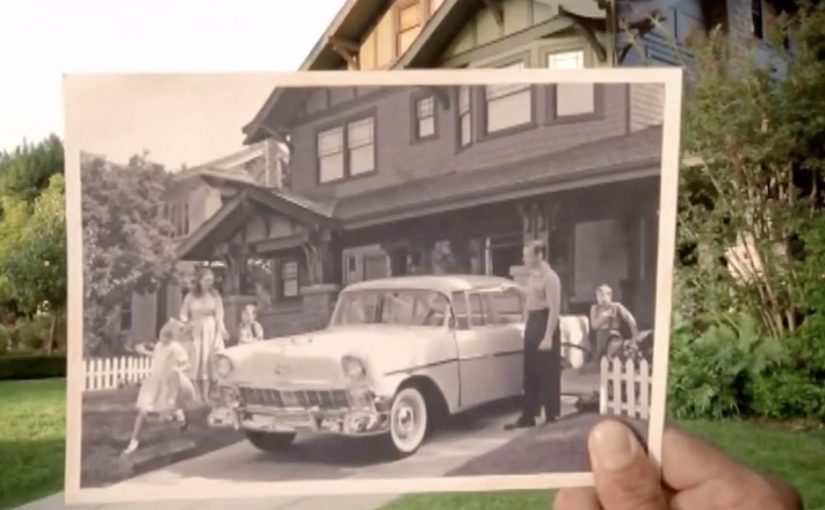
The mechanism is beautifully restrained: vintage photographs of Chevrolets and the people around them are held up to the camera in the exact same locations today, aligning past and present into a single frame.

In automotive heritage storytelling, the fastest way to communicate longevity is to make time visible with a device that needs almost no explanation.

In heritage-heavy categories, anniversary storytelling lands best when it helps the audience locate their own memories in the present, not when it asks them to admire the brand.

Why it lands emotionally

The film does not argue that the brand matters. It shows that memory matters, and lets the vehicles sit naturally inside that truth. The hand-held photos are the emotional bridge. They make nostalgia feel personal, not corporate.

Extractable takeaway: If you can make time visible with one repeatable in-scene device, you can earn nostalgia without turning the work into a corporate victory lap.

The business intent behind the sentiment

A centennial can easily become self-congratulation. This avoids that trap by focusing on the audience’s continuity. The brand is the thread that runs through people’s lives, places, and rituals, rather than the subject demanding applause. The real question is whether your anniversary work makes the audience feel time passing in their own life, not whether it proves you have been around. Anniversary work should prioritize the audience’s continuity over brand self-congratulation.

Transferable moves for anniversary work

  • Choose one visual metaphor and commit. One repeatable device beats a collage of “greatest hits”.
  • Let people be the hero. Heritage feels earned when the customer’s life is the storyline.
  • Use restraint as a quality signal. Minimal copy and slow pacing can make the work feel more truthful.
  • Anchor the past in the present. Showing the same place now keeps nostalgia from drifting into museum mode.

A few fast answers before you act

What is “Then & Now” in one line?

A centennial film that aligns vintage Chevrolet photos with the same real-world locations today to show continuity across generations.

What is the core creative mechanism?

Hand-held historical photographs matched precisely to present-day scenes, creating a single frame that contains both time periods.

Why does this approach work for anniversary advertising?

It makes time visible instantly, and it ties the brand to lived memory rather than to corporate milestones.

What should you avoid in centennial storytelling?

Avoid making the milestone the hero. If the audience cannot see their own continuity in the work, the film risks reading like self-congratulation.

What is the most transferable takeaway?

If you can show the passage of time with one simple, repeatable device, you can tell a heritage story without overexplaining it.