Coca-Cola: Slurp and Crunch Cinema Spots

Cinema etiquette, packaged as entertainment

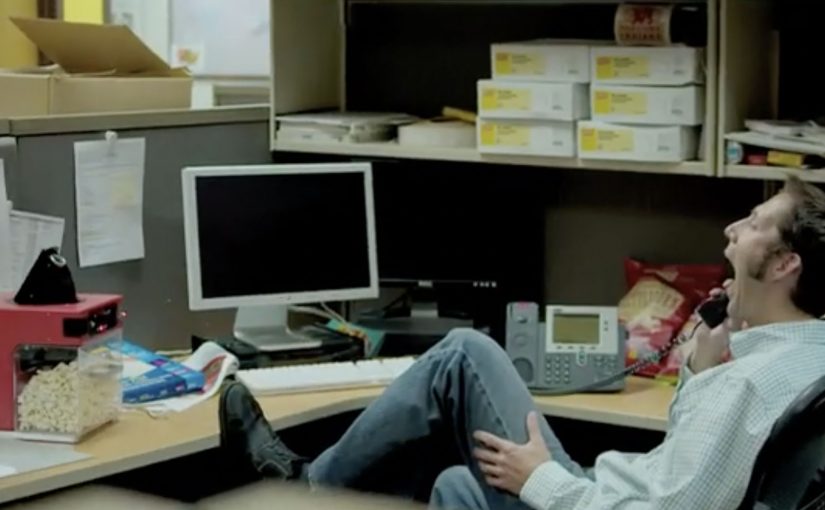
Coca-Cola, with the help of Saatchi & Saatchi Denmark and M2Film, created a two-spot public service campaign that highlighted the annoyance of noisy slurps and crunching of refreshments during public viewing at the cinema.

Here, “public service” means a brand-funded reminder about shared cinema etiquette rather than a product offer.

Coca-Cola Gangster

Coca-Cola Stableboy

The move: make the sound the villain

Everyone knows the noise. The spots take that tiny irritation and push it to the foreground, so the whole room shares the same reaction at the same time. By making the sound the villain, the films turn annoyance into an instant, shared norm signal.

In shared public settings like cinemas, etiquette is enforced socially, so in-context cues matter more than abstract rules.

The real question is whether you can correct the behavior in the moment without sounding like you are policing it.

Why it works where it plays

Because it runs in the cinema. The reminder lands in the exact environment where people can immediately correct themselves. It feels like a social cue, not a rule.

Extractable takeaway: When you want voluntary behavior change, put the cue inside the moment of action and make it emotionally legible to everyone in the room.

The behavioral job

Highlight how slurps and crunching can ruin public cinema viewing, and nudge people toward better behavior without preaching.

A short in-context spot like this beats a generic reminder for etiquette nudges because it recruits the audience, not just the offender.

Steal the nudge

  • Micro-irritation: Pick a universal micro-irritation and dramatize it fast.
  • In-context delivery: Deliver the message in-context, where relevance is unavoidable.
  • Watchable change: Use story and character so behavior change stays watchable.

A few fast answers before you act

What was this Coca-Cola cinema campaign?

A two-spot campaign designed to highlight how loud slurping and crunchy snacking can annoy other people during a movie.

Who created the campaign?

The post credits Saatchi & Saatchi Denmark and M2Film alongside Coca-Cola.

How many spots were there and what were they called?

Two spots. “Coca-Cola Gangster” and “Coca-Cola Stableboy.”

Where was this intended to run?

In a cinema context, aimed at audiences during public film viewing.
KLM: Disney’s Planes Pre-Screening on a Plane

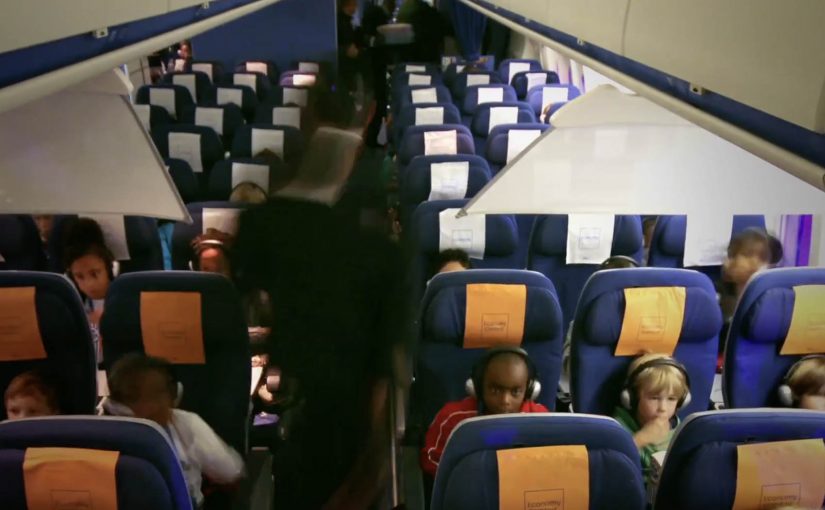
On October 2, KLM gave 300 kids an experience of a lifetime. The lucky kids were invited to a spectacular pre-screening of the new Disney film Planes.

To make the event unforgettable, KLM held the pre-screening on an actual airplane, then used timed special effects to recreate the world of Planes in a live setting around the aircraft. KLM described it as the world’s first movie experience in and around a plane.

A movie theatre that already has wings

The clever bit is not “screening a film on a plane”. That is normal. The clever bit is synchronizing the environment with the story so the audience feels like the film has leaked into real life.

In airline and travel brands, immersive launches work best when the setting is native to the promise you sell.

The real question is whether your launch idea could only happen in the world your brand already owns.

This is worth copying because it makes the brand story feel inevitable rather than advertised.

The most memorable launches turn passive viewing into a physical moment that people can retell in one sentence.

Why it sticks

It sticks because the story, the setting, and the timed effects all reinforce the same feeling, and the audience experiences it rather than just watching it.

Extractable takeaway: Immersive brand experiences land when the environment is part of the content. If you can make the setting behave like the story, you create a memory people repeat for you.

It collapses brand and story into one setting. An airline is already a stage for travel narratives. Parking a film about aircraft inside a real aircraft makes the connection immediate.

It treats immersion as service, not spectacle. The effects are not there to show off production budget. They are there to make the kids feel looked after and included in something that cannot be repeated at home.

It earns conversation because the headline is simple. “They screened Planes on a plane” is a line anyone can pass on. The live effects turn that line into a story worth sharing.

Steal the sync-moment playbook

  • Pick a venue that makes your message inevitable. The location should do half the explaining before a single word is said.
  • Design “sync moments”. By “sync moments” I mean timed physical cues that match a few key beats so people feel the story, not just watch it.
  • Optimize for retellability. If the concept cannot be summarized in one sentence, it will not travel as earned media.
  • Make the audience the hero. For kids especially, the emotional memory is the product. The brand benefit follows.

A few fast answers before you act

What did KLM actually do here?

They hosted a pre-screening of Disney’s Planes for 300 kids inside a real aircraft and staged timed effects around the plane to mirror moments from the film.

Why is the airplane venue more than a gimmick?

Because it is native to both the brand and the story. It makes the experience feel “only possible with KLM”, which is the point of experiential work.

What makes this different from a normal premiere?

The environment is synchronized to the content, creating immersion. It is closer to live theatre than to a standard screening.

What is the business intent behind an event like this?

To build brand affinity and memorability, especially with families, by creating a high-emotion story people associate with the airline.

What is the most transferable lesson?

Choose a setting that embodies the message, then add a few well-timed sensory cues that turn viewing into a felt experience.

Popcorn Indiana: The Popinator

You say “pop”. A machine swings toward you and launches a single piece of popcorn into your mouth.

Thinkmodo created “The Popinator”, a gadget built as a playful piece of brand content. It is presented as a voice-triggered system that can pinpoint where the spoken word originated in a room, then fire popcorn in that direction. Popcorn is described as being shootable up to 15 feet, and the device is described as intended for indoor use.

How the gag is engineered

The mechanism is deliberately simple to explain. A keyword prompt. Direction finding. A rotating launcher. One kernel per “command”. The build turns a familiar snack habit into a mini spectacle that feels like a “future gadget”, even if you never plan to own one.

In consumer marketing where product messages blur quickly, a physical prop that demonstrates one absurdly clear benefit can generate more talk than another round of feature claims.

Why it lands

It works because it compresses the whole story into a single, repeatable moment. Say the word. Watch the machine react. See the payoff. The format is built for office viewing, quick sharing, and the social proof of “we tried it and it actually did something”.

Extractable takeaway: If you want earned reach fast, create a one-line premise people can test in their heads instantly, then design the payoff so it reads clearly on camera without explanation.

What the brand is really buying

This is not only about popcorn. It is about attention and imagination. The Popinator reframes an everyday product as something playful and engineered, then lets the internet do the distribution work by debating whether the gadget is “real” and how it works. The real question is whether one absurd, repeatable demo can make a commodity snack feel worth talking about. The stronger brand move here is making the behavior memorable, not pretending the hardware is the story.

What to borrow from The Popinator

  • Build a single, legible “demo moment”. One trigger. One reaction. One payoff.
  • Make the prop do the talking. The less narration required, the more shareable the clip becomes.
  • Design for repeat attempts. Repetition is content when the mechanism is satisfying to watch.
  • Let curiosity drive comments. “Is it real” is a distribution engine when handled responsibly.

A few fast answers before you act

What is The Popinator?

A popcorn-launching machine created as brand content, presented as firing kernels toward whoever says the word “pop”.

What is the core mechanism?

A keyword prompt triggers direction-finding, then a rotating launcher fires one kernel toward the sound source.

Was it a real product you could buy?

It is presented as a prototype-style gadget for content. Some coverage from the time frames it as a marketing stunt rather than a commercial device.

Why do “fantasy gadget” videos travel so well?

They borrow the credibility of product demos while delivering entertainment. Viewers share them as a mix of “I want this” and “no way this is real”.

What is the safest reusable lesson for brands?

Turn a mundane product habit into a surprising, visual demonstration that can be explained in one sentence and enjoyed in under a minute.