
Turquoise Cottage: The Buddy Stamp

Turquoise Cottage: The Buddy Stamp

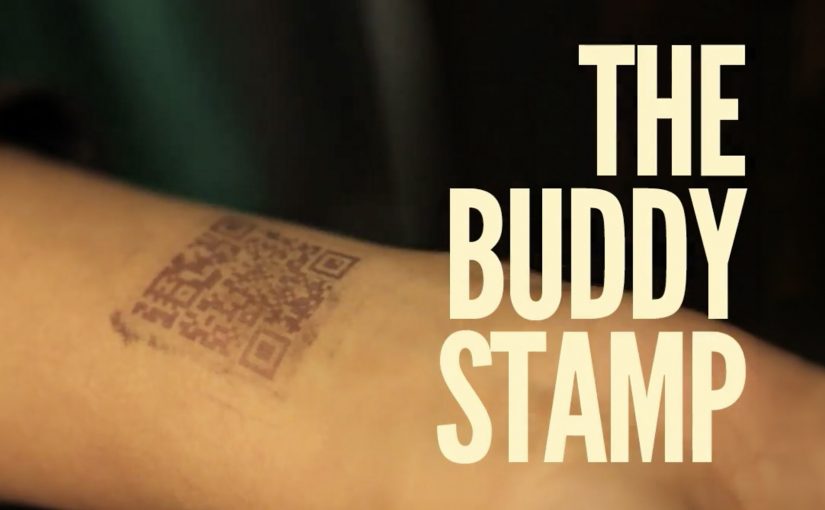
Most nightclubs in India put an admittance stamp on the wrist of their customers. Turquoise Cottage, a nightclub based in Vasant Vihar, New Delhi, was no different. However, with their digital agency, Webchutney, they created what then went on to be coined as “The Buddy Stamp”.

“The Buddy Stamp” was a unique QR code stamp which upon scanning gave customers useful and actionable information depending on the time of night.

A wrist stamp that keeps working after entry

The clever move is that the stamp is not branding. It is a tool. You already have it on you, so the lowest-effort scan becomes a doorway to whatever you need next, without searching, asking staff, or opening a menu.

How the QR code changes by time of night

The stamp routes to different content depending on when it is scanned. Early in the evening it can point to venue offers and drink specials. Later it can switch to practical “get home” help like cab options. It can even pivot the next day into recovery-style tips, which extends the brand’s care beyond the club.

In high-energy hospitality environments, time-based mobile utilities work when they reduce friction at the exact moment the customer needs help.

Why this lands

It respects how nights actually unfold. People do not want a generic microsite when they are out. They want one fast answer that fits the current hour, and they want it without social overhead.

Extractable takeaway: If you already “touch” the customer as part of entry, turn that touchpoint into a changing utility that anticipates the next decision, not just a logo.

What the club and agency are really optimizing

This is experience design disguised as a stamp. It upgrades service without adding staff steps, and it makes responsibility and convenience feel like part of the venue’s personality, not a lecture.

The real question is how a venue can turn a mandatory entry ritual into timely help people will actually use.

What venue teams can steal from this

  • Attach the utility to an unavoidable ritual. Admission is the perfect moment because everyone participates.
  • Use time as the personalization layer. You do not need profiles when the clock predicts needs well enough.
  • Design for the “next 30 minutes”. The best content is the thing people would otherwise ask a friend.
  • Extend care past the venue. Post-night help builds goodwill that outlasts the party.

A few fast answers before you act

What is The Buddy Stamp?

It is a QR code wrist stamp used as a nightclub admission stamp that links to different, practical information depending on the time of night.

What makes it different from a normal QR code poster?

The QR code lives on the customer. That makes it always available, and the time-based switching makes it feel context-aware without asking the user to do anything extra.

Why does “time of night” matter as a design input?

Because needs change predictably across an evening. Offers and discovery matter early. Getting home safely matters late. The best experiences match that rhythm.

What is the transferable pattern for other venues or brands?

Turn an existing physical touchpoint into a dynamic utility. Let one simple scan deliver the most useful next step for the customer’s current situation.

Why is the wrist stamp a better utility surface than a poster?

Because entry already puts it on every guest. That makes the utility universal, immediate, and easy to revisit without asking people to find a sign again.
Here Comes the Fun: QR-Linked Xmas Greeting

Here Comes the Fun: QR-Linked Xmas Greeting

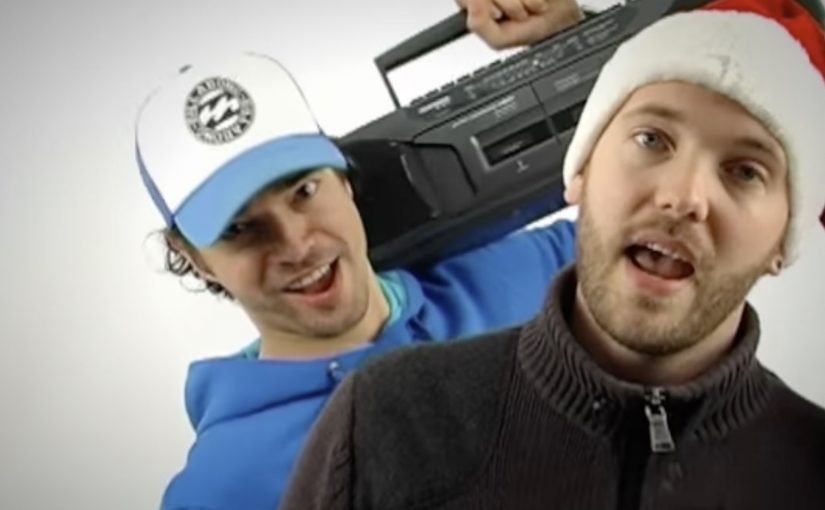
Here is a Christmas video that I helped conceptualize and create for the agency revo in Germany.

The video is linked via a QR code that appears on the Christmas card sent along with an advent wreath.

Print, scan, smile

The mechanic is deliberately lightweight. Here, the mechanic is the interaction design itself: card, scan, then video. A physical card becomes the trigger. The QR code becomes the bridge. The video becomes the payoff. That is enough to turn a seasonal greeting into a small interaction rather than a static message.

In agency relationship marketing, the best holiday touchpoints feel personal and immediate, not like a campaign trying to sell.

The real question is whether a holiday greeting gives people a reason to act, not just a reason to glance and move on. A seasonal greeting works better as a tiny interaction than as a passive branded card.

Why it lands

It works because the scan reward is instant. You do not have to hunt for context or decode instructions. Because the QR code collapses the step between object and content, the greeting feels immediate instead of effortful. The format also respects the moment. People receiving a card are already in “small delight” mode, so a short video is the right level of effort and attention.

Extractable takeaway: If you use QR codes for greetings, keep the path frictionless and make the payoff feel like a human gesture, not a branded asset.

Have a great Christmas and a super New Year. More from Ramble in January 2012.

What to steal from QR-linked holiday greetings

  • Make the QR code the only call-to-action. One action beats multiple options on a card.
  • Deliver the payoff fast. The first seconds should clearly confirm “this is for you”.
  • Keep it short enough to rewatch. Replay is your distribution.
  • Design for the scan context. Good contrast, enough quiet space, and no tiny codes.

A few fast answers before you act

What is the core mechanic of this Christmas greeting?

A Christmas card carries a QR code. Scanning it takes you directly to a short holiday video.

Why use a QR code on a card at all?

It turns print into a bridge to motion and sound, without requiring logins, search, or extra instructions.

What makes a QR-linked greeting feel “right” instead of promotional?

Speed, simplicity, and tone. The content should feel like a direct message to the recipient, not a generic brand film.

What is the biggest failure mode?

Friction. If the QR code is hard to scan, or the landing experience is slow or confusing, people stop immediately.

How do you improve completion rates for short greeting videos?

Keep it short, front-load the greeting, and avoid long intros before the viewer understands what they are watching.

Deutsche Telekom: Hologram Christmas Surprise

Deutsche Telekom: Hologram Christmas Surprise

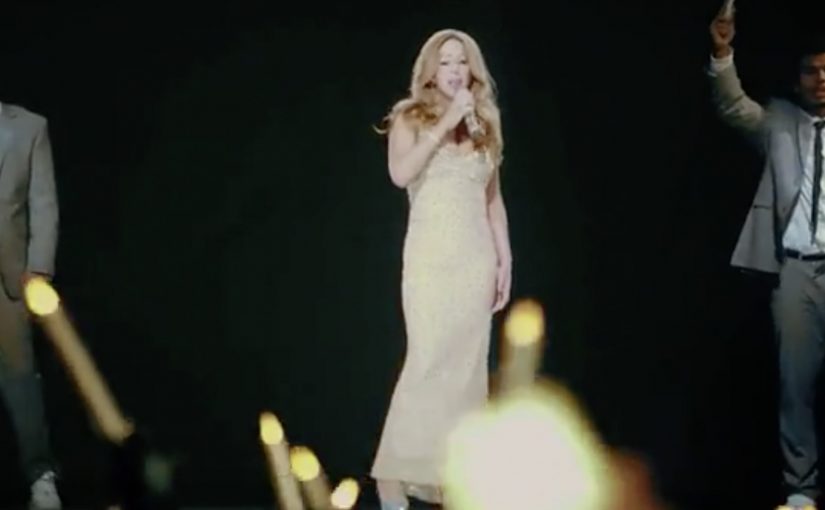
Deutsche Telekom stages a multi-city, multi-media Christmas surprise where people across five countries believe they are seeing Mariah Carey perform live, right in their city square.

The event is described as unfolding simultaneously in Germany, Croatia, Macedonia, Montenegro, and Poland. After roughly 10 minutes, the hologram “breaks” into the sky to reveal the surprise, then reforms to lead the connected crowds through “Silent Night”, finishing with “All I Want for Christmas Is You”.

How the spectacle is engineered

Mechanically, each city is linked live to the others, enabling interaction across locations while the performance plays out on large-scale public screens. Attendees are also given a QR code that takes them to a smartphone experience featuring a candle flame, turning the crowd into a coordinated visual.

In European telecom brand marketing, making the network feel like a shared human experience is a reliable way to give an invisible service a visible emotional payoff.

Why it lands as more than “a stunt”

This works because the surprise is collective, not individual. People do not just watch content. They witness their city being connected to other cities in real time, and that connection is the product truth Deutsche Telekom wants remembered. Because the cities are live-linked, the audience experiences “connection” as something happening to them, which makes the brand promise feel credible. The real question is whether your experience lets people feel the benefit in the moment, not just understand it in hindsight. If your brand sells connectivity, a shared public ritual beats a standalone content drop.

Extractable takeaway: When the benefit is intangible, engineer a shared moment that makes the benefit felt, then let the crowd carry the story.

What the numbers are really doing

The piece is framed with scale metrics. Attendance is described as 12,000 people in total, with an additional 27,000 watching via a live internet stream on lifeisforsharing.tv. Treated as reported figures, the strategic point is clear: the “in person” crowd creates authenticity, and the stream extends reach without losing the feeling of simultaneity.

Stealable patterns for cross-market surprise

  • Build one shared ritual. A carol everyone recognises becomes the simplest multi-language participation layer.
  • Make the reveal part of the story arc. Belief, disruption, then a coordinated finale gives the audience a plot to retell.
  • Link physical and mobile. A QR-driven phone element can turn a crowd into a synchronised visual without complicated instruction.
  • Design for “togetherness at distance”. The emotional payoff comes from knowing other cities are experiencing the same moment at the same time.

A few fast answers before you act

What is the “Hologram Christmas Surprise” in one line?

A simultaneous, five-country public concert that uses a Mariah Carey hologram and live city-to-city links to create a shared Christmas moment at scale.

What is the core mechanism that makes it feel real?

Live-linked public screens across cities, plus on-stage interaction cues and crowd participation elements that play out in real time.

Why add the QR code candle experience?

It gives the crowd a simple coordinated action, visually reinforcing the “connected” theme and making the audience part of the show.

How do you keep it from feeling like a pure tech demo?

Lead with a shared ritual and a simple participation layer so the emotion reads first, and the technology disappears into the experience.

What is the most transferable lesson?

If your brand benefit is intangible, engineer a shared public moment that makes the benefit visible, then let people do the storytelling for you.