
Antarctica: The Beer Turnstile

Carnival in Rio de Janeiro drives alcohol consumption up, and it also drives traffic risk up with it. Traditional safety warnings are easy to ignore in the middle of a street party.

Antarctica, as an official sponsor of Carnival, decides to make the safer choice feel easier than the risky one. With AlmapBBDO, they install a “beer turnstile” at a subway station where carnival groups gather. Scan an empty Antarctica can at the gate and the turnstile opens, giving you a free ride home.

Turning an empty can into a ticket

The mechanism is a direct behavior swap. Instead of telling people not to drink and drive, the brand turns public transport into the reward for doing the right thing. The “payment” is an empty can, scanned like a transit card, then collected at the turnstile.

In big-city event environments, the most effective safety interventions reduce friction at the exact moment decisions get made, and they do it with an incentive people can use immediately.

Why it lands

This works because it replaces moralizing with utility. The act is simple, public, and repeatable, and it reframes the end of the night as a next step you can take without planning. The real question is how to make the safer ride home easier than the risky one when people are already in motion. It also keeps the brand inside the solution rather than just beside the problem, which makes the sponsorship feel like action, not signage.

Extractable takeaway: If you want behavior change at scale, stop asking for restraint. Build a one-step alternative that fits the moment, then reward the safer behavior with access people already want.

What the beer turnstile gets right

  • Reward the right behavior at the decision point. Do not place the incentive after the moment has passed.
  • Use a token people already hold. An empty can is a frictionless “ticket” during Carnival.
  • Make it visible. A physical gate turns participation into social proof.
  • Keep the story one sentence long. “Scan a can. Ride free.” travels fast.

A few fast answers before you act

What is the Beer Turnstile?

A subway gate that accepts an empty Antarctica beer can as the “fare”, unlocking free travel during Carnival to reduce drunk driving.

Why is this more effective than a standard “don’t drink and drive” message?

Because it changes the default action. It makes the safe option simpler, faster, and immediately rewarding in the same moment people need to get home.

How does the can scanning work in practice?

The can’s code is scanned at the turnstile like a transit credential, then the can is collected as part of the exchange.

What results were reported for the activation?

Campaign write-ups reported usage of around 1,000 people per hour at the special gate, cited as 86% higher than conventional turnstiles that day, and a reported drop in drunk drivers caught of 43%.

When should brands use “brand utility” mechanics like this?

When a safety or public-good goal depends on real-time choices, and the brand can provide an immediate alternative action rather than just awareness.
Volkswagen: The BlueMotion Label

A magazine gets read, then it gets tossed. The campaign framing cites a blunt number: 77% of magazines, along with their ads, end up in the trash, which makes the medium itself feel like waste.

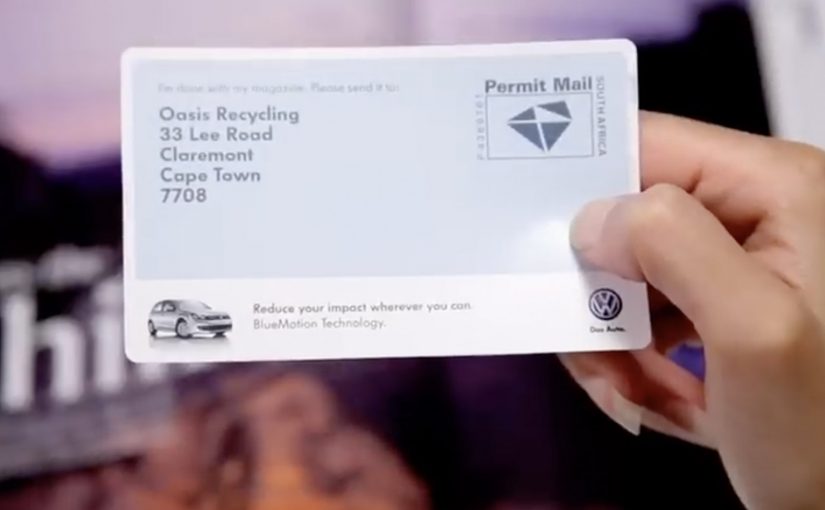
So when Volkswagen wants to promote the eco-conscious thinking behind its BlueMotion vehicles, Ogilvy develops a print insert that does not just talk about recycling. It makes recycling the default next step.

The insert is designed to get people in Cape Town to recycle their magazines via the city’s post boxes. Once you are done reading, you use the insert and drop the magazine into a post box, turning postal infrastructure into a recycling pathway instead of sending the paper to landfill.

When the medium becomes the message

The mechanism is a print ad that changes the fate of the print medium. Instead of adding more paper persuasion, it converts the entire magazine into something that can be routed to recycling, using a familiar behavior, posting, to remove the friction of “finding a recycling option”.

In consumer marketing, “sustainability” claims land best when the communication channel follows the same rules the product is asking people to adopt.

The strongest sustainability advertising makes the medium do part of the environmental work itself. The real question is whether the communication changes the waste behavior around the product, or just describes a greener intent.

Why it lands

This works because it removes hypocrisy. If you are going to sell eco-conscious thinking, your ad cannot behave like disposable clutter. By turning the magazine itself into the recyclable object, the campaign gives people a satisfying feeling of doing the right thing with almost no extra effort, and it makes the brand promise feel practical rather than moralizing.

Extractable takeaway: If your benefit is “less waste”, design the communication so it physically reduces waste, and let the proof be the experience, not the copy.

What to borrow from the BlueMotion Label

  • Replace messaging with utility. If you can change behavior directly, you do not need to preach.
  • Use existing infrastructure. People already know how to use post boxes, so adoption is friction-light.
  • Make the action one-step. The closer the action is to the moment of disposal, the higher the follow-through.
  • Make the proof visible. A physical insert is something people can show, talk about, and demonstrate.

A few fast answers before you act

What is “The BlueMotion Label”?

A Volkswagen BlueMotion print insert designed to make magazine recycling easy by letting readers use post boxes to route finished magazines into a recycling flow.

Why is this stronger than a standard eco-themed print ad?

Because it behaves like the promise. It reduces waste through the ad itself, instead of adding more disposable paper to argue about sustainability.

What behavior change does it target?

Moving magazines from “trash by default” to “recycle by default” at the exact moment people finish reading.

What is the key execution ingredient?

Friction removal. The action must be simple enough that people will do it immediately, without searching for a recycling option.

When should brands use this pattern?

When your claim depends on credibility, and you can redesign the medium or distribution so the communication itself demonstrates the value.

Volkswagen: Instant Christmas Recycler

A Christmas recycler that turns responsibility into a reward

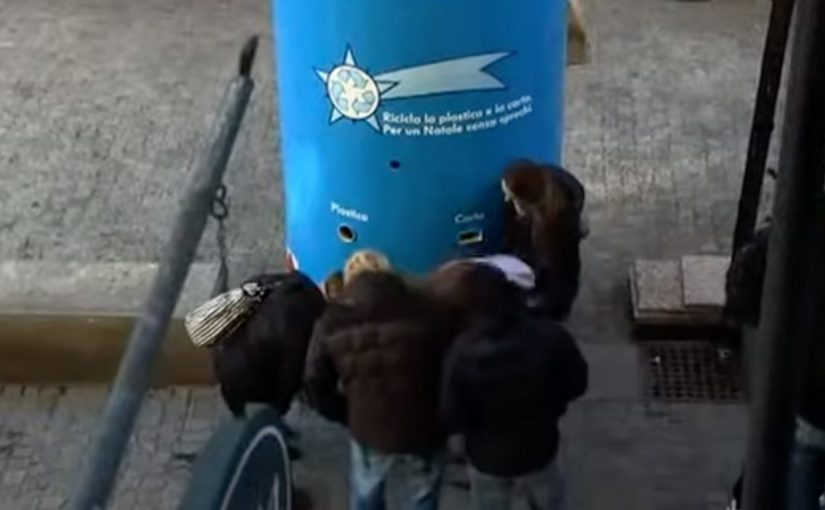
Volkswagen in Italy wanted to convince people to be more responsible towards the environment. So with the help of ad agency Now Available they created an engaging ambient ad called the “Instant Christmas Recycler”.

How the Instant Christmas Recycler works as an ambient activation

The idea is simple: put a recycling station where people are already moving, then make the “right” action feel immediately worthwhile. Here, “ambient activation” means a branded installation in a public setting that invites an on-the-spot action. As described in campaign write-ups, each time someone disposed of rubbish correctly, the machine responded with an instant Christmas-themed reward. That instant feedback is the mechanism. Because the response is immediate, it reinforces the behavior while the motivation is still present.

In retail-adjacent public environments, ambient installations can make sustainability tangible by turning small actions into visible, immediate consequences.

Why it lands: it replaces guilt with a small win

Environmental messaging often asks for sacrifice. This flips the emotional contract. It rewards the behavior on the spot, so the action feels like a game you want to complete rather than a lecture you want to avoid.

Extractable takeaway: If you can turn a “should” into an immediate, visible win, the behavior starts to feel self-propelled instead of imposed.

The Christmas framing matters too. It gives the act of recycling a seasonal “ritual” feel, which makes participation socially acceptable and easy to repeat.

The business intent behind the charm

This is brand reputation building with a behavioral nudge attached. The real question is whether you can design the loop so the sustainable choice feels rewarding in the moment. Reward-based nudges only hold when the payoff is inseparable from the action. Volkswagen gets to show up as a constructive actor in everyday life, while testing a simple truth: if you want people to change behavior, reduce friction and make the payoff immediate.

What to steal for your next sustainability activation

  • Reward the action, not the intention. People follow loops they can feel instantly.
  • Place it where behavior already happens. Footfall beats persuasion.
  • Make the feedback public. Visible participation normalizes the act for bystanders.
  • Keep the rules obvious. One action. One response. No instructions needed.

A few fast answers before you act

What is the “Instant Christmas Recycler”?

It is an ambient activation for Volkswagen in Italy that uses a branded recycling station to encourage responsible disposal by giving immediate feedback and reward.

What is the key mechanism that makes it work?

Instant reinforcement. When someone recycles correctly, the installation responds immediately, making the right behavior feel easy and worth repeating.

Why use an ambient installation for an environmental message?

Because it reaches people in the moment of action. It turns sustainability from a slogan into a behavior you can perform right now.

What should a brand be careful about with reward-based nudges?

If the reward is unclear, delayed, or inconsistent, the loop collapses. The response has to feel reliable and directly tied to the action.

How do you scale an idea like this beyond one location?

Standardize the behavior loop and vary the context. Same simple action and response, different placements and seasonal skins that fit local routines.