
Domino’s: Pizza Holdouts

When your friends “rat you out” to a pizza brand

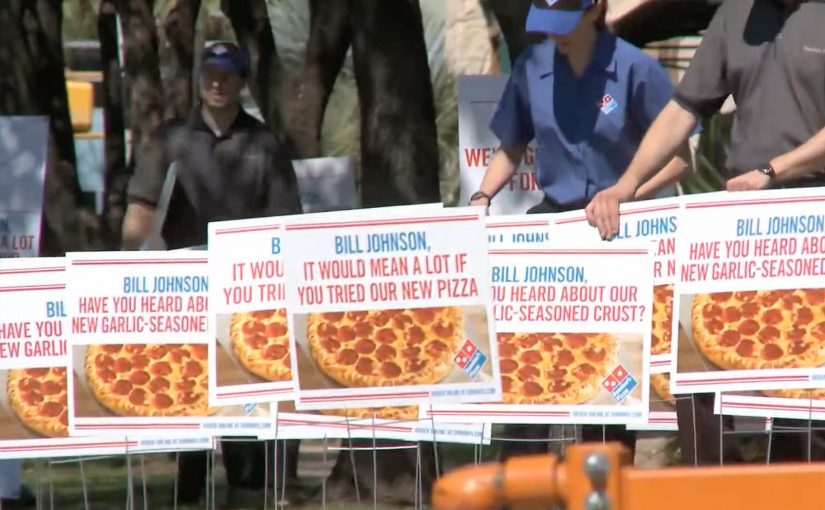
Domino’s campaign against consumers who cannot stand its pizza continues. Crispin Porter + Bogusky is back with a new facet of the “New Pizza” campaign. The brand sets out to harass three poor unsuspecting souls who have been ratted out as not eating Domino’s.

The premise is that “only a handful” of people have not tried the new pizza recipe Domino’s came out with.

The mechanic: turn trial into a social bounty hunt

The mechanism is simple and slightly mean in a way that makes people watch. Identify the “holdout”. Make their resistance a story. Then recruit their friends as the distribution layer, so the campaign spreads through personal networks instead of brand channels alone. Because the invitation comes from someone you know, it carries social proof and mild pressure that paid media cannot.

In US quick-service marketing, “get them to try it once” is often the hardest job, because taste perceptions and jokes about quality can become cultural default settings.

Why it lands: public call-out plus a clear path to redemption

This works because the tension is real. People do have strong opinions about Domino’s. Making the holdout visible creates social pressure, but the campaign balances that pressure by offering an easy way out. Try the new recipe. Join the conversation. Stop being the exception.

Extractable takeaway: When you use public call-out, pair it with a low-friction “redemption” action so people can update their stance without losing face.

The real question is whether your trial problem is a product problem or a permission problem, and which one you can solve fastest.

The business intent: accelerate reappraisal of the product

This is not a love-brand play. It is a credibility reset. Domino’s wants lapsed and sceptical customers to re-test the product, so the “new recipe” can replace the old mental model.

After this, Domino’s reported doubling its profits last quarter to $23.6 million.

Forcing first trial at scale: practical moves

  • Make the barrier explicit. “You have not tried it” is a clearer friction point than “please consider our brand”.
  • Recruit friends, not audiences. Social pressure works best when it comes from someone the holdout knows.
  • Give the story a role people can play. “Bounty hunter” is a participation frame, not just a message.
  • Link the stunt to a measurable behaviour. The only KPI that matters here is trial, not views.

So do you know a pizza holdout? Find out how to become a Taste Bud Bounty Hunter at www.PizzaHoldouts.com. A “Taste Bud Bounty Hunter” is the friend who nominates a holdout and nudges them to try the new recipe.


A few fast answers before you act

What is Domino’s “Pizza Holdouts” in one sentence?

A campaign that targets people who still have not tried the “new” Domino’s recipe, using friends to identify them and turning first-trial into a playful hunt.

What is the core mechanism?

Social recruitment plus a role people can play. Friends “rat out” holdouts, and the brand reframes outreach as a bounty-hunt style participation story.

Why does using friends change the effectiveness?

Because social pressure is more persuasive when it comes from someone you know. The message is carried by relationships, not just media.

What is the real KPI this format is trying to move?

Trial. The stunt is designed to force the first bite, not just generate views or talk.

What is the most transferable takeaway?

If your growth problem is “first experience”, make the barrier explicit, recruit peer influence, and design a participation frame that points to the behaviour you want.
Norms Restaurants: Social Media Above-the-Line

A TV spot that treats social as the main stage

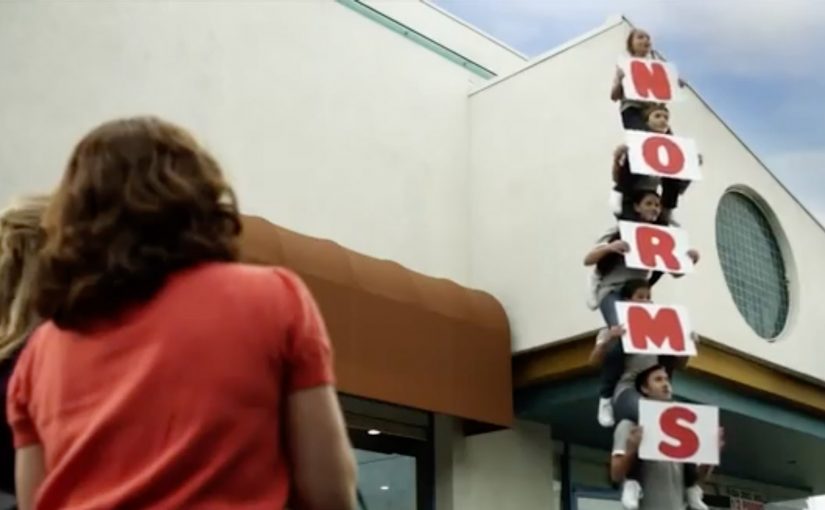
Here is a new TV spot promoting the NORMS Restaurants Facebook page. It does something different. The commercial is grounded in social media rather than simply being an add-on.

How it works: the channel is the creative, not the CTA

The mechanism is straightforward. Instead of telling you to “go to Facebook”, the spot behaves like social. It borrows the language, pacing, and cultural cues of the feed, then uses TV as the amplifier. By “social-native”, I mean it is structured like something you would actually scroll past in a feed. This works because viewers recognize that grammar instantly, so the follow action feels like continuing the same experience.

In US regional restaurant brands, social channels can function as a 24/7 extension of the dining room: service, deals, personality, and community in real time.

The real question is whether your mass media can behave like the channel you want people to adopt, rather than merely pointing at it.

Why it lands: the message and the operating model match

Just as social media never sleeps, NORMS Restaurants also never closes. They are open 24 hours a day. That alignment matters. The spot is not trying to look modern. It is connecting a true operational differentiator to a behaviour that is always on.

Extractable takeaway: When an “always-on” message is backed by something operationally true, the creative reads as utility instead of theatre.

The intent: make “follow us” feel like utility

The point is not only awareness. It is habit formation. If the brand is always open, then the social presence can be positioned as always available too, with updates that feel useful, timely, and worth checking. This is what it looks like to put social “above the line”, treating it as the primary experience and not a supporting channel. Here, “above the line” means the social presence is the main stage, while TV is used mainly to accelerate adoption. If you want social to matter, design mass media as an on-ramp to a repeatable social habit, not as a separate campaign.

Early results the brand shared at the time

This family owned business shared the following success within 10 days of the TV commercials:

  • Gained 1,000 fans on Facebook
  • Gained 150 followers on Twitter

Moves to put social above the line

  • Make the channel the idea. If you lead with social, the creative has to feel native to how social behaves.
  • Anchor the message in something operationally true. “Always on” lands when the business actually is.
  • Give people a reason to follow, not just a reason to notice. Utility beats slogans for repeat behaviour.
  • Measure fast, then iterate. If the goal is followers and engagement, build feedback loops early.

A few fast answers before you act

What is different about this NORMS TV spot?

It is built around social media as the core creative idea, not as a last-second add-on call-to-action.

What is the main mechanism that makes it work?

TV is used as the reach layer, while the creative language is intentionally social-native, so the handoff to Facebook and Twitter feels natural.

Why does the “social never sleeps” line fit NORMS?

Because NORMS is positioned as open 24 hours a day, so the always-on idea matches the operating model instead of feeling like marketing theatre.

What is the business goal behind grounding a TV spot in social?

To turn awareness into ongoing follow behaviour, so the brand gains a direct channel for repeat visits, offers, and relationship building.

What is the most transferable takeaway?

If you want social to sit above the line, treat it as the product experience, then use mass media only to accelerate adoption.

Ikea’s Facebook Showroom

You see a photo of an Ikea showroom in a Facebook album. The caption is simple. Tag the product you want. If you are first to tag it with your name, you win the item. One photo turns into a race. One tag turns into a claim.

The challenge. Breaking through Facebook clutter

Facebook is getting cluttered with brands screaming about themselves. Forsman & Bodenfors from Sweden leans into the platform instead of fighting it. They turn a basic Facebook behavior. Photo tagging. Into the promotional mechanic. Here, the mechanic is the simple rule set that rewards the first tag.

The real question is how to turn a crowded feed into a game people choose to play, not just a message they scroll past.

When the platform already has a native action people do without thinking, build the promotion on that action instead of adding extra steps.

The setup. A manager profile as the campaign hub

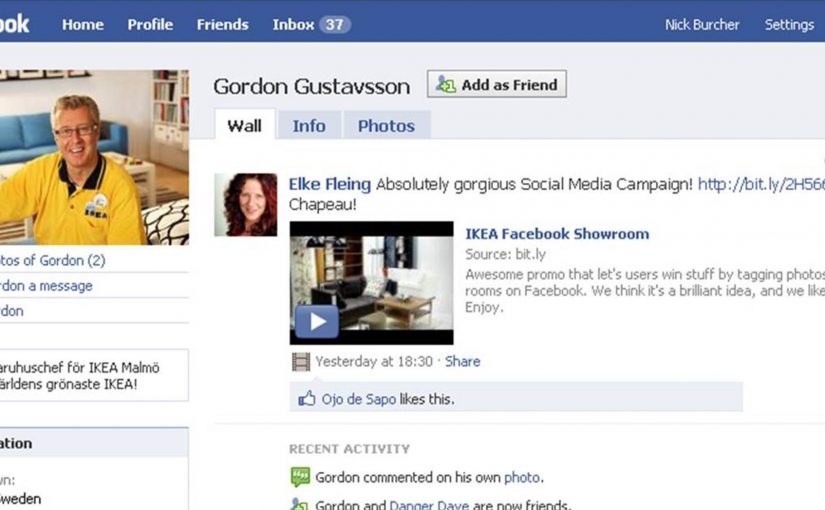
To promote the opening of Ikea’s new store in Malmö, Sweden, the campaign starts with a profile for the store’s manager, Gordon Gustavsson. With a small media budget, the experience is designed to spread through participation rather than paid impressions.

How it works. Tag to win

  • Gustavsson uploads pictures of the store’s showrooms into a Facebook photo album.
  • People browse the photos and tag the Ikea items they want with their own name.
  • The first person to tag a specific item wins it.

In European retail launches with tight media budgets, participation mechanics that travel through friends lists can do more work than another round of brand posts.

Why this works. Desire, speed, and public proof

The mechanic converts attention into action immediately. People do not just look at product photos. They interact with them. The tagging action creates public proof that others can see, and it naturally spreads Ikea products across networks without adding extra friction. Here, public proof means the visible tags on each item that signal demand and participation. Because tagging is instant and public, each claim doubles as distribution and social validation.

Extractable takeaway: If you can tie a desired outcome to a native platform action and make the action visible, you get behavior change and distribution in the same move.

Moves worth copying for your next launch

  • Use a native action as the CTA. Pick something the platform already trains people to do, then make that the whole interaction.
  • Make the action public by default. Visibility creates momentum and keeps the experience self-propagating.
  • Reward speed, not form-filling. The shorter the path from desire to action, the less drop-off you create.
  • Let one asset do double duty. A single photo should work as content, interface, and trigger for participation.

A few fast answers before you act

What is Ikea’s Facebook Showroom?

A Facebook campaign for Ikea’s Malmö store opening that uses photo tagging as a “tag first, win the item” mechanic.

What is the core user action?

Browse the showroom album and tag the product you want with your own name. The first person to tag a specific item wins it.

Who runs the profile and album?

The campaign centers on a profile for the store manager, Gordon Gustavsson, who uploads the showroom photos.

What makes it spread without heavy media?

Tagging is already a native Facebook behavior. Each tag is visible and shareable, so participation creates distribution.

What is the transferable pattern for brands?

Turn a native platform action into the promotional mechanic, then let participation create the distribution.