
Cornetto: Love Plane

A couple tweets a love message with a hashtag, and a few minutes later it appears on a banner flying over the beach. Cornetto’s Love Plane turns summer flirting into public media, with the sky as the timeline.

A Twitter feed you can read in the air

Summer is the season of crazy, unexplainable romances. Cornetto launches the Love Plane in Spain and attaches a Twitter-based banner feed to it.

The mechanism: hashtag in, banner out

People who want to declare their love both online and in the sky tweet using the hashtag #cornettoskytweet. The most popular tweets are then painted on the banner and flown over the beach. To keep things moving, the banner creative is changed every 15 minutes.

In European FMCG summer activations, a simple real-time mechanic can turn social posting into a shared public moment that people notice even if they are not online.

Why this lands

This works because it upgrades a small, personal gesture into something you cannot ignore. A tweet becomes physical, scarce, and time-bound, which raises the perceived stakes and makes participation feel like a mini event rather than just another post.

Extractable takeaway: If you want social participation at scale, convert digital inputs into a visible, time-boxed output in the real world, so the reward is public and immediate, not buried in a feed.

What Cornetto is really doing

Cornetto is smart to make participation public instead of leaving the interaction inside Twitter. The brand is borrowing the emotional energy of summer romance and using it to create a repeatable content loop. By a repeatable content loop, this means each new tweet can create another visible banner moment and another round of attention.

The real question is how a brand turns disposable social chatter into a public moment people want to trigger and watch.

People supply messages. The campaign outputs spectacle. Onlookers become an audience. Participants become distributors.

What summer activation teams should steal

  • Make the reward unmistakably public. Participation feels bigger when others can witness it.
  • Use a simple popularity rule. “Most popular tweets win” is easy to understand and easy to compete in.
  • Keep the cadence fast. Refreshing every 15 minutes creates urgency and repeat attention.
  • Match channel to emotion. Romance works when the output feels bold, not subtle.

A few fast answers before you act

What is the Cornetto Love Plane?

It is a plane flying over beaches with a banner that displays selected tweets, turning social posts into a public sky message.

How do people participate?

They tweet a message using the hashtag #cornettoskytweet. The most popular tweets are selected to appear on the banner.

Why change the banner every 15 minutes?

Frequent updates create urgency and make the activation feel live, which encourages repeated participation and attention.

What does this communicate about the brand?

That Cornetto “owns” summer romance moments, and that the brand can turn small gestures into shared experiences.

What is the main operational risk with this idea?

Moderation and logistics. You need tight filtering for messages, plus reliable production timing so the “real-time” promise holds.
Coca-Cola: Sharing Can That Splits in Two

When “share” is built into the can

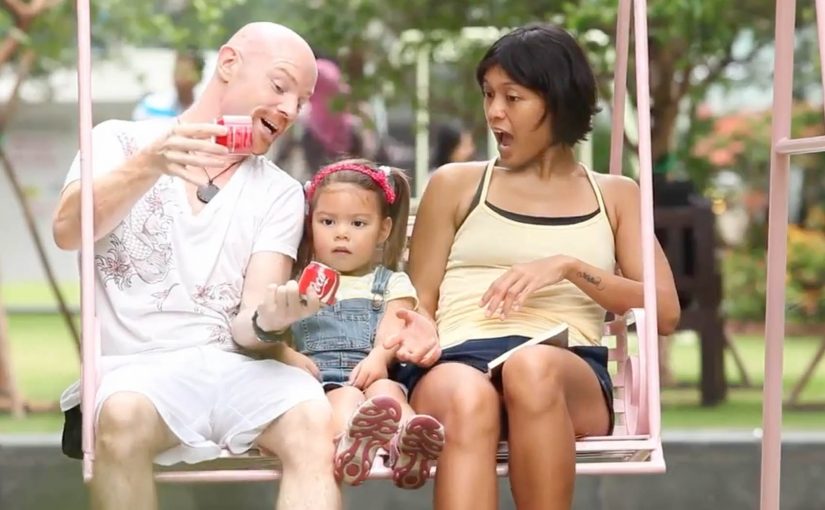
With summer coming up and an ice cold soda in your hand, people around you are bound to hope that you will share the soda with them. The normal way of doing so would be to sip from the same opening.

Now in an attempt to create another way of sharing happiness, Coca-Cola teamed up with Ogilvy in Singapore and France to create a shareable can of Coke that splits into two and creates two half pints. The results.

The packaging hack: one can becomes two

The can does not just contain the drink. It choreographs the moment. Split it. Hand one half over. The product becomes the gesture.

In global FMCG brands, packaging is often the fastest way to turn “share” from a line of copy into a behavior.

If the behavior matters, design it into the object. Because the can physically divides into two drinkable halves, the social negotiation disappears and the gesture becomes obvious.

Why it changes the social moment

The post nails the truth. People want a sip. This design turns that awkward micro-negotiation into a simple ritual that feels natural in the moment. Here, “ritual” means a tiny repeatable sequence anyone can copy. Split, hand one half over, drink.

Extractable takeaway: When the friction lives in a shared micro-moment, redesign the object so the desired behavior is the default, not a negotiation.

The job it solves

Create another way of sharing happiness in summer, without two people sipping from the same opening. Here, “sharing happiness” is not abstract. It is one can producing two separate openings, so two people can drink without swapping sips.

The real question is how to make sharing feel effortless and hygienic at the exact moment someone is holding the drink.

Steal the split-and-share ritual

  • Encode the behavior: If the behavior matters, build it into the object, not only the message.
  • Remove micro-friction: Design for the real scenario, then remove friction inside that moment.
  • Make the ritual portable: Create a repeatable ritual. The best ones travel without explanation.

A few fast answers before you act

What is the “sharing can” concept?

A Coke can engineered to split into two drinkable halves, creating two half pints from one can.

Who was involved?

Coca-Cola partnered with Ogilvy. The post associates the work with Singapore and France.

What moment does it target?

The everyday situation where someone has a cold drink and others around them hope they will share it.

What is the core creative move?

Turning “sharing happiness” into a physical product feature rather than a line of copy.

IKEA: Catch the Swedish Light

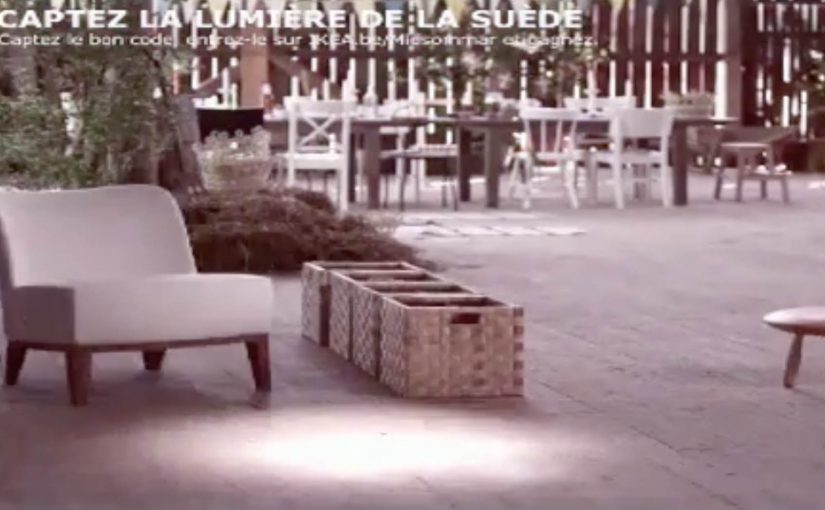
Summer is usually a slow period for IKEA in Belgium, and IKEA wanted to change that. Instead of running traditional advertising for summer offers, they built an interactive YouTube game that challenged viewers to “catch the Swedish light.”

Click here to watch the case video on the AdsSpot website.

A YouTube mechanic that turns attention into speed

The game used a set of 48 different ads. Viewers had to pause the spot at the exact moment a beam of light hit a product. In that unique frame, a yellow code appeared in the top right corner. The first person to validate the code on the summer microsite won the product instantly.

In seasonal retail marketing, this kind of mechanic works best when it converts passive viewing into an action that is both simple and time-sensitive.

Why this is a smart use of YouTube’s constraints

The neat twist is that the limitation becomes the hook. Because YouTube is not designed for frame-perfect browsing, the challenge feels like a real skill moment rather than a basic form-fill. That “I nailed it” feeling is the reward even before the prize lands.

Extractable takeaway: If you want people to pay full attention to video ads, give them a single, clear reason to watch closely, and make the payoff depend on timing rather than effort.

What IKEA is really optimizing for

Yes, it is a prize mechanic. But the deeper objective is to turn summer browsing into a competitive habit. Viewers must watch actively, replay, and react quickly, which increases recall of products and offers without relying on heavier messaging. The real question is whether you want your summer promo to be remembered as an offer, or as a skill moment people choose to replay. This is a stronger play than a standard summer-offers spot, as long as the validation race feels fair across devices.

What to steal from Catch the Swedish Light

  • Make the win condition visual. A light beam hitting a product is instantly understandable.
  • Keep the action atomic. Pause at the right moment. Capture code. Validate. Done.
  • Use scarcity properly. “First to validate wins” creates urgency without extra complexity.
  • Scale through variations. Multiple ads keep the game fresh and reduce repetition fatigue.
  • Protect fairness. If latency (the delay between a code submission and server confirmation) or site load affects outcomes, communicate rules clearly and log validation times reliably.

A few fast answers before you act

What is “Catch the Swedish Light” in one sentence?

It is an IKEA Belgium YouTube-based game where viewers pause ads at the exact moment light hits a product to reveal a code, then validate fastest to win instantly.

Why does “pause at the right frame” drive engagement?

Because it forces active viewing. People stop multitasking, replay moments, and concentrate to hit the timing.

What makes this better than a standard prize draw?

The outcome feels earned. Speed and attention decide the winner, which makes participation more exciting and shareable.

What is the biggest execution risk?

Perceived unfairness. If buffering, device differences, or slow microsite performance decide winners, sentiment can flip fast.

What should you measure beyond views?

Replay rate, average time spent per viewer, code validation volume, site conversion rate, and whether product interest rises during the slow summer window.