
Yellow Pages: Yellow Chocolate

Yellow Pages: Yellow Chocolate

A phone directory brand sells a real chocolate bar, and the public lines up to buy it. That is the core twist behind Yellow Pages New Zealand’s “Yellow Chocolate”.

When a “job to be done” becomes a product on a shelf

The premise is simple and weird enough to travel. A regular New Zealander, Josh Winger, is tasked with creating, marketing, and distributing a chocolate bar that “tastes like the colour yellow”, using only businesses he can source via Yellow Pages across print, online, and mobile.

Here, a “job to be done” means the practical outcome people need help achieving, not the channel they use to achieve it.

The campaign is described as starting with a call for entries and then turning Josh’s progress into episodic content that pulls people into the build, not just the reveal.

How it works as an integrated proof, not a stunt

The mechanism is a live product demonstration disguised as entertainment. The brand does not claim usefulness. It forces a public, time-boxed build where every dependency is a Yellow Pages lookup, and the finished output is a retail product that carries the proof story with it.

That works because a public build turns a vague claim of usefulness into a visible chain of evidence people can watch, judge, and later buy.

At Cannes Lions 2010, the work is listed as winning a Gold Lion in Media, a Silver Lion in Titanium and Integrated, and a Bronze Lion in Cyber.

In mature categories where a brand needs to prove relevance to a search-first audience, turning the proof into something people can buy and share compresses “brand promise” into observable behavior.

Why “taste like yellow” sticks

An abstract brief invites participation. People argue about what “yellow” should taste like, contribute ideas, and then follow the build to see whose intuition survives contact with manufacturing, packaging, distribution, and retail reality.

Extractable takeaway: If your product is a utility people underestimate, stage a public build where your tool is the only allowed method. Then ship a tangible artifact that carries the proof narrative into everyday life.

What Yellow Pages is really buying

This is repositioning by demonstration. The chocolate bar is a carrier for a bigger reset: Yellow Pages is not an “old book your parents used”. It is framed as a modern system that can still help anyone get a job done, end to end, under real constraints.

The real question is whether a legacy utility can make usefulness feel current again without leaning on nostalgia or category habit.

What the results are described as

Results are reported as unusually strong for something that is, technically, a piece of marketing communications. The bar sold for $2. Some supermarkets reportedly sold out on launch day, and some bars were later traded online for up to $320. The campaign is described as building an online audience of more than 80,000, including around 16,000 Facebook fans and about 800 Twitter followers.

What to steal for your next “prove it” campaign

  • Make the constraint the headline. “Only use businesses found via X” is clearer than any brand manifesto.
  • Design for contribution. Pick a problem the audience can argue about in public, then let them feed the build.
  • Ship an artifact. A real product, sample, tool, or output beats a landing page when you need belief, not awareness.
  • Carry the proof inside the thing. Packaging and POS that explain “how it was made” extends the story past the content moment.

A few fast answers before you act

What is the Yellow Pages “Yellow Chocolate” campaign?

It is an integrated campaign where Yellow Pages challenges a participant to create and launch a chocolate bar that “tastes like yellow” using only Yellow Pages listings to source everything needed. The finished bar becomes the proof artifact.

Why does a physical chocolate bar matter here?

Because it turns an abstract brand claim into observable reality. People can buy the output, and the story of how it was made becomes a portable demonstration of the directory’s usefulness.

Which Cannes Lions awards is it listed as winning?

Cannes Lions listings for 2010 show the work winning a Gold Lion in Media, a Silver Lion in Titanium and Integrated, and a Bronze Lion in Cyber.

What outcomes are reported?

Reported outcomes include rapid sell-outs in some supermarkets, bars traded online for high prices, and sizeable social followings. Some recall and usage-lift figures are also reported, but vary by secondary retellings.

What is the transferable principle?

When you need to change perception of a legacy utility, do not argue. Force a public build where your tool is the only allowed method, then ship the proof as a tangible artifact.
Jeep Puzzle for Twitter

Jeep Puzzle for Twitter

Leo Burnett Iberia is running “Jeep Puzzle”, a first of its kind online action that turns the microblogging platform Twitter into a real playground.

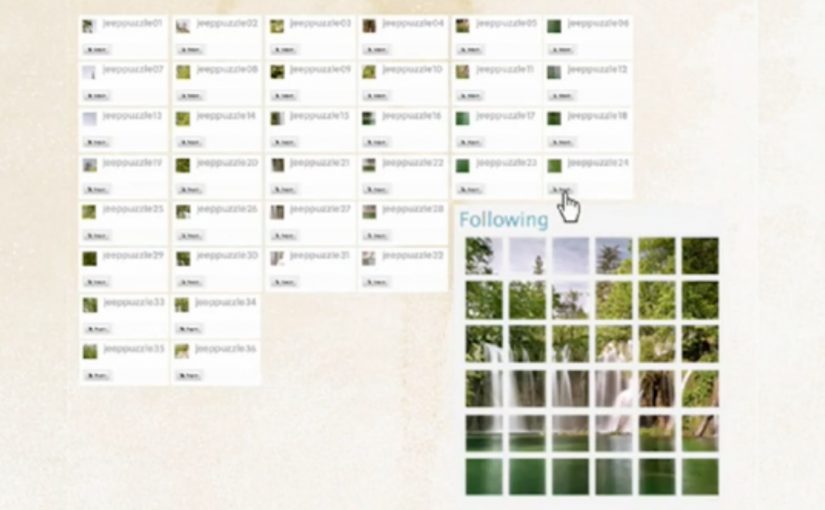
The competition invites users to complete puzzles using several different images from Twitter profiles. Each puzzle represents landscapes which only Jeep can access. Users who complete any of the puzzles can win prizes including T-shirts with the exclusive Jeep Icon design.

Leo Burnett Iberia created more than 371 Twitter profiles in order to include all the puzzles and their pieces. Ten main Twitter profiles each follow 36 profiles!

  • @waterfallpuzzle
  • @beachpuzzle
  • @desertpuzzle
  • @mountainspuzzle
  • @icebergpuzzle
  • @forestpuzzle
  • @snowpuzzle
  • @volcanopuzzle
  • @rockspuzzle
  • @cavepuzzle

Why this worked on Twitter

The clever part is that the “platform limitation” became the mechanic. Instead of treating Twitter profiles as static identity pages, the campaign used profile images as modular puzzle tiles and turned the setup into a platform-native mechanic, meaning an experience built from the platform’s own features. Following connections became navigation, and discovery became play. That works because it turns a basic Twitter behavior into visible progress.

Extractable takeaway: When a platform gives you only a few native parts to work with, the stronger move is often to turn those parts into the experience instead of layering on a separate one.

In social platforms, the most reusable mechanics are usually the ones built from features people already understand.

What the brand is really doing here

The real question is whether the platform’s own building blocks can carry the brand promise without extra explanation.

The business intent is to make Jeep’s access story memorable through participation rather than description. This is a strong approach because the experience makes Jeep’s access story felt, not just stated.

What to borrow for social mechanics

  • Build the experience out of native platform objects. Here it is profiles and following.
  • Make progress visible. Every solved piece changes what the user can see next.
  • Let the content carry the brand promise. The landscapes are the message.

A few fast answers before you act

What is Jeep Puzzle?

It is an online competition that turns Twitter into a puzzle playground by spreading puzzle pieces across multiple Twitter profile images.

How do participants play?

They complete puzzles by navigating across profiles and assembling the images that form Jeep-accessible landscapes.

How many profiles were created for the campaign?

More than 371 Twitter profiles were created to host the puzzles and their pieces.

What are the main puzzle hubs?

Ten main Twitter profiles each followed 36 profiles, grouped by landscape themes like waterfall, beach, desert, and more.

What could players win?

Prizes included T-shirts featuring the exclusive Jeep Icon design.

Orange UK: Singing Tweetagrams

Orange UK: Singing Tweetagrams

When “say it on Twitter” becomes “say it in song”

Got a friend who needs cheering up? Or maybe you just want to tell them that you love them, miss them, or really like their new haircut. Now you can say it with Orange UK’s new singing tweetagram. In this activation, a tweetagram is a short tweet that gets turned into a personalized song you can share.

The mechanic: hashtags in, custom songs out

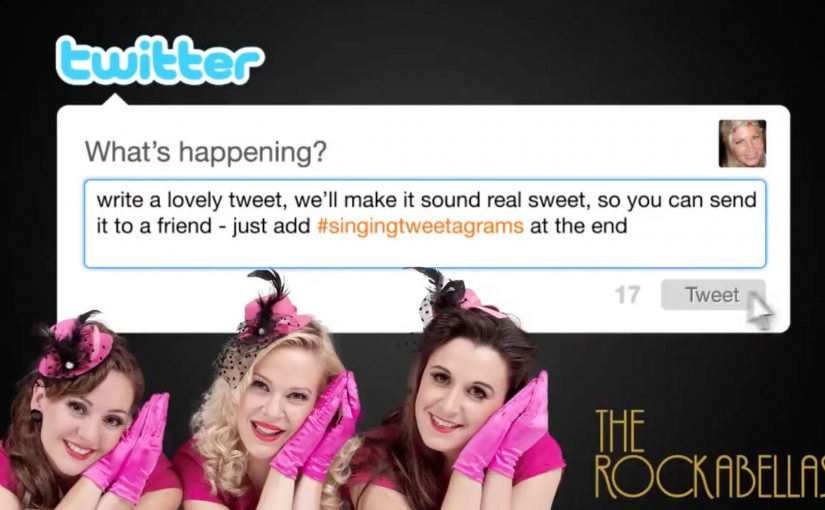
It works like this. You write the tweetagram message to someone, adding the hashtag #singingtweetagrams. Orange then picks the best ones and has the Rockabellas record the message in song within a few hours. Orange then uploads the song and tweets it to you with a link, so you can send it on to the person.

A tweetagram is a short message written in the native language of Twitter, then converted into a personalized media artifact that feels like it was made for one person.

In consumer social marketing, the strongest hashtag activations reward participation with a tangible output that people can share without extra explanation.

Why it works: the reward is the content

The clever part is that the prize is not a discount or a badge. The prize is the thing you actually want to share. This is a smart activation because it turns participation into a gift-like artifact people actually want to pass on. A custom song is inherently gift-like, and it gives the sender social credit while giving the receiver a genuine moment.

Extractable takeaway: If you can turn a native platform input into a fast, polished, personal artifact, the reward becomes the share, and the experience travels without extra persuasion.

This also reduces the usual user-generated content risk. Users write the raw line, but the brand controls selection, production, and final output quality.

When a brand turns a user’s message into a polished artifact and returns it quickly, it converts “engagement” into a keepsake. That creates higher motivation to participate and higher likelihood of forwarding.

The operational question: can Orange produce at internet speed?

The question will be whether they can keep up the pace set by Wieden + Kennedy in its Old Spice effort, which was described at the time as producing more than 180 videos in a couple days and pumping out responses nearly immediately. The real question is whether Orange can keep the “within hours” turnaround feeling real at scale.

That comparison matters because the magic is not only the idea. It is the turnaround time. If the lag feels slow, the moment passes and the sender stops feeling clever for trying.

Steal this pattern: hashtag-to-song rewards

  • Make the output unmistakably personal. Names, in-jokes, and direct address beat generic templates.
  • Return value fast. “Within hours” is part of the product, not a service detail.
  • Keep creation native. Let people use the platform behavior they already know. Here it is a tweet plus a hashtag.
  • Curate to protect quality. Selection is a feature. It keeps the final artifacts share-worthy and on-brand.

A few fast answers before you act

What is Orange UK’s Singing Tweetagrams campaign?

It is a Twitter-based activation where people post a message with #singingtweetagrams. Orange selects some messages and has the Rockabellas record them as short personalized songs, then sends the result back as a shareable link.

Why is “speed” so important in this format?

Because the sender’s motivation is tied to the moment. Fast turnaround keeps the interaction feeling live, current, and socially relevant.

What role does curation play in making it work?

Curation protects output quality and brand tone. Users provide raw inputs, but the brand controls which messages become finished content.

How is this different from typical user-generated content contests?

The reward is not external. The reward is the finished content itself, which is designed to be shared and kept.

What is the biggest execution risk?

Production bottlenecks. If demand outpaces recording capacity, turnaround slows and the concept loses the real-time feeling that drives participation.