
Ben & Jerry’s #CaptureEuphoria: Instagram OOH

Ben & Jerry’s #CaptureEuphoria: Instagram OOH

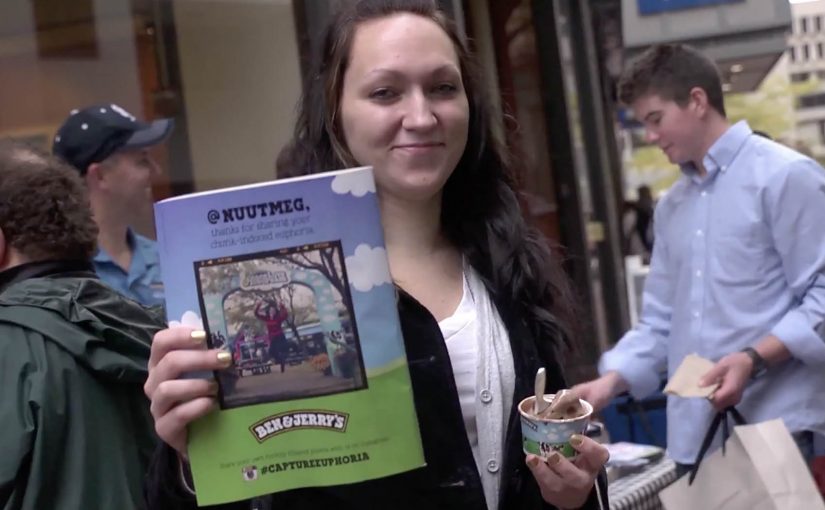
Ben & Jerry’s jumps onto the Instagram wave with a photo contest that challenges fans to capture their “euphoria” towards the brand. Winners from around the world are then featured in special Ben & Jerry’s advertising, including local print, bus station placements and billboards that appear near their homes.

The mechanic: a hashtag that turns into local visibility

The idea is straightforward. Fans post Instagram photos that represent “euphoria” and tag them with #captureeuphoria. Ben & Jerry’s curates a set of winners, then brings those images into the real world by placing them as local advertising close to where the photographer lives.

This is hyperlocal out-of-home (OOH) as a reward. Instead of giving people a generic prize, the campaign gives recognition that is geographically personal.

Recognition-based rewards are the better default when the goal is to deepen community, not just spike entries.

The real question is whether your reward shows up in the participant’s physical world, not just their feed.

In global FMCG marketing, the strongest social contests create an offline payoff that feels personal, not promotional.

Why it lands: recognition beats “stuff”

Most contests promise products, vouchers, or a one-time win. This one promises status. Your photo becomes the ad. Your community becomes the audience. That flips the usual relationship between brand and fan, and it makes participation feel less like a transaction and more like belonging.

Extractable takeaway: A social contest gets more powerful when the payoff is not only online. It is something the participant can physically encounter in their own neighborhood.

What Ben & Jerry’s reinforces by calling it “euphoria”

By anchoring the idea to a feeling rather than a product shot, the campaign invites more creative submissions and a wider interpretation of what “Ben & Jerry’s moments” look like. The brand gets a stream of fan-made images that reflect joy and personality, and the best of it becomes media.

What to steal for your next community-first contest

  • Reward participation with identity, not only incentives. Public recognition can outperform discounts when the brand has true fans.
  • Make the submission format native. A hashtag plus a photo is a low-friction action people already understand.
  • Close the loop in the real world. If you can turn online creation into offline visibility, the story becomes more memorable.
  • Keep the brief emotionally clear. “Capture euphoria” is an instruction people can interpret without overthinking.

A few fast answers before you act

What is Ben & Jerry’s #CaptureEuphoria?

It is an Instagram photo contest where fans post images tagged #captureeuphoria, and selected winners have their photos featured in local advertising near where they live.

Why is the offline ad placement the key twist?

Because it turns participation into public recognition. The reward is visible, personal, and rooted in the winner’s own community.

What makes this different from a standard user-generated content (UGC) contest?

Instead of only reposting winners online, it converts fan content into out-of-home and print media, which raises the perceived value of being selected.

What should a brand be careful about with hashtag-based submissions?

Moderation and curation. If the hashtag stream is unfiltered, off-brand or disruptive content can hijack the gallery effect.

How do you measure success for a contest like this?

Track volume and quality of submissions, unique participants, sentiment, earned reach from reposting, and the lift in brand engagement during the campaign window.
Jimmy Kimmel: Halloween Candy Prank 2012

Jimmy Kimmel: Halloween Candy Prank 2012

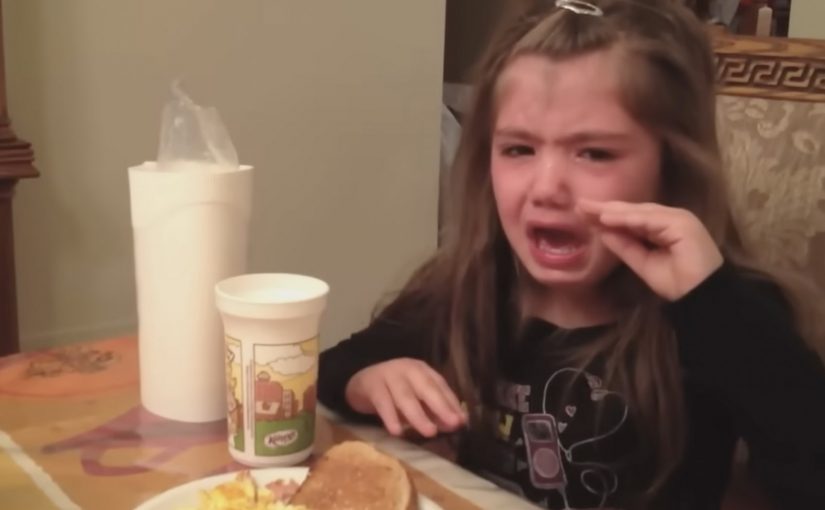
Last year for Halloween, talk show host Jimmy Kimmel challenged the parents of America to tell their kids that they ate all their Halloween candy and then video tape their reactions and share them on YouTube. The challenge was a huge success and the best-of compilation reportedly passed 34 million views within a year.

So this year, once again, Jimmy Kimmel issued the same challenge. The results are exactly as brutal and hilarious as you’d expect.

A late-night segment built from other people’s cameras

The mechanic is straightforward: a single, repeatable prank with a clear instruction. Tell the kids you ate the candy, capture the reaction, upload it, and label it so the show can find it. The audience does the filming. The show does the curation.

In mass-audience US entertainment formats, recurring viewer challenges turn a broadcast show into a participatory channel.

The real question is how you turn a simple prank into a recurring submission format people want to recreate.

This is smart format design, not just a funny late-night stunt.

Why it lands

It is a format, not a one-off. The joke is simple enough to repeat annually, which makes participation feel like joining a tradition.

Extractable takeaway: Repeatable audience challenges go viral when the instruction is easy, the emotional payoff is immediate, and the show’s role is tight curation. The audience supplies volume. The editor supplies pace and punch.

It scales because the setup is universal. Every family understands the stakes instantly. No explanation needed. Just the moment.

It is engineered for contrast. You get the full spectrum in minutes: outrage, tears, bargaining, moral lectures, and the occasional surprisingly mature response.

What this recurring prank format teaches

  • Write the participation brief like a recipe. One action, one prompt, one deliverable, one label.
  • Design for low production. If it can be filmed on a phone with no setup, you will get scale.
  • Make the headline self-evident. If people can describe it in one sentence, they will share it.
  • Curate ruthlessly. The “best-of” cut is what turns raw clips into a watchable story.

A few fast answers before you act

What is the core idea behind this Jimmy Kimmel challenge?

A simple prank prompt that viewers can easily recreate, then submit, allowing the show to compile the best reactions into a tight, shareable segment.

Why does it work so well as a recurring format?

Because the setup is instantly understood, participation is easy, and each year produces fresh reactions without changing the concept.

Is this “user-generated content” or just a TV bit?

Both. The audience generates the footage. The show packages it into a broadcast-quality narrative through editing and selection.

What makes the compilation feel addictive to watch?

Fast escalation and variety. Each clip delivers a quick emotional hit, and the edit keeps the pace moving before any one moment drags.

What is the transferable lesson for marketers?

If you want mass participation, create a repeatable prompt with an immediate emotional outcome, then invest in curation so the best entries become the distribution engine.

Lacta: Love Messages on Real Bars

Lacta: Love Messages on Real Bars

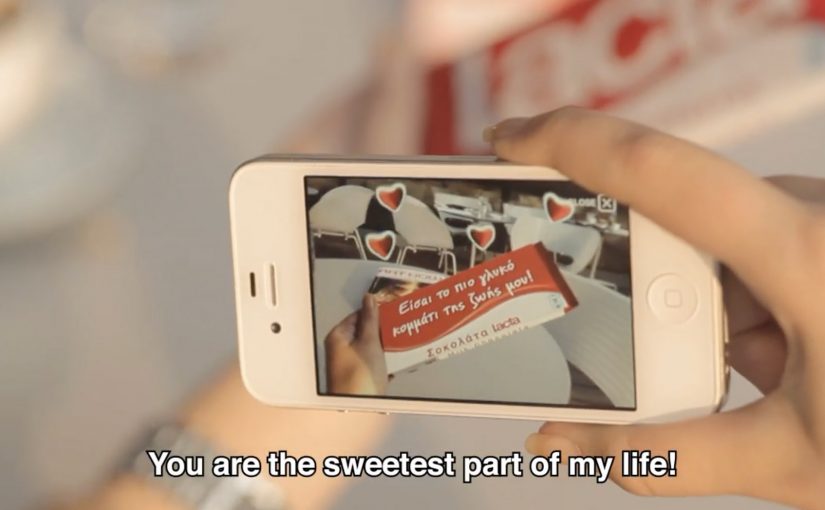
OgilvyOne Athens created another innovative campaign for Lacta Chocolate. This time, people write their own love messages and see them appear on real Lacta bars through an augmented reality mobile app.

The twist is that the message is not “published” online first. It is revealed on the physical product when the receiver scans the wrapper with the app, which turns a simple bar of chocolate into a personalized moment.

Click here to view some of the past Lacta Chocolate campaigns that are equally innovative.

How the AR message reveal works

The mechanism is a clean three-step loop. The sender composes a message in the app and chooses who it is for. The receiver is prompted to use the app too, then scans a Lacta bar to reveal the hidden message in augmented reality. Because the reveal depends on scanning the product, the experience is designed to connect emotion and purchase in the same gesture.

In FMCG gifting categories where love and ritual drive preference, adding a personal reveal layer can create differentiation without changing the core product.

Why it lands

It modernizes a familiar behavior, writing something personal on a gift, without losing the physicality of giving chocolate. The message feels private and earned because it only appears when the recipient holds a real bar in their hands and chooses to reveal it. That makes the brand’s role feel like an enabler of intimacy, not an interruption. That works because the product scan turns anticipation into part of the gift, which makes the interaction feel more meaningful than a standard message.

Extractable takeaway: If you want personalization to drive both attention and sales, tie the reveal to a physical trigger. Make the digital layer unlockable only through the product, so the magic moment and the transaction reinforce each other.

What Lacta is really optimizing for

The real question is how to make personalization pull product demand instead of floating as a nice digital extra.

This is built to turn gifting into repeatable behavior. One person sends a message, another person downloads the app, then the product becomes the key that unlocks the experience. That creates a loop that can scale through relationships rather than through media weight alone.

The strongest strategic choice here is keeping the chocolate bar as the gate to the experience, not just the branded wrapper around it.

What to steal for your own packaging-led digital work

  • Use the pack as the trigger. If the wrapper is the marker, the product stays central.
  • Make the reveal the reward. The moment of discovery is what people remember and retell.
  • Keep the steps simple. Create, send, scan. Anything more complex reduces participation.
  • Design for reciprocity. The best gifting mechanics invite the receiver to respond, not just consume.

A few fast answers before you act

What is the core idea of this Lacta campaign?

An AR mobile app that lets people write a love message that only appears when the recipient scans a real Lacta chocolate bar.

Why does tying the reveal to the physical bar matter?

It keeps the product as the gateway to the experience, so personalization supports purchase rather than replacing it.

What is the main emotional benefit versus a normal digital message?

The message feels more intimate because it is hidden and revealed in a physical moment, not broadcast in a feed.

Why not publish the message online first and then link to the product?

Because that would make the product secondary. Here, the chocolate bar is the access point, so the physical gift remains central to the experience.

What is the biggest execution risk with AR-on-pack ideas?

Friction. If install, scanning, or recognition is unreliable, the magic becomes disappointment. The reveal has to work fast and consistently.