
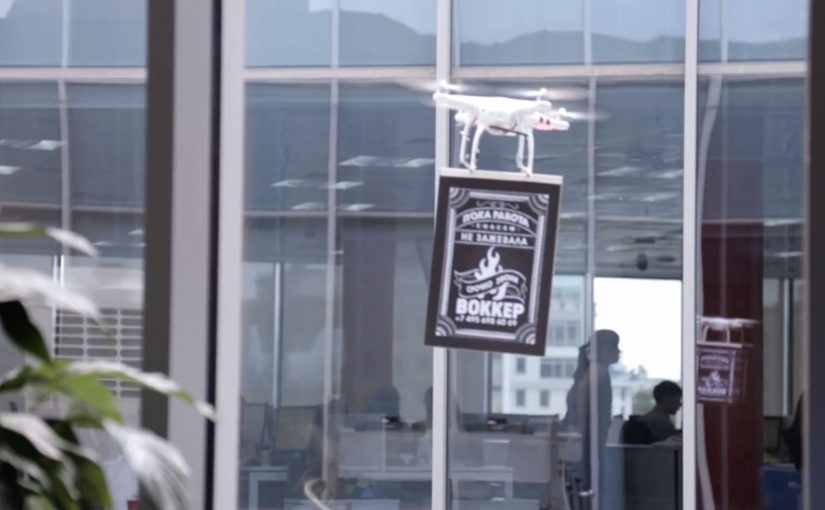
Drone-vertising: Wokker and Cup Noodles

Unmanned aircraft have been used to carry out military strikes, to film weddings, and are also being explored for product delivery from companies like Amazon, Netflix, Francesco’s Pizzeria and Flower Delivery Express.

Until the legalities of commercial use are cleared up by local governments, companies in Russia and Brazil go ahead with what are described as early drone-vertising campaigns. Drone-vertising is using drones as moving media, either by flying banners through high-attention locations or by staging a delivery moment that doubles as a filmed ad.

Airspace as a new media channel

The mechanism is straightforward. Put a message or a product on a drone. Fly it where the audience is already looking. Capture the moment on video so the stunt can travel beyond the people who witnessed it live. Because the drone enters an uninvited sightline, it creates surprise, which is why the filmed moment gets retold and replayed.

In dense urban districts where attention is scarce, brands keep searching for formats that create surprise without requiring new screen time.

The real question is whether the brand promise stays clear when the novelty fades, or whether the drone becomes the headline and the product becomes the footnote.

Russia

As ordinary advertising channels continue to be congested, Russian creative agency Hungry Boys uses drones to advertise noodle company Wokker.

Wokker banners are attached to drones and flown around high-rise business buildings in Moscow’s financial district, drawing the attention of office workers as the drones pass windows. The campaign is described as driving deliveries in the targeted area up by 40%.

Brazil

Cup Noodles, the instant ramen noodles snack from Nissin-Ajinomoto, is promoted in Brazil with drones dressed as cows, chickens, corn cobs and shrimps. A two-and-a-half minute film created for the brand’s online campaign uses drones to take Cup Noodles to surfers, skateboarders and highline walkers as they practise their sport.

Why drone-vertising gets noticed

This format works because it breaks the normal media contract. People do not expect ads to appear outside their window, and they do not expect “delivery” to arrive from above. The novelty is doing most of the work. The brand then benefits from the retelling, because the story is easy to summarise and the footage is inherently watchable. Drone-vertising is only worth doing when the brand meaning is unmistakable and the safety story is boring.

Extractable takeaway: If you are betting on a new attention surface, make the idea legible in one glance and one sentence. The stunt must communicate the category benefit instantly, otherwise the drone becomes the headline and the brand becomes a footnote.

Rules worth stealing before you fly ads

  • Target a context with a clear “why now”. Wokker links to lunch-time office hunger. Cup Noodles links to being hungry while out doing sport.
  • Design for cameras as well as eyeballs. You need a clean visual read at distance, plus a story that survives reposting.
  • Keep the stunt safe and bounded. The moment you look reckless, the conversation turns from clever to irresponsible.
  • Prove impact carefully. If you cite uplift, be ready to explain what changed, where, and for how long.

A few fast answers before you act

What is drone-vertising?

It is using drones as moving media. Either by flying banners through high-attention locations or by staging a delivery moment that doubles as a filmed ad.

Why does it work particularly well near offices or public hotspots?

Because the audience is concentrated and the environment is predictable. A drone appearing in a controlled corridor creates surprise without needing people to opt in.

What is the biggest brand risk?

Safety and permission. If the flight looks uncontrolled or disruptive, attention quickly becomes negative and the brand is blamed for the intrusion.

How do you keep the idea from becoming “tech for tech’s sake”?

Tie the drone to a simple product truth that the audience recognises instantly, like lunch delivery urgency or on-the-go convenience, then make that truth the focus of the footage.

What should you measure before you claim “uplift”?

Define the exact area and time window the stunt covered, choose a baseline for comparison, and separate what changed because of the flight itself versus what changed because the filmed story spread online.
Volvo Trucks: The Hamster Stunt

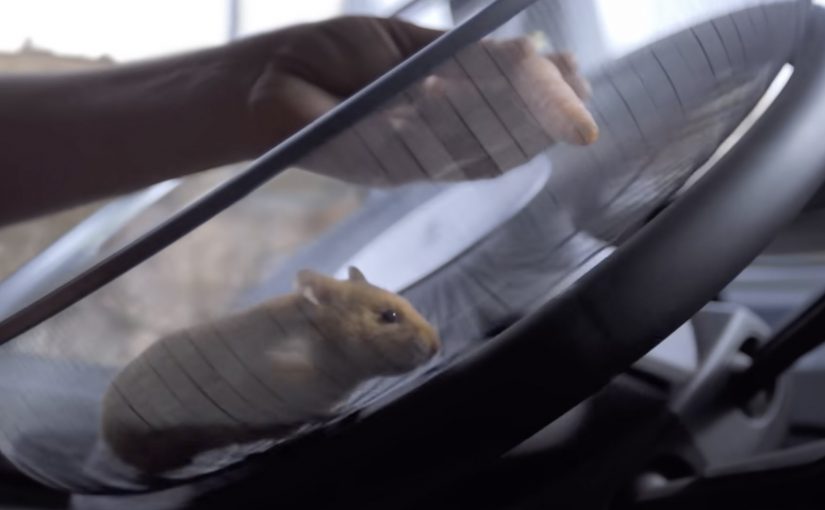
Brands everywhere are chasing branded content. Volvo Trucks picks a sharper route: it turns a technical feature into a spectacle by letting a hamster “steer” a Volvo FMX out of a quarry using Volvo Dynamic Steering.

The gag is simple to explain and hard to ignore. A hamster wheel is mounted to the steering wheel, and a precision driver handles pedals and safety while guiding the hamster with a carrot. The result feels like a ridiculous idea that somehow still proves something real.

When the product proof is the entertainment

Volvo Dynamic Steering is not an easy feature to dramatize in a way non-truck buyers want to watch. This film solves that by making “light steering” visually absurd, then grounding it with a credible live-test frame. A live-test frame is a visibly real setup that keeps the demonstration believable even when the idea is silly.

In global B2B and industrial marketing, this is a clean blueprint for turning an engineering benefit into mass-reach content without losing the proof.

The real question is whether your product proof can be watched by people who will never buy the thing.

B2B brands should bias toward demos that carry the claim in the image, not explanations that require patience.

Why the hamster works as a device

The hamster is not just cuteness. It is a proxy for “minimum force.” If a tiny animal can move the wheel, the viewer instantly understands the claim before any explanation arrives.

Extractable takeaway: If you can embody your benefit in a single visual proxy, the claim lands before the explanation.

That is the key branded-content trick: build an image that carries the message on its own, then let the technical story catch up afterwards.

Reported reach, and the deeper lesson

Volvo Trucks reports the film drew millions of views quickly, and industry press echoes that early momentum. The bigger point is not the number, it is the audience expansion. A feature aimed at fleet operators becomes something broadly watchable because the demonstration is designed like a story, not a spec.

What to copy from the hamster stunt

  • Turn the benefit into a visual impossibility that still stays true.
  • Keep the proof readable without narration, the image should carry the claim.
  • Use a live-test frame so entertainment does not undermine credibility.
  • Design a one-sentence retell, “a hamster steers a truck” is instant recall.

A few fast answers before you act

What feature is Volvo proving here?

Volvo Dynamic Steering, positioned as making the steering feel unusually light and precise even in demanding conditions.

Is the stunt “real” or purely visual effects?

It is presented as a controlled live test executed in a managed environment, with safety handled by a precision driver while the hamster influences the steering wheel.

Why does this count as strong branded content?

The product truth is inseparable from the story. The plot only works because the feature exists, which makes the content feel earned rather than bolted on.

What makes this approach effective for B2B brands?

It recruits non-buyers as viewers. When the demo is entertaining on its own, reach grows beyond the immediate purchase audience, while still reinforcing the proof.

What is the biggest risk when copying this pattern?

If the spectacle overwhelms the claim, people remember the stunt but not the feature. The visual must map cleanly to the benefit.

Mazda2: Smooth Parking

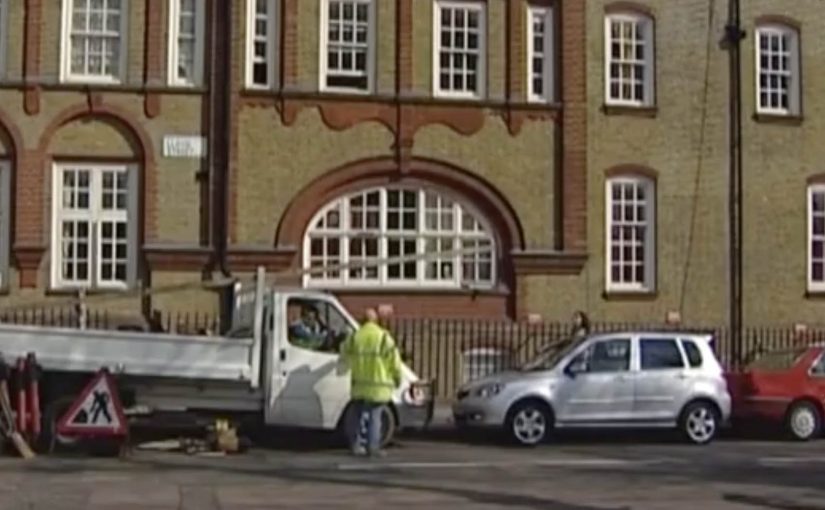
A woman pulls up in her Mazda2 and faces a classic “you’ll never fit in there” moment. Two road workers have effectively turned a parking bay into a narrow trap, and the smirk on their faces says the punchline is supposed to be on her.

Then the ad flips the frame. Instead of forcing the expected struggle, she reverses, lines up, and uses the planks like ramps, smoothly climbing over the obstacle and landing the car where it needs to be. The joke is still there, but the target changes.

How the trick is staged

The execution is built as a micro-story with one clear constraint. A “too-small” space, onlookers who provide the social pressure, and a single move that resolves the tension in an unexpected way. The product benefit is not explained. It is demonstrated.

In consumer marketing for everyday mobility products, the fastest way to prove a benefit is to stage it in an instantly understood micro-situation.

The real question is whether your benefit can be proven in a single, instantly legible move.

Why it lands

It borrows a familiar stereotype as bait, then cashes out with a clean reversal. The audience is guided to predict failure, so the successful outcome feels sharper, funnier, and more shareable than a standard capability demo.

Extractable takeaway: If your category is full of “feature talk”, build a single-scene proof that forces a prediction, then overturn it with one unmistakable visual action. When the viewer can explain the benefit in one sentence without pausing the video, you have a story that travels.

What Mazda is really selling here

This is not a parking tutorial. It is a personality claim delivered through performance. “Small car agility” becomes a social moment. The driver keeps composure under judgement, and the car becomes the quiet accomplice that makes the comeback possible.

Steal the one-scene proof technique

  • Engineer a single constraint. Make the situation legible in two seconds, so the viewer immediately forms a prediction.
  • Let the crowd voice the tension. Onlookers, comments, or disbelief create stakes without exposition.
  • Resolve with one clear move. One action that visually “proves” the benefit beats a stack of claims.
  • Make the twist retellable. If someone can summarise it in a line, it is easier to forward.

A few fast answers before you act

What is “Smooth Parking” in this context?

It is a short Mazda2 film that sets up an apparently impossible parking space and then resolves it with a surprising manoeuvre that makes the car’s agility feel real rather than advertised.

Why use a stereotype at all?

Because it accelerates comprehension. The risk is obvious. You need the payoff to clearly reverse the target, otherwise you reinforce the stereotype instead of undermining it.

What makes this “viral-ready”?

A tight setup, a fast twist, and a visual finish that does not require language or brand knowledge to understand. People share it as a punchline, and the product benefit comes along for free.

How do you apply this outside automotive?

Choose one everyday friction point your audience recognises instantly. Add a single constraint that feels unfair. Then show your product resolving it with one unmistakable action, not a list of features.

How do you avoid the twist feeling like a gimmick?

Make the setup and constraint honest, then let the resolution be a single action that cleanly proves the benefit, not extra explanation.