
ASICS: Run With Me at the Gold Coast Marathon

ASICS: Run With Me at the Gold Coast Marathon

ASICS has a fine history not just in running sports, but also in the innovative use of technology. So at the Gold Coast Airport Marathon, a grueling 42km run, they created a powerful demonstration of running and technology by connecting runners with their supporters like never before.

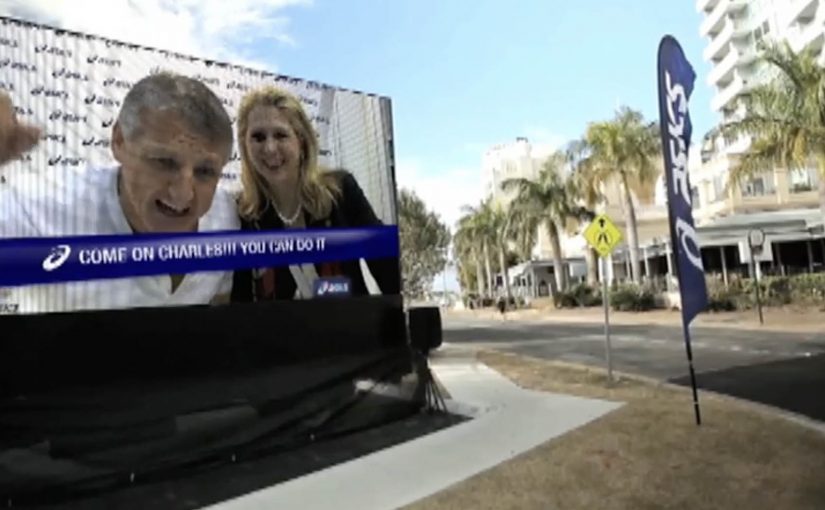
Runners were given RFID timing chips to connect their run with Facebook. RFID, or radio-frequency identification, lets a small chip be detected automatically at checkpoints. This allowed them to automatically post pre-written messages at checkpoints, along with distance run and remaining, live timing, and location data plotted on Google Maps. At the same time, friends and loved ones were able to upload video messages of support, which were triggered and played as runners approached giant screens along the course.

A marathon that posts for you, at the moments that matter

The clever part is not “Facebook integration.” It is the timing. Checkpoints are already emotional beats in a race. Effort spikes. Doubt kicks in. Motivation dips. By tying updates to those exact points, the campaign makes every status feel earned, and every reply from friends feel relevant. The real question is whether you can make that support arrive inside the effort, not after the finish.

Extractable takeaway: Automate sharing only at moments participants already care about, so updates feel like earned progress and support can land at the exact point it matters.

RFID is doing quiet work here. It removes manual posting friction, and it makes the updates feel live rather than staged, because the data is anchored to race progress.

In large-scale sports events, real-time data and social signals can turn spectators into an active support system that changes how the race feels while it is happening.

Support that shows up on the course, not just in the comments

Most event social campaigns keep encouragement on a screen at home. This one brings encouragement into the race environment. The supporter uploads become on-course content, triggered when the runner is near, so the message arrives in the body, not just in the feed.

That shift matters. It turns “cheering” from a passive gesture into an intervention, and it gives runners a reason to care about the system mid-race, not only after finishing. This kind of activation is worth building only when the trigger system is reliable enough to feel invisible to the runner.

Reported outcomes, and what they imply

The campaign reported that 2,000 runners, described as 15%, connected their run with Facebook. It also reported 6,000 messages of support uploaded, 1,000 video messages created at the event, and 35% of runners receiving video support. Additionally, it reported thousands of unique status updates from inside the race, 25,850 unique visitors to the microsite, and tens of thousands of return comments from friends and family.

Even if you strip the numbers back, the strategic takeaway is clear. When you connect performance data to social response, you create a loop. Effort generates updates. Updates generate support. Support reinforces effort.

Steal this support-loop pattern for your next event

  • Attach the experience to natural moments. Checkpoints, milestones, and thresholds beat “post whenever you want.”
  • Automate the boring part. If the participant must manually publish, most will not.
  • Bring support into the physical environment. On-course screens, audio, or wearable prompts outperform distant encouragement.
  • Give supporters a real role. Uploading a message is simple, but it feels meaningful when it is triggered at the right time.

A few fast answers before you act

What is the core mechanic of “Run With Me”?

RFID-triggered race checkpoints publish pre-written social updates, while supporter videos are triggered on giant screens as runners approach.

Why does RFID matter here?

It makes the experience hands-free. The system captures progress automatically, so runners do not have to stop or think about posting.

What makes the supporter videos more powerful than normal social comments?

They appear in the runner’s world during the effort, not after it. Timing plus proximity turns a message into motivation.

What is the biggest risk when building this kind of live experience?

Reliability. If triggers misfire or content appears late, the emotional payoff collapses. The tech has to feel invisible and dependable.

How do you measure success beyond impressions?

Opt-in rate, supporter participation rate, trigger completion rate, and whether the loop changes behavior, for example more mid-race engagement and higher repeat participation intent.
Happy Holiday Videos 2012: Agency Stunts

Happy Holiday Videos 2012: Agency Stunts

Welcome back. Hope everyone had a great holiday season. Now for a great start to 2013.

Taking off from my last post, here are a series of holiday action videos created by ad agencies around the world in their lead up to Christmas 2012. By “holiday action videos,” I mean greetings built around a simple interaction or trigger with a visible payoff.

Holiday greetings that behave like products

The mechanism across this set is consistent. Use the “holiday card” moment as permission to ship something people can experience, not just watch. A hacked player, a tweet-triggered donation, a synchronized “orchestra,” a physical gag product.

In global agency culture, the holiday card is a low-risk moment to test interactive mechanics and craft that can later show up in bigger client work.

Why this format keeps working

These pieces earn attention because they trade greeting-card sentiment for an observable action. The real question is whether your greeting demonstrates a capability people can experience, not just a sentiment they can scroll past. You should treat the holiday card as a tiny product launch, not a branded message. The viewer is not only receiving wishes. They are triggering something, learning something, or being surprised by a mechanism that is simple enough to retell.

Extractable takeaway: If you want something to travel during peak-season noise, design a one-step interaction with a visible payoff, and make the payoff describable in a single sentence. That is retellability, meaning a friend can summarize it in one sentence.

Maurice Lévy’s Digital Wishes by Publicis Groupe

Maurice Lévy, the chairman and chief executive of Publicis Groupe, traditionally records a holiday greeting-card video. This year, through a special deal with YouTube, Publicis modified the function buttons of the video player and embed tricks into what seems like another long, boring address by an ad industry veteran.

TwinterWonderland by 360i

To celebrate the arrival of the holiday season and provide assistance to those affected by Hurricane Sandy, 360i wanted to do something big. For every #TwinterWonderland tweet they received, 360i donated $5 to an aid organization helping with the post-Sandy cleanup effort.

25th Anniversary Holiday CompuCard by TBWA\TORONTO

To celebrate their 25th anniversary, TBWA\TORONTO brought in their digital expert from 1988, who then, through an e-card, tried to capture the spirit of their past along with their digital future.

Buzzed Buzzer by Havas Worldwide Chicago

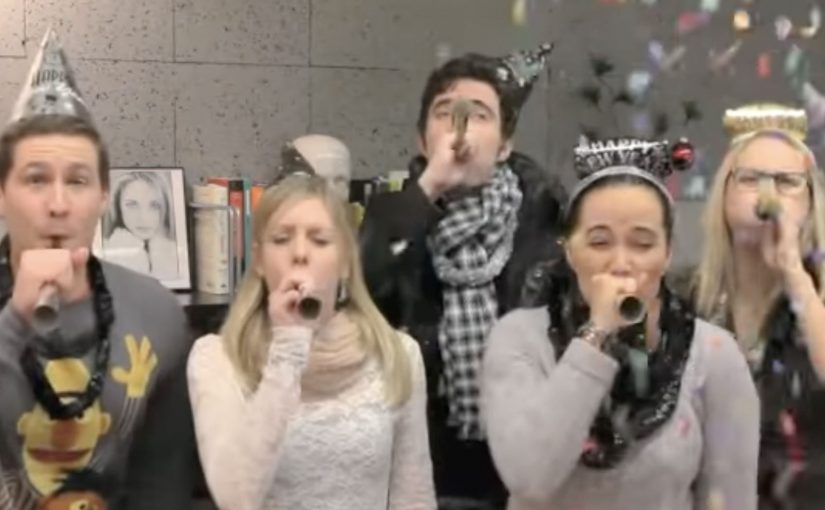
The first New Years Eve noise maker that only works when you’re drunk.

Christmas carol played on food by FullSIX Spain

To wish happy new year to customers and friends, FullSIX transformed typical Spanish Christmas food into a carol-playing piano.

Click here to watch video on the AdsSpot website.

The Snow Machine by Weapon7

Passers-by were invited to Tweet #snow to @thesnowmachine Twitter account. For every tweet received, the machine gave ten seconds of snow flurry. The event ran all day, was seen by thousands of people and generated over one thousand tweets.

Stealable patterns for next year’s greeting

  • Give the audience one trigger. One hashtag, one button, one simple mechanic.
  • Make the payoff visible. Something changes immediately, on-screen or in the real world.
  • Design for retellability. If the idea cannot be summarized in one sentence, it will not spread.
  • Let craft do the selling. Use the holiday excuse to demonstrate capability, not just sentiment.

A few fast answers before you act

What makes “holiday action videos” different from normal holiday ads?

They are built around a visible action or interaction. The greeting is the excuse. The mechanism is what people experience, talk about, and share.

Why do agencies use holiday cards as a playground for experimentation?

The stakes are lower and the audience is receptive, so it is easier to try unusual formats, technical tricks, and interactive mechanics that would be harder to justify elsewhere.

What is the common mechanism across the strongest examples?

One clear trigger and one clear payoff. A hacked player that surprises you, a tweet that causes a donation, a simple “instrument” that performs when activated.

How do you keep it from feeling like a gimmick?

Anchor the interaction in a human reward. Delight, generosity, togetherness, or a simple shared joke. Then keep friction low so the idea survives first contact.

How do you test retellability before you publish?

Ask someone outside the project to explain the idea back to you after a 10-second description. If they cannot say the trigger and payoff in one sentence, simplify the mechanic.