Burger King Burn that Ad

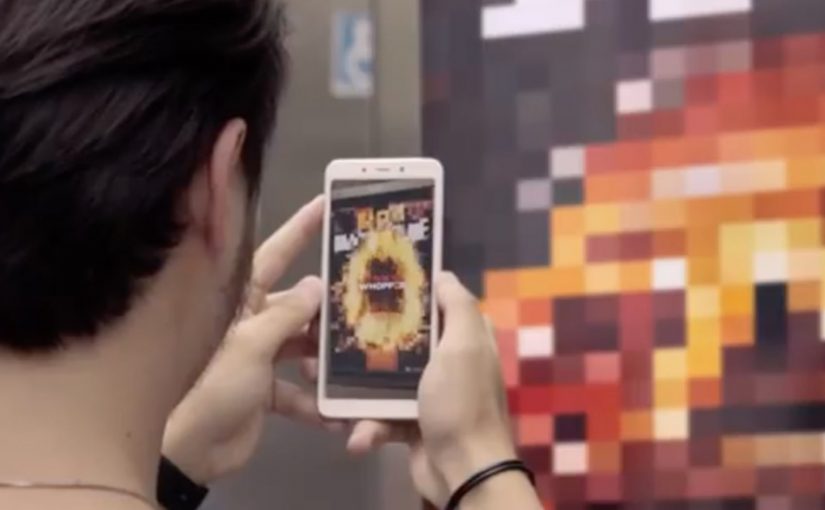
In Brazil, Burger King and ad agency David SP use augmented reality to “burn” competitors’ ads through consumers’ mobile phones. The reward is simple and immediate. Participate, and you earn a free Whopper.

Burger King expects to give away 500,000 Whoppers through the promotion, pushing more people to use Burger King Express, the service that lets customers pre-order food for pickup.

How “Burn that Ad” works

The mechanic turns rival advertising into a trigger. You point your phone at a competitor’s ad, the experience “burns” it in AR, and the payoff is a Whopper coupon. It is a direct, product-first incentive tied to a single action.

Why the reward is the strategy

This is not a brand-film play. It is a behavioural exchange. The customer does something specific in the moment, and Burger King pays them back with something they value immediately. That makes participation scalable beyond the novelty of AR.

The operational goal: Burger King Express

The giveaway is not only about footfall. It is designed to drive adoption of pre-order pickup via Burger King Express. The campaign builds a reason to try the service, not just the product.

What to steal

  • Turn a competitor’s presence into your acquisition trigger, without relying on complicated steps.
  • Keep the action simple and the reward tangible.
  • Link the incentive to an operational behaviour you want to scale, such as pickup pre-order adoption.

A few fast answers before you act

What is “Burn that Ad”?

A Burger King Brazil promotion that uses augmented reality to “burn” competitors’ ads on mobile phones and reward participants with a free Whopper.

What is the incentive?

A free Whopper, delivered via the promotion’s reward mechanic.

How many Whoppers does Burger King plan to give away?

500,000.

What business behaviour does it push beyond the giveaway?

Using Burger King Express to pre-order food for pickup.
Burger King Truckvertising

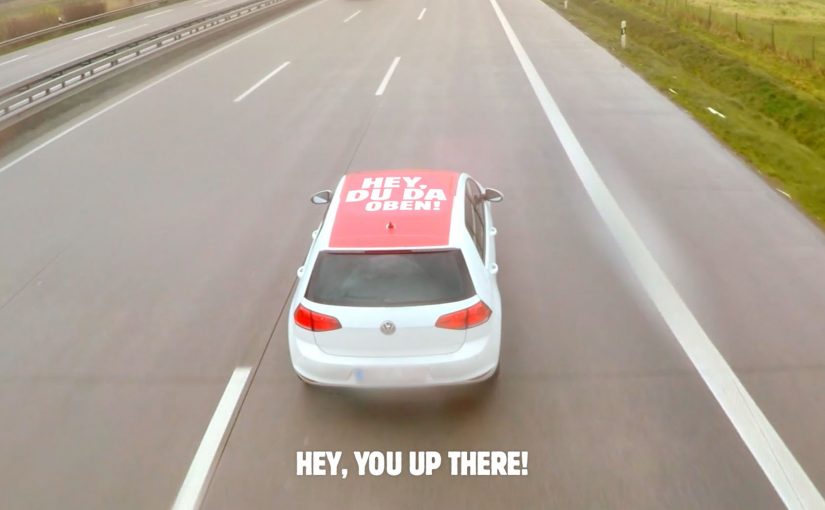
Due to strict laws, reportedly around 13,000km of the German motorway network is ad-free. So to convince truckers in Germany to buy freshly grilled Whoppers, Burger King and agency Grabarz & Partner create ads that only truckers can see. The ads sit on the roof of multiple cars that take turns overtaking trucks.

The cars do not just show an ad. They run a sequence of messages that feels like a conversation from the road:

  • “Hey, you up there!”
  • “You look hungry!”
  • “Why don’t you try out the Whopper?”
  • “Fresh and flame grilled”

Once the first few cars get the truckers’ attention, the remainder guides them to the next Burger King, turning the motorway into a moving funnel:

  • “If yes, then wink”
  • “Follow me to Burger King”

As a result, many truckers give in to temptation and follow the cars to the next XXL Burger King Drive-In.

The constraint that forces the creativity

The starting point is the limitation. Large parts of the German motorway network are ad-free, so the classic roadside billboard play is unavailable at scale.

The execution is “roof media” plus choreography

Burger King turns overtaking cars into a media surface and a delivery system. Roof placements ensure the message is visible from the truck cab. A rotating set of cars keeps the sequence going long enough to land.

The craft is the choreography. It is not one clever line. It is a paced interaction that escalates from attention, to appetite, to direction.

Why this works as shopper marketing in motion

This is direct response built into a live environment. The target is already in a vehicle. The call-to-action is a drive-in. The next best action is physically nearby, and the message literally leads the way.

It also respects context. Truckers are not asked to scan, click, or search. They are asked to notice, react, then follow.

What to steal

  • Start with a hard constraint and treat it as a design brief, not a blocker.
  • Use a format the audience cannot ignore in their context, in this case overhead visibility from a cab.
  • Build a sequence that moves from attention to action, not a single punchline.

A few fast answers before you act

What is “Truckvertising” in one line?

Car-roof ads overtake trucks on ad-free motorways, deliver messages to truckers, then guide them to the next Burger King drive-in.

Why put the ad on the roof?

Because the goal is visibility from the truck cab.

What is the conversion mechanic?

A staged sequence of overtaking cars that gets attention, then provides directions to the next Burger King.

What is the underlying business aim?

To drive immediate, local store visits and Whopper purchase intent from a high-propensity audience in transit.

Burger King: Whopperface

Proof marketing at the counter, not in a tagline

In fast-food marketing, “fresh” claims are easy to say and hard to believe. Burger King’s Whopperface is a clean example of turning a claim into visible proof inside the restaurant.

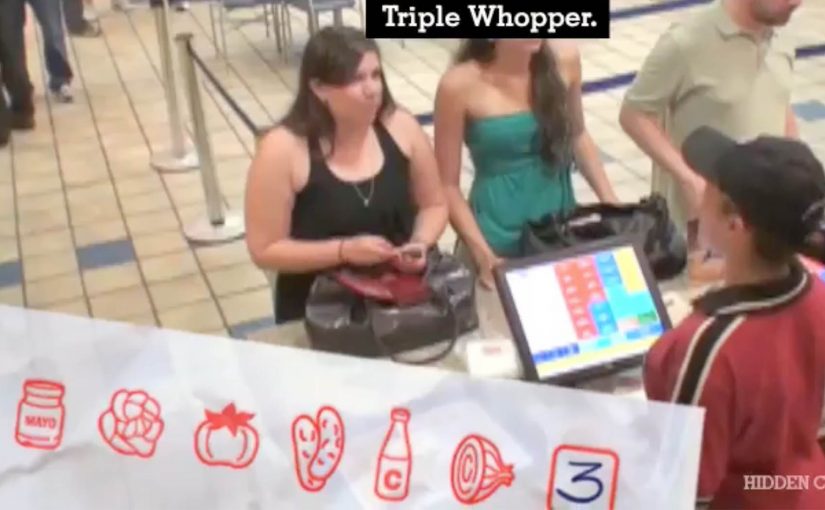
One cashier, one hidden cam, one printer. That is all Ogilvy Brasil needed to prove that Burger King sandwiches are made to order.

When a customer ordered a Whopper, they took a picture without anyone noticing. Then the customer got their freshly made sandwich with their face on it. Burger King proved that each sandwich is unique and made to order for each customer.

How Whopperface created “made to order” evidence

The mechanism is simple. Capture identity at the moment of order, then attach it to the product that comes out of the kitchen.

The hidden camera took the photo. The printer produced the personalized output. The handoff at the counter delivered the proof. The customer did not just hear “we make it fresh”. They received a physical, personalized marker that could only exist if the sandwich was made for them in that moment.

Why it lands psychologically

People trust what they can verify.

A customized face print is not a vague reassurance. It is a unique token. It signals individual attention and removes doubt about whether the item was pre-made. It also triggers a social instinct: if you receive something with your identity on it, you are more likely to show it, talk about it, and remember it.

The business intent behind the stunt

The intent was to rebuild credibility around freshness and ordering, using retail experience as the media channel.

Instead of spending budget repeating a claim, Burger King invested in a moment that created both belief and shareable content. The proof lived in the customer’s hands, and the story traveled naturally from there.

What to steal from Whopperface

  • Turn claims into artifacts. If you want belief, create something physical that acts as evidence.
  • Place proof at the point of truth. The counter is where doubt happens. Solve it there.
  • Use personalization as verification. Identity markers make “made for you” tangible.
  • Keep the system minimal. Simple setups scale. One camera, one printer, one process.

A few fast answers before you act

What was Burger King’s Whopperface?

A retail stunt where customers received their freshly made sandwich with their face printed on it, proving the order was unique and made specifically for them.

What was the core mechanism?

A hidden camera captured the customer at order time, and a printer produced a personalized output that was attached to the fresh sandwich at handoff.

Why does this prove “made to order” better than a claim?

Because it creates a unique, verifiable artifact that can only exist if the sandwich was produced for that specific customer in that specific moment.

What business goal did it support?

Increasing trust in freshness and differentiation by turning the restaurant experience into proof and shareable content.

What is the main takeaway for other brands?

If trust is the barrier, design a simple proof mechanism that customers can see, hold, and share.