Nike Football: The Last Game

Nike Football: The Last Game

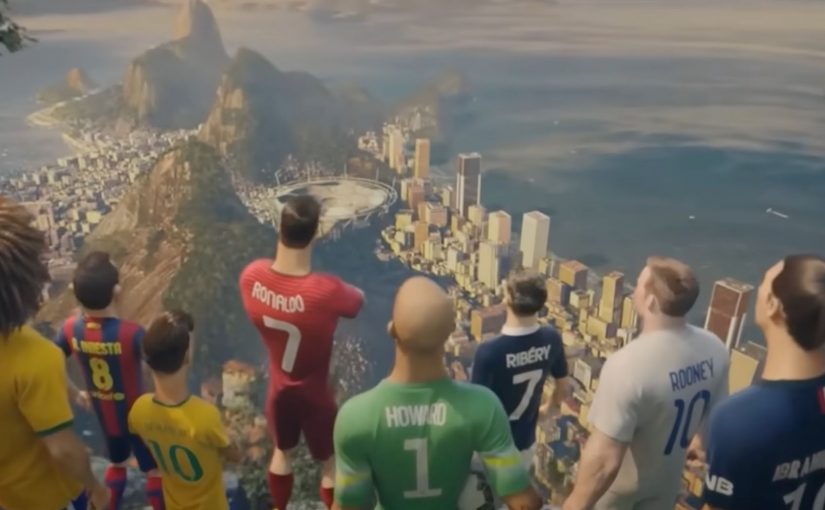
In a build up to the first match of the 2014 FIFA World Cup, Nike Football released a five minute animated film that features some of the world’s greatest footballers on a mission to save football from the hands of a villainous mastermind, The Scientist.

In a future where brilliant football has ceased to exist and the game has become almost extinct, Brazilian legend Ronaldo (O Fenómeno) decides enough is enough and goes on a mission to reignite the game with brilliant football with the help of a re-assembled group of the world’s most brilliant players.

In the final minutes of the film, Cristiano Ronaldo, Wayne Rooney, Neymar Júnior, Zlatan Ibrahimović, Andrés Iniesta, David Luiz, Franck Ribéry, Tim Howard and Ronaldo (O Fenómeno) are seen battling the “perfect” football clones in a winner take all match.

How the plot carries Nike’s platform

The film pits “brilliant football” against a future of optimized, risk-free play, so “Risk Everything” reads like a choice between creativity and extinction. Here, a brand platform means the recurring campaign idea that frames the work.

In global tournament marketing, this kind of work competes with entertainment, not other ads.

The real question is how you turn a tournament moment into a story people choose to watch and share, even when they do not care about the sponsor.

Why this story structure is so effective

By giving creativity a face (the players) and safety a face (The Scientist and his clones), the film turns an abstract brand message into a clear, watchable conflict.

Extractable takeaway: If your platform is an attitude, dramatize it as a choice with consequences, then let the audience feel the outcome instead of explaining it.

  • It turns a brand platform into a myth. “Risk Everything” translates naturally into a fight for football’s soul.
  • It uses a clear villain to sharpen the message. The Scientist represents control, safety, and sameness. The players represent creativity and individual brilliance.
  • It makes the product message implicit. You do not need to be told that creativity wins. You watch it win.

What marketers can take from “The Last Game”

When you have a cultural moment as big as the World Cup, the winning work often behaves like entertainment first. Nike built a mini-universe with stakes, characters, and a simple conflict. That gives the story a reason to be shared beyond football fans, and it gives the brand a clear point of view without sounding like advertising.

  • Lead with stakes. Make the outcome matter before you ask anyone to share.
  • Give the tension a face. A clear opponent sharpens what you stand for, and what you stand against.
  • Keep the product message implicit. Show the behavior you want to reward, then trust viewers to connect the dots.

A few fast answers before you act

What is Nike Football “The Last Game”?

It is a five-minute animated film released ahead of the 2014 FIFA World Cup where Ronaldo (O Fenómeno) and a group of top players try to save football from The Scientist and his “perfect” clones.

Who are the players featured in the final match?

Cristiano Ronaldo, Wayne Rooney, Neymar Júnior, Zlatan Ibrahimović, Andrés Iniesta, David Luiz, Franck Ribéry, Tim Howard and Ronaldo (O Fenómeno).

What is the core idea behind the villain “The Scientist”?

He represents a future of controlled, optimized, risk-free football. The film positions creative, brilliant play as the antidote.

Why does this work so well ahead of a tournament?

It amplifies the emotion people already bring to the World Cup and gives them a shareable story that feels like culture, not a commercial break.

Happy Holiday Videos 2013: Agency Stunts

Happy Holiday Videos 2013: Agency Stunts

Welcome back. Hope everyone had a great holiday season. Now for a great start to 2014.

Taking off from my last post, here are a series of holiday action videos created by agencies around the world in their lead up to Christmas 2013. By “holiday action videos” I mean greetings built around a single visible action or interaction, not a passive message.

Holiday greetings that behave like products

The mechanism across this set is simple. Use the “holiday card” moment as permission to ship a stunt, an installation, or an interactive video that people can experience rather than merely watch.

In global agency culture, holiday cards are a low-stakes sandbox for experimentation that teams can ship fast and share widely.

The real question is whether your greeting can demonstrate something people can experience, not just a sentiment you can post.

This format is worth copying because it turns a seasonal hello into proof of craft.

Why this format keeps working

These pieces earn attention because they trade greeting-card sentiment for an observable action. Put in a coin. Click a button. Gather people in front of a webcam. One clear trigger, one visible result.

Extractable takeaway: If you want something to travel during peak-season noise, design a one-step interaction that produces a visible payoff, and make the payoff easy for someone else to describe in a sentence.

Christmas Chocolate Coin Factory by W+K London

Wieden+Kennedy London turned their Hanbury Street office window into a Christmas installation. Passers-by who inserted a 1 pound coin into Dan & Dave’s Chocolate Coin Factory activated the machine on display which then dispensed a special gold Belgian chocolate coin at the other end. All the money collected from this coin factory was donated towards building a new playground for Millfields Community School in Hackney, East London.

Disrupted Christmas by Holler

Holler, an agency from Sydney, created a live interactive installation that gave the general public a chance to disrupt the agency as it worked throughout the day. Electric Muscle Stimulation (EMS) units were hacked and hooked up to the Internet via IP cameras. Then key members of the agency were connected to the EMS units, and the Internet via a live stream. The public could then watch the agency staff online and instantaneously zap them at will with the click of a button.

For each disruption the agency donated $1 to The Factory, a local community centre with a long history of supporting socially and economically disadvantaged local residents.

The More the Merrier by Publicis Groupe

The Publicis Groupe was back again with another Maurice Lévy holiday video. This time they worked with DigitasLBi to create a video that uses your webcam to detect how many faces are watching together, and then adapts the video based on the number of viewers.

The Epic Christmas Split by Delov Digital

Delov Digital from Hungary used Chuck Norris to top Jean-Claude Van Damme’s epic Volvo split with the help of some serious digital enhancement.

A repeatable structure for next year’s greeting

  • Give the audience one trigger. A single action that anyone can explain and repeat.
  • Make the payoff visible. Something that changes on-screen or in the real world, immediately.
  • Design for retellability. If the idea cannot be summarized in one sentence, it will not spread.
  • Let craft do the selling. Use the holiday excuse to demonstrate what you can build, not just what you can say.

A few fast answers before you act

What makes “holiday action videos” different from normal holiday ads?

They are built around a visible action or interaction. The greeting is the excuse. The experience is the asset that people talk about and share.

Why do agencies use holiday cards as a playground for experimentation?

The stakes are lower and the audience is receptive. That creates room to try unusual formats, technical tricks, and interactive mechanics that would be harder to justify in a client campaign.

What is the common mechanism across the best ones?

One clear trigger and one clear payoff. Insert a coin and get a coin back. Click a button and something happens. Add more people and the video changes.

How do you choose a mechanic that people will actually try?

Pick a one-step trigger that feels effortless, then make the payoff obvious within seconds. If someone cannot explain both in one sentence, the interaction will not travel.

How do you keep it from feeling like a gimmick?

Anchor the interaction in a simple human reward. Delight, togetherness, surprise, or a small act of good. Then keep the mechanic effortless so the idea does not collapse under friction.

Recruitment: Pirates and Cyber Warriors

Recruitment: Pirates and Cyber Warriors

Since 2010 I have covered how different agencies around the world have been innovating with their recruitment campaigns. Now here are the latest two to join the list.

Two modern filters for hard-to-hire talent

Both ideas avoid broad “we’re hiring” noise. Instead, they place the offer inside the candidate’s real behavior, then use a simple mechanism to separate curiosity from capability.

The better recruitment move is to screen for behavior before you screen for polish.

The real question is not how to attract more applicants, but how to surface people whose behavior already matches the role.

Pirate Recruitment

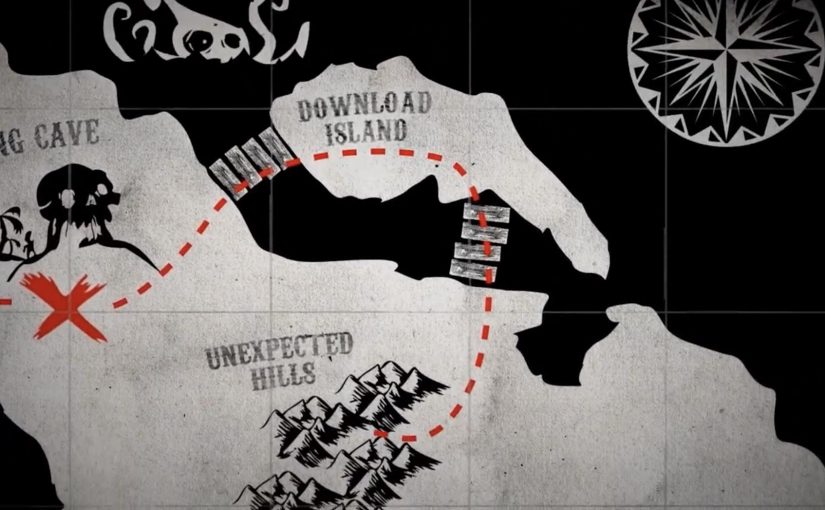
Young web designers often need expensive application suites to create, and many end up downloading them from illegal pirate websites. Ogilvy Brussels uses that insight by uploading a file that appears to be the “wanted” application suite.

When designers download it, they do not find the software. They find a stronger offer: a job opportunity, delivered right inside the moment of intent.

In competitive digital talent markets, the hardest problem is not reach but signal.

Why this one works

The delivery is the targeting. If you are not the kind of person who looks for pro tools, you never see it. If you are, the offer lands as a wink that proves the agency understands your world. Because the message appears inside a live tool-search moment, it feels relevant instead of interruptive.

Extractable takeaway: Put the offer where the target audience already goes to solve a real problem. The closer your message sits to a “work moment”, the higher the relevance and the lower the waste.

Cyber Warriors Challenge

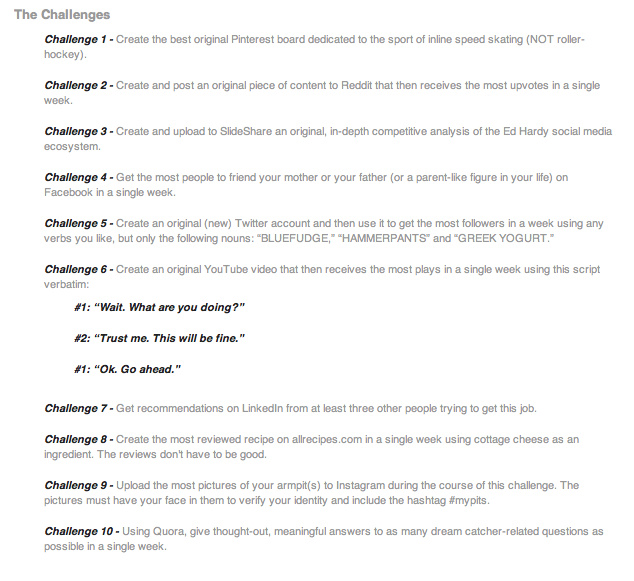
Wieden+Kennedy wants to recruit community managers for its client Old Spice, so it creates a deliberately crazy set of challenges. Candidates get five days to complete one or more tasks and submit proof of their exploits.

Cyber Warriors Challenge

Why this one works

It forces the right kind of effort. Community management is not just “posting”. It is speed, judgment, creativity, and resilience under ambiguity. A challenge-based entry filters for people who can actually do the work, not just describe it.

A small, time-boxed demonstration of the craft makes the screening signal stronger than a generic application form.

What to steal for your own recruitment

  • Recruit inside real behavior: distribute where the audience already acts, not where recruiters usually post.
  • Make the first step self-selecting: the wrong candidates should bounce naturally.
  • Keep the proof simple: “show me” beats “tell me”, but it has to be feasible in limited time.
  • Respect the audience: clever targeting works when it feels insightful, not exploitative.
  • Optimize for quality, not volume: fewer applicants can be a feature if they are better matched.

A few fast answers before you act

What is “pirate recruitment” in one line?

A job offer is packaged as a fake software download on pirate sites, so the right web designers discover the recruitment message at the moment they search for pro tools.

What is the Cyber Warriors Challenge?

A time-boxed set of tasks used as a screening step to recruit Old Spice community managers by requiring candidates to submit proof of real-world exploits.

Why do these tactics outperform standard job ads?

They target behavior, not demographics. Both approaches reach people in-context and require a small demonstration of motivation or capability.

What is the biggest risk when copying these ideas?

Trust and ethics. If the tactic feels deceptive, unsafe, or disrespectful to the audience, it can damage the employer brand faster than it attracts applicants.

How do you measure success?

Not by raw applicant volume. Track qualified applicants, interview-to-offer ratio, time-to-hire, and early performance or retention of hires sourced through the mechanic.