
Mercedes-Benz: Yes, A.I. Do

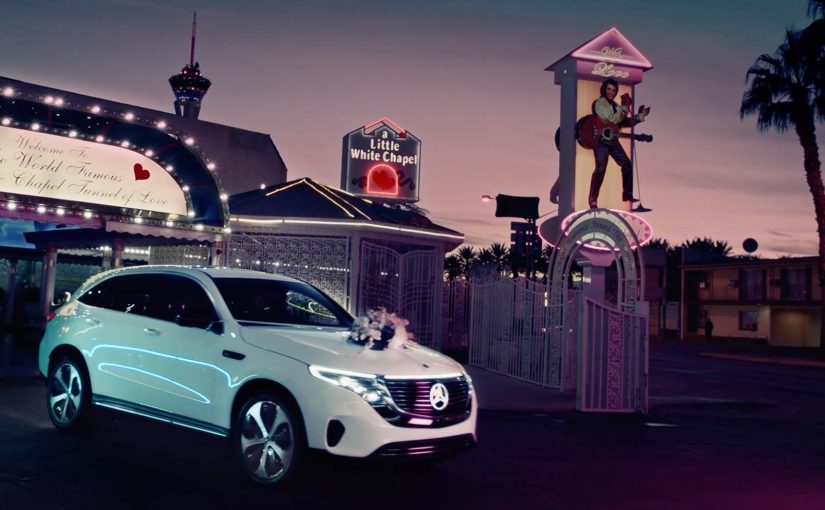
For the world premiere of their new Mercedes-Benz EQC at CES 2019 in Las Vegas, Mercedes transformed their new model into a wedding carriage. Four lucky couples were invited to test drive the new Mercedes-Benz EQC on the roads of Las Vegas and experience its special A.I. features first hand. In this context, “A.I. features” refers to the in-car intelligent functions Mercedes chose to demonstrate during the drive.

The real question is how you make a new, tech-heavy product feel experienceable in minutes, not explainable in slides.

Why this launch twist works

By wrapping a CES tech premiere in a wedding ritual and putting couples behind the wheel, Mercedes turns abstract capability into visible behavior. The ritual creates instant stakes and attention, so the A.I. moments are noticed as part of a real drive, not as claims.

Extractable takeaway: If your features are hard to describe, borrow a human ritual people already recognize so the experience carries the technology.

  • It turns a product reveal into a story. A “wedding carriage” reframes a tech premiere into an experience people immediately understand.
  • It makes A.I. tangible. Instead of describing features on a stage, it puts them into a real drive where reactions matter.
  • It earns attention without shouting. The setup is unusual enough to travel, while still keeping the car at the center.

In consumer-tech and automotive launches where attention is fragmented and skepticism is high, familiar rituals help audiences grasp “what is happening” before they judge “what it does”.

Steal the ritual frame for launches

Wrap a launch moment in a simple, human ritual. Then invite a small group to experience the product in-context so the story carries the technology, not the other way around.

  • Pick a ritual that already means something. Use a simple human frame to make the launch instantly legible.
  • Let real use do the persuading. Put the product into an in-context experience so reactions carry more weight than narration.
  • Keep the product as the stage. The theme should guide attention toward the product experience, not away from it.

A few fast answers before you act

What happened in the Mercedes-Benz “Yes, A.I. Do” activation?

For CES 2019 in Las Vegas, Mercedes used the EQC premiere as a wedding-carriage themed experience and invited four couples to test drive the car and experience its A.I. features first hand.

Why use couples and a wedding theme for a car launch?

It creates an instantly recognizable narrative frame, which makes the activation easier to remember and easier to share than a standard demo.

What is the main takeaway for product launches?

Give the viewer a clear story hook, then let the product prove itself through a real experience rather than through claims.

How do you keep a stunt from overshadowing the product?

Make the product the “stage”. The theme should guide attention toward the experience of the product, not away from it.
MINI: We Tow You Drive

Driving a MINI is addictive. Which is why drivers who test drive are more likely to buy one. So to get prospective customers to test drive, MINI decides to help drivers stranded by their own cars.

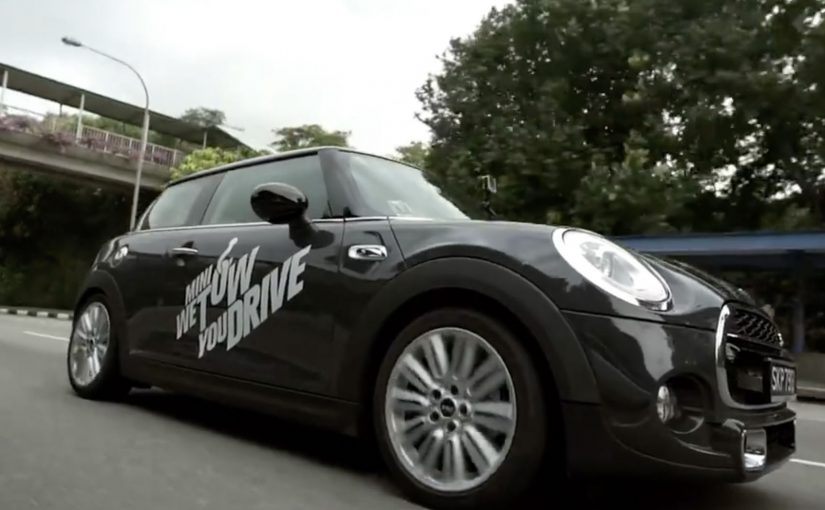
MINI partners with a tow service company and responds to breakdown calls in real time throughout Singapore. The campaign not only takes the test drive out of the showroom and onto the streets. It also turns an annoying situation into a pleasant surprise.

A test drive that arrives exactly when you need a lift

The mechanism is the point: instead of asking people to come to MINI, MINI shows up when a driver has an immediate mobility problem. The tow moment becomes the conversion moment, because the customer is already thinking about reliability, comfort, and what it feels like to be back in motion.

In urban automotive acquisition, the strongest test drives happen when the product solves a real, present problem, not when it is scheduled as a chore.

Why this is more than a stunt

This idea works because the brand is doing something useful first. The “surprise” is not a discount. It is relief. That usefulness makes the experience feel earned, and it also makes the story more shareable. Brands should earn attention by delivering utility before they ask for consideration. The real question is whether your operations can make the promise true in real time, not whether your creative can make it look clever.

Extractable takeaway: When your acquisition moment solves an urgent problem, the product benefit lands as lived proof, and the customer tells the story for you.

A similar play from Brazil

A Brazilian Chevrolet dealership in 2012 reportedly ran a very similar “breakdown to test drive” promotion in Brazil with the Chevrolet Cobalt.

What to steal from tow-to-test-drive

  • Move the product moment into real life. A test drive is more persuasive when it is embedded in a situation that matters.
  • Use real-time operations as marketing. The experience is the message when the service delivery is visible.
  • Turn frustration into gratitude. Solving a pain point creates a stronger memory than any feature list.
  • Design for talk value without forcing it. Talk value is the retellable detail someone repeats to friends. If the help is genuine, sharing happens naturally.

A few fast answers before you act

What is “We Tow You Drive” in one line?

A test drive activation where MINI partners with a tow service and turns real breakdown moments into an unexpected opportunity to drive a MINI.

Why is roadside assistance a smart acquisition moment?

Because the customer has immediate need. They are receptive to a solution and they feel the product benefit in the exact moment mobility is restored.

What is the main risk in copying this idea?

Operational failure. If response times are slow or the handoff feels messy, the “rescue” story flips into frustration.

How do you keep this from feeling opportunistic?

Lead with help, not pitch. The driver should feel rescued first, and only then invited to try the car, with an easy opt-out.

What is the most transferable lesson?

Stop treating test drives as appointments. Put the product into a real situation where it solves a real problem, and let the experience do the persuasion.

smart fortwo: parKING

Parking in the city is rarely fun, so BBDO Germany turns a regular test drive for the smart fortwo into an interactive parking game inspired by musical chairs.

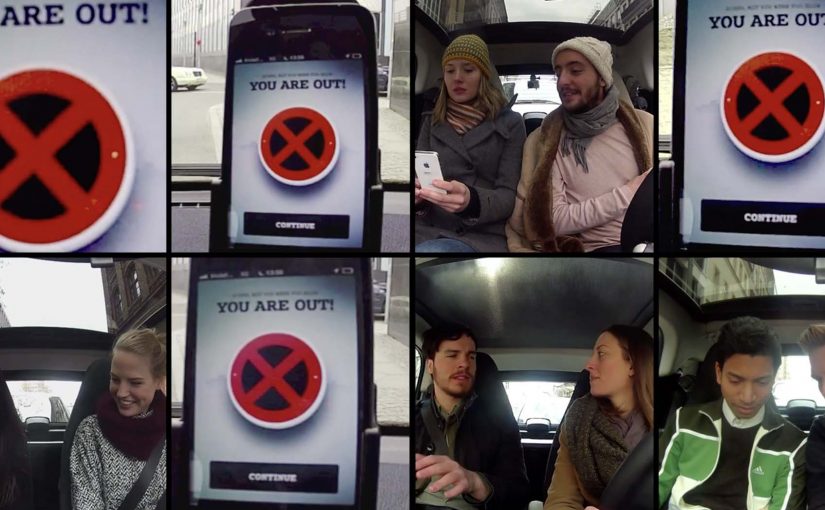
An iPhone app plays music and directs teams around central Berlin. When the music stops, teams have to find a parking spot immediately. The last team to park and verify their location with a photo upload is eliminated. The competition runs out of the smart Center Berlin, where eight teams battle to become Berlin’s first “parKING”. In this activation, “parKING” names the elimination-style parking race where the last team to park when the music stops is out.

How the game works as a test drive

The mechanism is simple. A timed audio cue creates urgency. GPS-style direction turns the city into the board. Photo proof keeps it honest. Underneath the playfulness, every round forces the product truth the brand wants to dramatize. In a dense city, a small car that can slip into tight spots changes the outcome. Because the win condition is parking fast in tight spots, the fortwo’s city-fit advantage shows up as a competitive edge.

In urban European mobility marketing, turning a functional advantage into a public game is a reliable way to make a test drive feel like entertainment rather than evaluation.

The real question is whether the rules make the product truth decide the winner, without narration.

For city-mobility brands, this rule-first approach beats a standard test drive because it turns a claim into observable proof.

Why it lands

It converts a daily friction into a competitive moment, then makes the proof visible. People do not need to be told that parking is painful. They already feel it. The activation reframes that pain as a challenge where speed, composure, and the vehicle’s city fit are the deciding factors.

Extractable takeaway: If your product benefit only matters in a real context, stage a rule-based experience that forces the context to happen. Then let the rules make the benefit obvious without narration or feature lists.

Steal the parKING activation pattern

  • Build the experience around one constraint. Here it is time pressure when the music stops. One constraint keeps the story legible.
  • Use verification that audiences trust. Photo proof is simple and public. It prevents the “this is fake” reaction.
  • Turn the environment into the media. The streets of Berlin are not a backdrop. They are the gameplay.
  • Make the rules do the branding. When the win condition is aligned with the product truth, the brand message arrives naturally.

A few fast answers before you act

What is parKING in one sentence?

It is a city-wide parking game that turns a smart fortwo test drive into musical chairs, guided by an iPhone app and enforced with photo verification.

Why does a game work better than a normal test drive here?

Because it creates stakes and a clear outcome. A standard test drive is private and subjective. A game produces winners, losers, and shareable proof.

What makes this feel “made for Berlin” instead of generic?

The rules depend on dense city parking reality. The city’s constraints are the point, so the activation feels native to the environment.

What is the main risk when brands copy this pattern?

Misaligned rules. If the game’s win condition does not directly demonstrate the product truth, you end up with a fun event that does not build the intended belief.

What is the minimum viable version of this mechanic?

A single timed cue, simple navigation to keep teams moving, and one proof step such as a photo upload. Strip everything else.