
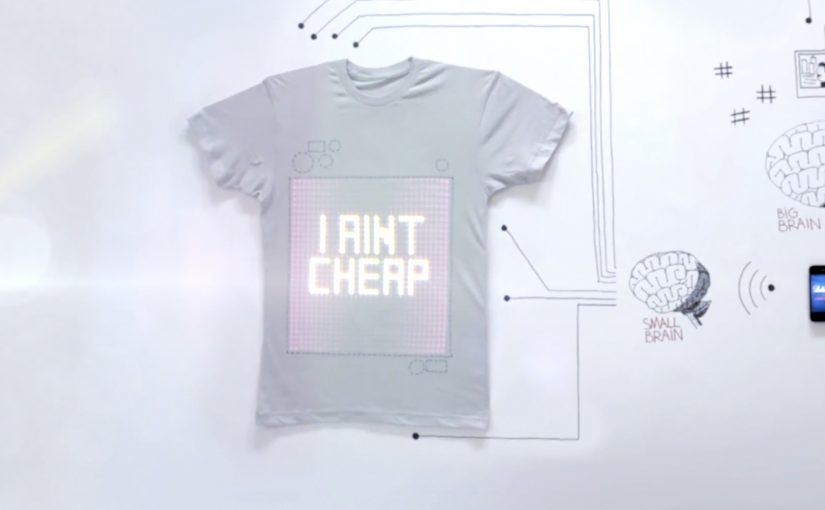
CuteCircuit x Ballantine’s: tshirtOS

A grey T-shirt looks ordinary until it lights up and starts broadcasting whatever you choose. Text. Images. A status. A moving graphic. Your chest becomes a screen.

London fashion house CuteCircuit, in collaboration with whisky brand Ballantine’s, introduces tshirtOS, described as a wearable, shareable, programmable T-shirt built for digital creativity.

Here is a short making-of film, described as having received over 500,000 views.

What tshirtOS actually is

At the center is a 32 by 32 grid of 1,024 LEDs on the front of the shirt, controlled via an app on your phone. The concept is expanded with built-in components including a micro-camera, a microphone, an accelerometer, and speakers. The result is a garment that can display and capture content, then push it outward as a wearable broadcast. Here, that means the shirt itself becomes the display surface and the phone becomes the control layer.

In global consumer culture, where mobile is the primary tool for self-expression, programmable wearables turn identity signals into a personal channel that travels with the wearer.

Why it lands

Most “future of fashion” ideas die because they look like tech demos instead of culture. tshirtOS works as a story because it keeps a familiar object, the plain tee, then adds one new superpower that everyone understands immediately. You can show something. Right now. In public. Because the output appears on a familiar object people already understand, the technology reads as communication before it reads as hardware. That instant legibility makes the idea feel less like a gadget and more like a new medium.

Extractable takeaway: If you are launching a new interface, anchor it in a familiar form factor, then make the first benefit obvious in one glance so the audience explains it for you.

What the brands are really betting on

The ambition is bigger than a one-off prototype. It is a new creative canvas that sits between fashion, social content, and live communication. Ballantine’s gets cultural adjacency to creativity and experimentation, while CuteCircuit extends its interactive fashion narrative into something that looks commercially repeatable.

The real question is whether a programmable garment can move from prototype theater into a repeatable medium people instantly understand and want to use.

The second film, “T-shirt of the future,” puts tshirtOS into a night-out storyline. It is described as having already generated over 1.3 million views.

What to steal from tshirtOS

  • Prototype the medium, not the message. When the platform is new, the product itself is the headline.
  • Design for instant comprehension. If it cannot be understood in a second, it will not spread.
  • Show it in culture, not a lab. A night out beats a spec sheet for explaining why it matters.
  • Make it programmable. Viewer control creates infinite variations without infinite production.

A few fast answers before you act

What is tshirtOS in one line?

A programmable T-shirt concept that uses a 32 by 32 LED grid and a mobile app to display and share digital content in real time.

What hardware is described as being inside the shirt?

A 1,024 LED grid plus components including a micro-camera, microphone, accelerometer, and speakers.

Why does a programmable shirt matter for brands?

It turns the wearer into a moving, controllable surface for expression, which can connect live moments to digital content without relying on external screens.

What is the main adoption barrier?

Practicality and cost. Washability, comfort, battery life, and price all determine whether it becomes a product or stays a prototype.

What is the strongest creative use case?

Live, personal expression in social settings, where instant visual output is part of the experience and the wearer wants to change what is displayed on the fly.

Goodyear Eagle F1 Test Drive

Goodyear does not try to “tell” you that a tire grips better. They stage a test drive that makes you feel it.

A customer walks into a Goodyear retail store expecting the usual sales conversation. Instead, a salesperson offers a test drive. The customer gets into a performance car with what looks like a normal driver. Then the drive turns into a controlled, choreographed, Hollywood-grade demonstration. The driver is a disguised stunt professional. The “test route” includes conditions that exaggerate what traction and control actually mean when things get unpredictable.

That single choice is the unlock. The product story is no longer a brochure. It is an experience.

Goodyear describes this execution as entertainment built around retail-store proof for its Eagle F1 Asymmetric All-Season line, often referred to as “Control Freak”. The point is not the stunt. The point is that grip becomes a felt outcome, not a claim.

The core move

Goodyear turns a retail test drive into entertainment that proves performance.

The real question is: how do you turn an “invisible” performance claim into belief at the moment intent is forming.

How the proof is staged

The stunt is engineered as a sequence of “proof moments” that escalate. The customer starts in a familiar retail context, then the driver introduces controlled chaos where traction and handling show up as outcomes you can feel. Because the demo is structured around cause and effect, the viewer does not need tire expertise to understand what is being proven.

In enterprise marketing organizations where retail, brand, and performance teams operate in different rhythms, retail-first proof content is one of the fastest ways to shorten the distance between awareness and intent.

Why this works so well

Most tire marketing struggles with the same problem. Performance is hard to visualize until you are already in a situation where you need it. “Better grip” sounds like every other claim until something slips.

Extractable takeaway: When a benefit is hard to evaluate in everyday life, do not buy more media to repeat the claim. Engineer one credible moment where the benefit becomes undeniable, then scale that moment through video.

This activation removes that abstraction by doing three things at once. Here, “activation” means a real-world, point-of-sale experience designed to prove one product claim with live human reaction and camera-ready structure.

  1. It makes proof visible.
    The story is designed around moments where traction and handling show up as a physical result. You do not need to understand tread compounds to understand what you just felt.
  2. It creates real human reaction.
    A staged product demo can feel like a stunt. A real customer reaction makes it believable, and shareable, at the same time.
  3. It anchors the brand in the point of sale.
    This is not a distant TV spot. The narrative starts inside the tire store. The purchase context is baked into the content, so the jump from awareness to intent is shorter.

The “retail first” storytelling pattern

A lot of experiential marketing starts with spectacle, then tries to connect it back to the product.

This one starts with the most ordinary commercial moment. A customer is about to buy tires. Then the experience expands outward. That sequencing keeps the brand motive clear. This is not adrenaline for its own sake. It is a dramatic way to demonstrate a benefit that is otherwise invisible.

If your category is dominated by price and familiarity, you win by making functional proof unignorable. You do not win by shouting “better” louder.

The deeper point

This is a category where functional proof usually loses to price promotions and familiarity. Goodyear flips that by turning functional proof into an event.

It is a reminder that “performance marketing” does not always mean dashboards and retargeting. Sometimes it means engineering a moment where the product benefit cannot be unseen.

What to borrow if you run marketing or commerce

  • Design for “proof moments,” not messages. Write down the one thing a customer must believe for your product to win. Then define the single moment they would need to see, feel, or experience for that belief to become non-negotiable.
  • Build the experience around the buying context. Placing the opening scene in a retail outlet removes friction. The story is already where the decision happens. For many categories, that is the most underrated advantage.
  • Treat the camera as a distribution strategy. The activation is designed to be filmed. Multiple angles. Real people. A sequence that escalates. In practice, the video becomes the scalable media layer on top of a physical stunt.
  • Make the customer the hero, not the brand. The most memorable part is not a feature list. It is the reaction. The brand earns attention by giving the customer an experience worth talking about.

A few fast answers before you act

What is the campaign actually demonstrating?

It demonstrates traction and handling by forcing controlled situations where grip and stability show up as physical outcomes, not claims.

Why stage it in a retail store instead of a track?

Because the purchase decision lives in retail. The story starts where intent is highest, so the proof is already in the buying context.

What makes this feel credible instead of gimmicky?

Real customer reactions plus a clear cause-and-effect link between the stunts and the product promise. The entertainment serves the proof.

What is the repeatable lesson for other categories?

Find your “invisible benefit,” create a safe way to make it visible through one engineered proof moment, then film it so it scales beyond the physical experience.

When does this approach fail?

When the experience is spectacle with no causal link to a product benefit. If you cannot explain what is being proven in one sentence, you are buying attention, not belief.

NAB: The Honesty Experiments

Australian bank NAB positions Australians as an honest lot, and argues they deserve honest credit cards to match. To bring that promise to life, they conducted a series of “honesty experiments” and published the results on YouTube.

Incorrect Change

Lost Wallet

Leaky Pockets

From a product claim to a public proof loop

The mechanism is a classic credibility builder. A “public proof loop” means turning a claim into a repeatable test, then publishing the outcome so the audience can judge it. Run simple real-world tests where people can choose honesty, film the outcome, then let the audience do the judging rather than the brand doing the telling.

In retail banking categories, trust is built faster through observable behaviour than through promises and price claims.

The real question is whether a trust claim can be converted into something people can judge for themselves.

For trust-starved categories, this is a stronger play than another round of product-feature messaging.

Why it lands

These films work because they invite a low-friction emotional conclusion. People want to believe the best of others, and the experiments are structured to deliver that relief, then attach it to the brand stance. The content is also inherently shareable because it is about character, not about banking mechanics.

Extractable takeaway: If you want to own “trust,” do not describe it. Show a behaviour that audiences can recognise as trust in action, then connect it back to the product promise in one simple line.

Then NAB escalates to “thank you” in real time

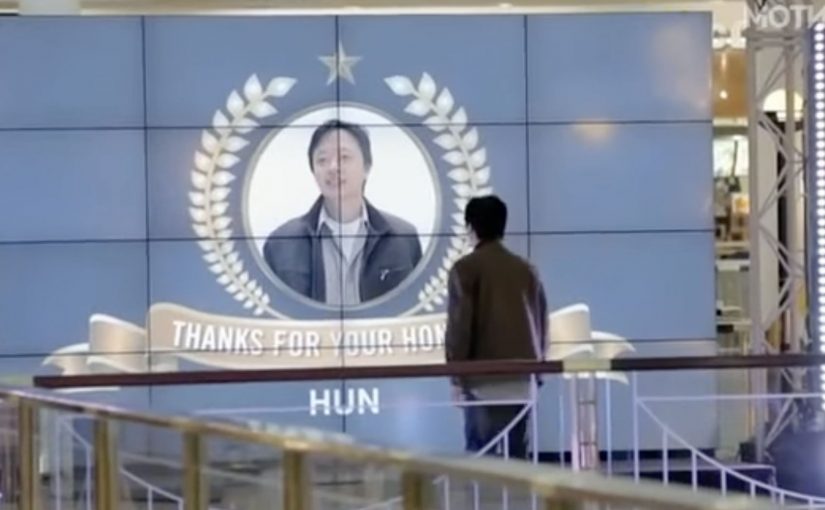
To say thanks in the biggest possible way, NAB followed the experiments with a real-time stunt that thanked honest passers-by immediately after they returned lost objects.

What the second phase adds that video alone cannot

  • Immediate reciprocity. Honesty is met with an instant reward, not abstract praise.
  • A bigger emotional beat. Surprise gratitude creates a stronger memory than “you did the right thing.”
  • Proof at street level. The brand shows up in the moment of integrity, not after the fact.

What to replicate from NAB’s honesty experiments

  • Pick one human truth. “Most people are honest” is clearer than a bundle of values.
  • Design the choice point. The story lives in a single decision. Keep it simple and legible.
  • Let people self-identify. The viewer should be able to imagine themselves in the situation.
  • Add a second act. If phase one proves the belief, phase two can reward it and deepen the brand role.
  • Protect credibility. Be transparent about rules and ensure the reward does not feel staged or selective.

A few fast answers before you act

What are the “honesty experiments” in one sentence?

A set of filmed, real-world tests where strangers can choose to act honestly, used to support NAB’s “honest credit cards” positioning.

Why do social experiments work for trust-based brands?

They replace claims with observable behaviour. Viewers decide what the outcome means, which feels more credible than advertising language.

What does the real-time thank-you stunt add?

It turns the brand from narrator into participant, rewarding honesty immediately and creating a stronger emotional memory.

What is the biggest risk with this format?

Credibility erosion. If viewers suspect manipulation, selective editing, or unclear rules, the trust message can backfire.

What should you measure beyond views?

Brand trust lift, message association with the product, sentiment, share rate, and whether the work changes consideration versus competitors in the same period.