
Beaming Rocket: LG MiniBeam Street Projections

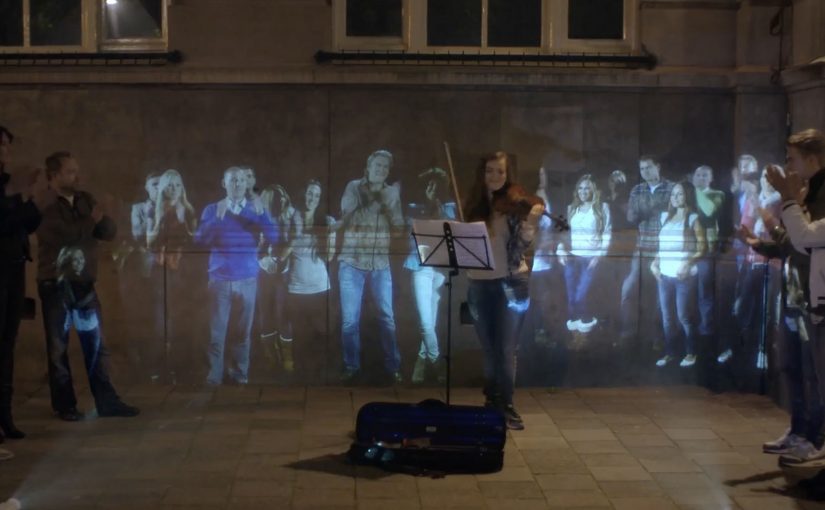
LG, to make everyday life more fun and exciting, decided to bring a few surprises to the street. They found Juan, a video artist who took his hobby to another level with LG’s portable projectors. Together they surprised and entertained people in ways never expected.

Portable projection as street-level theatre

The mechanism is the point. A small, mobile projector turns almost any surface into a temporary screen, and that mobility lets the experience pop up where people least expect it. Instead of asking people to come to a venue, the “venue” appears around them for a few seconds, then moves on.

In consumer electronics marketing, the fastest way to prove portability is to show the product leaving the living room and creating value in public spaces.

Why it lands

This works because it turns a spec sheet into a story. Brightness and portability are hard to communicate in words, but they become self-evident when a projection transforms a wall, a street corner, or a passing moment into something shareable. If you want the benefit to stick, make the demo do the explaining.

Extractable takeaway: When a product benefit is experiential, demonstrate it through a simple, repeatable scene that makes the benefit visible without explanation.

What LG is really selling here

Beaming Rocket is the LG MiniBeam film built around a video artist using portable street projections to make portability and brightness feel obvious.

The real question is whether your demo makes the benefit self-evident in the first five seconds, without relying on narration or specs.

The film is doing more than showcasing “fun.” It is positioning a portable projector as a creative tool, not just a gadget. That widens the audience beyond home viewing into creators, event moments, and spontaneous social experiences.

Steal this street-projection pattern

  • Demonstrate the core benefit in the real world. If mobility is the claim, the story needs movement.
  • Keep the format lightweight. Short, surprising moments travel better than long, complex narratives in public.
  • Use people as the proof layer. Real reactions sell the experience faster than product copy.
  • Make surfaces part of the idea. The environment should feel like a collaborator, not a backdrop.
  • Design for repeatability. If the concept can happen in many places, it scales as a content engine.

A few fast answers before you act

What is “Beaming Rocket” in one sentence?

It is an LG MiniBeam film built around a video artist who uses a portable projector to create surprising street projections and spontaneous moments for passers-by.

What product truth does the film demonstrate?

Portability and ease of use. The projector can be carried, set up quickly, and used on everyday surfaces without a formal venue.

Why is street projection a strong demo format?

It makes brightness, scale, and immediacy visible in a single scene, and it naturally generates bystander attention and shareable reactions.

What is the main execution risk if you copy this approach?

Weak payoff. If the projected content is not instantly legible or delightful, the “surprise” becomes confusion and people walk on.

What should you measure if you run a similar activation?

Dwell time, crowd build rate, social sharing volume, sentiment, and whether the content creates downstream lift in search or product page visits.
Carrie: Telekinetic Coffee Shop Surprise

A coffee shop that turns into a horror scene

Carrie is an upcoming 2013 American supernatural horror film. It is the third film adaptation of Stephen King’s 1974 novel of the same name.

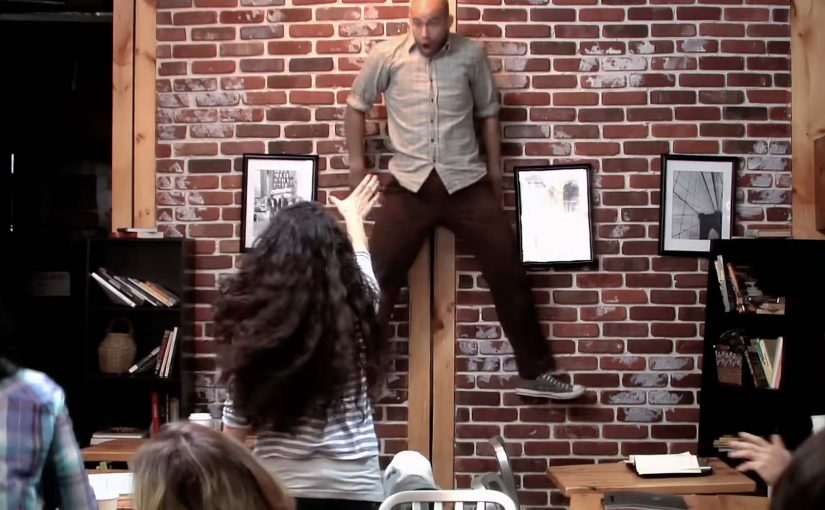
To promote the remake, Sony (with help from Thinkmodo) outfits a small coffee shop in New York with remote-controlled tables and chairs, a fake wall used to “levitate” a guy, and books that fly off the shelves by themselves. An actor takes on the role of Carrie and sets up innocent customers for a prankvertising experience they do not see coming. Here, prankvertising means a brand-built public stunt designed to capture genuine reactions on camera.

The mechanic: practical effects plus hidden cameras

The execution works because the effects are physical, not “post.” Furniture moves with real force. Books drop in real time. A wall gag sells the impossible moment. Hidden cameras then capture reactions that read as instinctive rather than performed, which is exactly what makes the video rewatchable and shareable.

In entertainment launches, engineered “you had to be there” moments are a reliable way to turn a theme into conversation without relying on a trailer.

Why it lands

The spot uses a tight emotional sequence. Normal. Confusion. Escalation. Relief. Then laughter. That arc matches how people actually experience a scare, and it gives viewers permission to share it because the payoff is reactions, not cruelty. It also maps cleanly onto the film’s core promise. Something supernatural breaks into an everyday setting, and nobody is ready for it. The real question is whether the stunt makes people feel Carrie before they watch Carrie.

Extractable takeaway: If you are selling a feeling (fear, awe, suspense), stage a believable real-world trigger that creates the feeling first, then let the audience’s reaction become your proof and your distribution.

What to steal from this horror launch

  • Make the premise legible in five seconds. Coffee shop. Spilled drink. Sudden shift. No explanation needed.
  • Use practical cues that cameras can’t fake. Real movement and real sound sell “impossible” faster than clever editing.
  • Keep the reveal product-aligned. The stunt matches the movie’s supernatural premise, so it feels like an extension of the story world.
  • Design for safe escalation. Intensity rises, but the scene resolves quickly enough that sharing feels fun, not disturbing.

A few fast answers before you act

What is the “Telekinetic Coffee Shop Surprise” for Carrie?

It is a staged hidden-camera stunt where a “Carrie” character appears to use telekinesis in a New York coffee shop, creating a real-world scare moment to promote the 2013 remake.

What is the core mechanic that makes it believable?

Practical effects in a real environment. Remote-controlled furniture, triggered props, and a wall gag create physical proof, and hidden cameras capture genuine reactions.

Why is this format effective for film marketing?

It demonstrates the film’s emotional promise in the real world, then turns audience reactions into shareable content that travels farther than a standard promo clip.

What makes prankvertising work without backlash?

When escalation is controlled, participants are not humiliated, and the payoff is relief and laughter. The moment should feel surprising, not harmful.

What’s the main transferable lesson?

Stage the feeling first. If you can reliably create the intended emotion in a real setting, the audience will do the storytelling for you.

Volvo Trucks: The Hamster Stunt

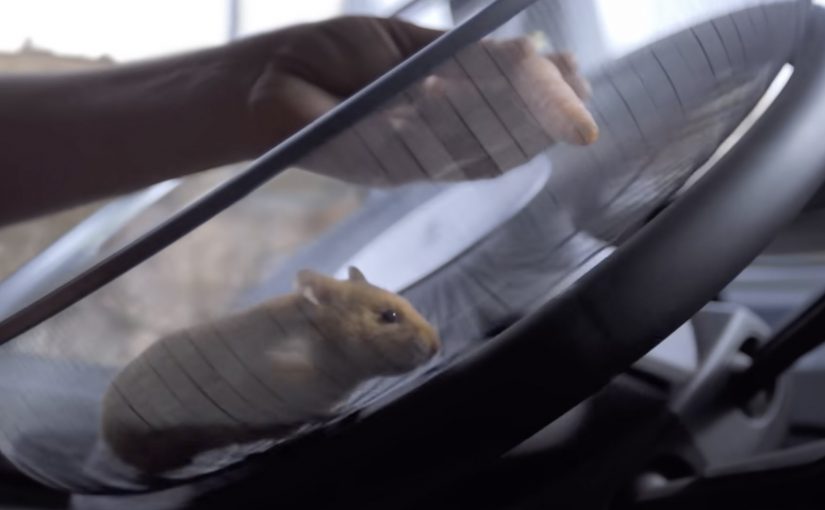
Brands everywhere are chasing branded content. Volvo Trucks picks a sharper route: it turns a technical feature into a spectacle by letting a hamster “steer” a Volvo FMX out of a quarry using Volvo Dynamic Steering.

The gag is simple to explain and hard to ignore. A hamster wheel is mounted to the steering wheel, and a precision driver handles pedals and safety while guiding the hamster with a carrot. The result feels like a ridiculous idea that somehow still proves something real.

When the product proof is the entertainment

Volvo Dynamic Steering is not an easy feature to dramatize in a way non-truck buyers want to watch. This film solves that by making “light steering” visually absurd, then grounding it with a credible live-test frame. A live-test frame is a visibly real setup that keeps the demonstration believable even when the idea is silly.

In global B2B and industrial marketing, this is a clean blueprint for turning an engineering benefit into mass-reach content without losing the proof.

The real question is whether your product proof can be watched by people who will never buy the thing.

B2B brands should bias toward demos that carry the claim in the image, not explanations that require patience.

Why the hamster works as a device

The hamster is not just cuteness. It is a proxy for “minimum force.” If a tiny animal can move the wheel, the viewer instantly understands the claim before any explanation arrives.

Extractable takeaway: If you can embody your benefit in a single visual proxy, the claim lands before the explanation.

That is the key branded-content trick: build an image that carries the message on its own, then let the technical story catch up afterwards.

Reported reach, and the deeper lesson

Volvo Trucks reports the film drew millions of views quickly, and industry press echoes that early momentum. The bigger point is not the number, it is the audience expansion. A feature aimed at fleet operators becomes something broadly watchable because the demonstration is designed like a story, not a spec.

What to copy from the hamster stunt

  • Turn the benefit into a visual impossibility that still stays true.
  • Keep the proof readable without narration, the image should carry the claim.
  • Use a live-test frame so entertainment does not undermine credibility.
  • Design a one-sentence retell, “a hamster steers a truck” is instant recall.

A few fast answers before you act

What feature is Volvo proving here?

Volvo Dynamic Steering, positioned as making the steering feel unusually light and precise even in demanding conditions.

Is the stunt “real” or purely visual effects?

It is presented as a controlled live test executed in a managed environment, with safety handled by a precision driver while the hamster influences the steering wheel.

Why does this count as strong branded content?

The product truth is inseparable from the story. The plot only works because the feature exists, which makes the content feel earned rather than bolted on.

What makes this approach effective for B2B brands?

It recruits non-buyers as viewers. When the demo is entertaining on its own, reach grows beyond the immediate purchase audience, while still reinforcing the proof.

What is the biggest risk when copying this pattern?

If the spectacle overwhelms the claim, people remember the stunt but not the feature. The visual must map cleanly to the benefit.