InVideo AI: Future of Ads, or Slop at Scale?

InVideo just dropped a campaign that might be one of the sharpest AI ads to date. Or one of the most controversial.

Not because the ad itself is “good” or “bad.” But because of what it demonstrates.

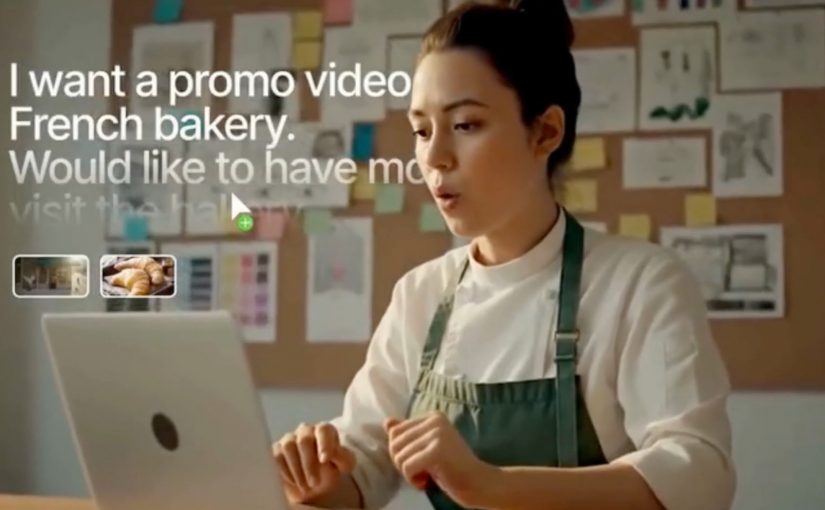
The premise is simple. A local business wants awareness and local footfall. A single prompt arrives. Then a “creative team” appears on screen. A writer, director, producer, and sound designer. They brainstorm, storyboard, pull assets, debate tone, change direction midstream, swap narrators, land a punchline, and ship a finished promo.

The twist is that the “team” is not human. It is AI agents collaborating in real time.

Some people will see this and think: finally, creativity at the speed of thought. Others will see it and think: here comes manufactured content. At industrial scale.

So let’s unpack what’s actually happening here. Not the hype. Not the fear. The shift.

What this campaign is really showing

On the surface, it’s a product story.

Under the surface, it’s a proof-of-concept for a new production model. Prompt-to-video, orchestrated by role-based agents, pulling from your assets, and iterating like a team would.

That matters because we are crossing a line:

  • Yesterday: AI helped you edit.
  • Today: AI can generate components.
  • Now: AI attempts to run the full production loop. Brief to concept to execution to polish.

If that sounds incremental, it isn’t. The bottleneck in content has never been “ideas.” It has been translation. Turning intent into something shippable, on brand, on time, and fit for a channel.

This is what changes. The translation cost collapses.

The “agents” idea. Why it clicks so hard

Most AI video tooling gets described as features: text-to-video, voiceover, stock replacement, templates.

Agents are a different mental model. They mimic how work gets done.

Instead of one tool trying to be everything, you have multiple role-based systems that divide the labor:

  • Writer: Hook, script, narrative beats
  • Director: Framing, pacing, scene intent
  • Producer: Assets, structure, feasibility, assembly
  • Sound designer: Voice, music cues, timing, emphasis

The output is not just “a video.” It’s a workflow that looks like collaboration.

And that’s why the campaign is sticky. It doesn’t just show a capability. It shows an operating model.

Fast definition. What “AI agents” means in this context

AI agents are role-based AI workers that take responsibility for a portion of the task, coordinate with other roles, and iteratively refine toward a shared goal.

In practical terms, this is orchestration. Task decomposition. Decision loops. And multi-step iteration that feels closer to a real production process than a single prompt and a single output.

In enterprise marketing teams, agentic video tools compress production time while making governance, briefing quality, and brand standards the real constraints.

Why the bakery storyline matters. It’s not about video

The reason this lands is the bakery.

A small business is a stand-in for every team that has historically been excluded from “premium” creative production. Not because they lacked ideas, but because they lacked:

  • Budget
  • Time
  • Specialist talent
  • Access to production infrastructure

If AI production becomes cheap and fast, a new baseline emerges.

Customer expectations tend to move in one direction. Up.

In other industries we’ve seen this pattern repeatedly:

  • Shipping went from weeks to days. Then days to “why isn’t it here tomorrow?”
  • Support went from office hours to 24/7 chat.
  • Information went from gatekept to instant.

Content is heading the same way.

When a local business can generate credible, channel-ready creative quickly, the competitive advantage shifts away from “who can produce” and toward “who can differentiate.”

So is this the future of content. Or a shortcut that kills creativity?

Both outcomes are plausible, because the tool is not the strategy.

Here are the three trajectories I think matter.

1) Creativity gets unlocked for more people

AI reduces the friction between an idea and a first draft. That can empower founders, small teams, educators, non-profits, internal comms teams, and marketers who have always had the brief but not the bandwidth.

If you’ve ever had a good concept die in a doc because production was too heavy, you know how big this is.

The upside version of the future looks like:

  • More experimentation
  • More niche creativity
  • More localized storytelling
  • Faster learning cycles

2) The internet floods with “content wallpaper”

When production becomes cheap, volume spikes. When volume spikes, attention gets harder. When attention gets harder, teams chase what performs. When teams chase what performs, sameness creeps in.

The downside version of the future looks like:

  • Infinite mediocre ads
  • Homogenized pacing and tone
  • Interchangeable visual language
  • “Good enough” content dominating feeds

That’s the fear behind “slop at scale.” Not that content exists. That it becomes meaningless.

3) Premium creative becomes more premium

There is a third outcome that’s often missed.

When baseline production becomes abundant, true differentiation becomes rarer.

Human advantages do not disappear. They concentrate around the things AI struggles with reliably:

  • Strategy and intent. What are we trying to change in the market?
  • Cultural nuance. What does this mean here, with these people?
  • Original point of view. What do we stand for that others don’t?
  • Brand taste. What is “on brand” beyond templates?
  • Ethical judgment. What should we not do even if we can?
  • Lived insight. What’s the human truth behind the message?

In that world, AI does not replace creative leaders. It raises the bar on them.

The practical question every marketing leader needs to answer

People debate whether AI can “replace creatives.” That’s not the operational question.

The operational question is: Where do you want humans to be irreplaceable, and where do you want machines to be fast?

Because if AI handles production, your competitive edge moves to:

  • The quality of your briefs
  • The clarity of your brand system
  • The strength of your POV
  • The governance of your outputs
  • The measurement of creative impact
  • The speed of iteration without brand drift

A simple maturity test you can run this week

If AI can produce at scale, the risk is not “bad videos.” It’s unmanaged systems.

Ask this:

Who owns the continuous loop of prompting, testing, learning, scaling, and deprecating AI-driven creative workflows in your organization?

If the answer is “no one,” you don’t have an AI capability. You have scattered experiments.

My take

Production is getting cheaper. Differentiation is getting harder.

So the real decision is not whether you can generate more content. It’s whether you can scale output without losing taste, brand truth, and accountability.

Is this the future of content. Or a shortcut that kills creativity? It depends on who owns the brief, who owns the guardrails, and who is willing to say no.


A few fast answers before you act

Can AI agents replace a creative team?

AI agents can replicate parts of the production workflow and speed up iteration. They do not automatically replace strategy, taste, or cultural judgment. Those still require accountable humans.

What does “prompt-to-video” actually mean?

Prompt-to-video is the ability to turn a single idea into a finished video. Script, scenes, voice, music, edit, and formatting. Without traditional filming or manual timeline editing.

Will this create more generic ads?

It can, especially when teams optimize for speed over differentiation. The antidote is strong briefs, clear brand constraints, and human ownership of taste and intent.

WestJet Flight Light

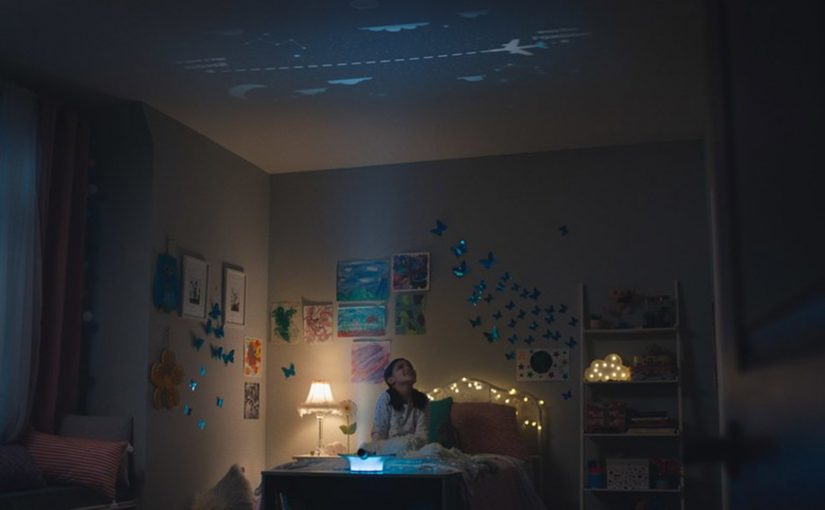
WestJet creates a small device with a big emotional job. WestJet Flight Light is a nightlight that uses live flight data to project a parent’s WestJet flight path onto a child’s bedroom ceiling, turning the wait into a visual, interactive countdown of hours and minutes until the parent returns.

Behind it sits a broader shift that shows up across industries. More brands move beyond selling a product and start designing convenience services that drive repeat usage and loyalty by solving real-life friction.

Here, the friction is business travel. WestJet wants frequent travellers to pursue work opportunities without losing connection with the people waiting at home. Flight Light makes the journey feel present. Not abstract.

Why the concept works

The power is not the hardware. It is the experience design. A child’s instinct is to count down. Flight Light makes that countdown tangible and playful by projecting the route in the place where bedtime routines already happen.

The service logic

This is a brand service that behaves like a product. Live flight data becomes a family connection layer. The airline becomes part of the at-home story, not just the transport provider.

Beta-testing and what it signals

WestJet says a prototype of Flight Light exists, with beta testing scheduled to begin later this year. That is the bridge between a cute concept and something that can be operated, supported, and scaled.


A few fast answers before you act

What is WestJet Flight Light?

A nightlight concept that uses live WestJet flight data to project a parent’s flight path onto a child’s bedroom ceiling as an interactive countdown to their return.

Who is it designed for?

Business travellers and frequent flyers with families, especially parents who travel regularly for work.

What is the core experience design move?

Turn a data stream. Live flight status. Into a comforting, visible bedtime ritual that makes the trip home feel real and close.

Ford Smart Lane-Keeping Bed

Ford Europe has unveiled a “Lane-Keeping Bed” that ensures partners always have equal amounts of sleeping space. The idea was inspired by the driver-assist technology that prevents unintentional drifting in new models like the 2019 Ford Ranger.

As demonstrated in the video below, pressure sensors detect when an active dreamer strays to the opposite side of the mattress and triggers an integrated conveyor belt that puts them back where they belong.

Like Ford’s noise-cancelling dog kennel, the Lane-Keeping Bed is only a prototype in the company’s “Interventions” series of innovations that extend beyond the car industry.

What makes this more than a gimmick

The best part of this idea is how clearly it translates a car behavior into a home behavior. Lane-keeping takes a drifting object and gently guides it back. Here, the drifting object is a person during sleep, and the “guidance” is a slow conveyor movement that restores the boundary without turning the moment into a fight.

Why it works as a brand signal

Ford’s “Interventions” framing matters. It positions the company’s tech capabilities as transferable. Sensors, assistive correction, and comfort innovations are not locked inside vehicles. They can show up wherever people experience everyday friction.

What to borrow if you build products or campaigns

  • Start from a real tension. Mattress hogs are a universal problem, and the benefit is instantly understood.
  • Make the mechanism visible. Pressure sensors plus a moving belt is easy to demonstrate, so the story travels.
  • Prototype to communicate capability. Even if it never ships, it can reframe what your brand is “good at”.

A few fast answers before you act

What is Ford’s Lane-Keeping Bed?
It is a prototype bed concept that uses pressure sensors and an integrated conveyor belt to move a drifting sleeper back to their side of the mattress.

What inspired the idea?
It was inspired by Ford’s driver-assist technology that helps prevent unintentional drifting in vehicles like the 2019 Ford Ranger.

How does it detect someone moving across the bed?
Pressure sensors detect when a sleeper strays to the other side, then trigger the conveyor belt response.

Is this a real product for sale?
No. It is presented as a prototype within Ford’s “Interventions” series, which explores ideas beyond the car industry.

What is the main takeaway?
Take a capability you already own. Translate it into a different everyday context where the tension is obvious and the benefit is immediate.