Touch the Sound: 3D printed radio history

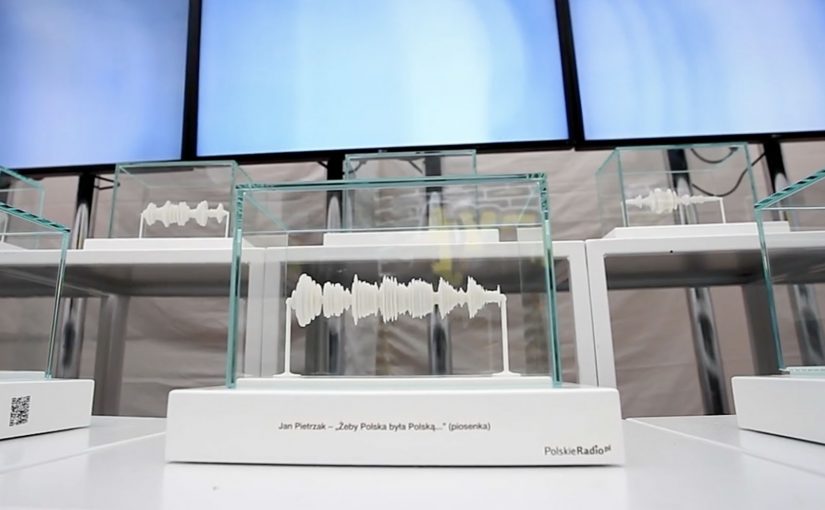
PolskieRadio.pl is described as a news portal with the largest radio recordings database in Poland. To promote it at Science Picnic in Warsaw, Hypermedia Isobar creates a special event built around one simple idea: make sound physically touchable.

Using 3D printing technology, they print out some of the most famous historical radio recordings, turning audio into tangible objects that visitors can hold and explore as “important sounds” of the 20th century.

In European public media and culture marketing, giving people a hands-on way to experience an intangible archive can outperform any “come visit our site” message.

How “sound you can touch” is staged

The experience works because it is instantly legible on a crowded show floor. You see unusual 3D printed forms, you learn they represent famous recordings, and you understand the invitation without needing a demo or instruction manual.

Instead of asking people to browse a deep archive, the activation turns the archive into a physical exhibit. That shift changes the audience mindset from “searching content” to “discovering artifacts”.

Why this fits Science Picnic

Science Picnic is positioned as a hands-on, experiment-first environment. A 3D printed sound object belongs there because it feels like a real scientific trick: invisible data becomes a thing you can touch, compare, and talk about with strangers.

What to steal from this approach

  • Materialize the invisible. If your product is digital, give people a physical handle on the idea.
  • Start with curiosity, then explain. A strange object earns attention before any copy does.
  • Turn an archive into a highlight reel. People engage faster when you curate “the famous 10” rather than expose “the full 10,000”.
  • Design for conversation. Installations that provoke “what is that?” get shared on the spot.

Last year tourists visiting the La Rambla neighborhood in Barcelona also experienced 3D printing technology. But at that time they were able to pose and create their very own three-dimensional statues.


A few fast answers before you act

What is “Touch the Sound” for PolskieRadio.pl?

It is a live event concept where famous historical radio recordings are turned into 3D printed objects, so visitors can literally touch “sounds” as physical artifacts.

Why use 3D printing for a radio archive?

Because it converts an intangible asset into a tangible experience. People understand the idea instantly and remember it because it feels like a scientific reveal.

Why does this kind of activation work at a science fair?

Science fairs reward hands-on discovery. A physical “sound object” matches the environment, so visitors treat it like an exhibit rather than an ad.

What is the key strategic benefit for the brand?

It reframes a large digital archive as cultural heritage worth exploring, and it creates a memorable story people can retell in one sentence.

What is the most transferable lesson?

If your brand owns data, recordings, or digital history, curate the best pieces and give people a tactile, participatory way to encounter them.

Lexus GS: NFC-Enabled Print Ad in WIRED

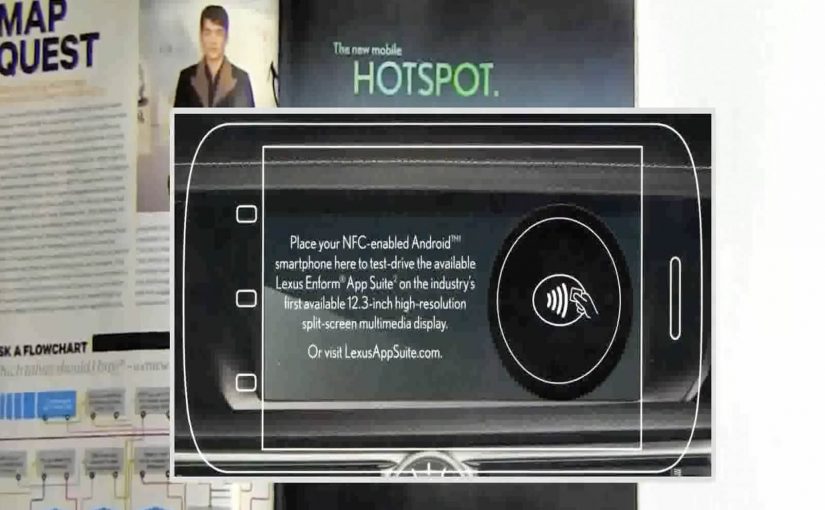
A print ad sits inside WIRED, but it behaves like a link. Hold an NFC-enabled phone to the page and a Lexus GS demo opens on your device, without scanning a code or typing a URL.

Brands like Mercedes Benz, Reporters Without Borders, Volkswagen etc have all been working hard to create clutter breaking and engaging print ads.

In this latest example of an interactive print ad, WIRED magazine and Lexus have teamed up to create what they describe as the first mass-produced print ad embedded with an NFC tag. The ad, reported as appearing in 500,000 subscriber copies of WIRED’s April issue, lets readers with NFC-enabled phones access a demo of the Lexus GS 2013’s Enform App Suite simply by holding their phone up to the ad.

A tap replaces the scan

The mechanism is straightforward. An NFC tag is embedded into the page, and the phone reads it when placed close to the printed area. That single “tap” launches a mobile experience that can demonstrate features and apps without requiring camera alignment or extra steps.

In global publishing and automotive marketing, bridging print to mobile works best when the handoff is faster than habit, and simple enough to do without thinking.

Standalone takeaway: NFC in print is a friction-cutting bridge. It turns paper into a one-touch launcher for mobile demos, which makes print feel current again without pretending it is digital.

Why this matters for print innovation

Most interactive print relies on behavior people already associate with effort, like scanning codes or typing. NFC flips that. The interaction feels like “just place phone here”, which is closer to natural curiosity than task completion.

Definition-tightening: NFC tags in print are typically passive. The page is not powered. The phone provides the energy and reads a short payload that triggers a destination on the device.

What Lexus is really buying

This is a modern product story told through a legacy medium. The GS positioning leans into connected experiences, so demonstrating an app suite through a connected print interaction reinforces the message at the exact moment of discovery.

What to steal for your next interactive print execution

  • Design for one gesture. If it takes more than a tap, many readers will not try.
  • Reward instantly. The first screen after the tap should feel like a payoff, not a loading screen.
  • Make the print do real work. Print should provide context and desire. Mobile should provide depth and demonstration.
  • Plan for non-NFC readers. If the print idea relies on a capability not everyone has, ensure there is still a clear alternate path.

A few fast answers before you act

What makes this WIRED ad “interactive”?

The page contains an embedded NFC tag. Tapping an NFC-enabled phone to the ad launches a Lexus GS mobile demo experience.

Why use NFC instead of a QR code?

NFC removes the camera step. A tap is faster and tends to feel easier than scanning, which can increase participation.

Do you need a special app to use an NFC print ad?

Typically no. If NFC is enabled, the phone reads the tag and opens the linked mobile experience using standard system behavior.

What is the key benefit for the advertiser?

A lower-friction bridge from print attention to a measurable digital demo, without breaking the reading flow as aggressively as “go type this URL”.

What is the biggest execution risk?

Compatibility and clarity. If readers do not have NFC, or do not understand where to tap, the interaction collapses back into a normal print ad.