
Cornetto: Series Commitment Rings

Netflix has taken the world by storm, transforming itself from a mail order DVD company into a streaming behemoth that consumes immense amounts of internet bandwidth worldwide. Along the way, it helped normalize a cultural habit called binge-watching, where you watch multiple episodes of the same TV show in one sitting.

Cornetto looks at that habit and pulls out a relationship insight. People “binge-watch cheat”. Skipping ahead without their partner, then pretending they did not. Campaign materials from Cornetto described this as widespread behavior and framed it as “Netflix infidelity”, including stats about how often people watch ahead while the other person sleeps, or re-watch episodes later to cover it up.

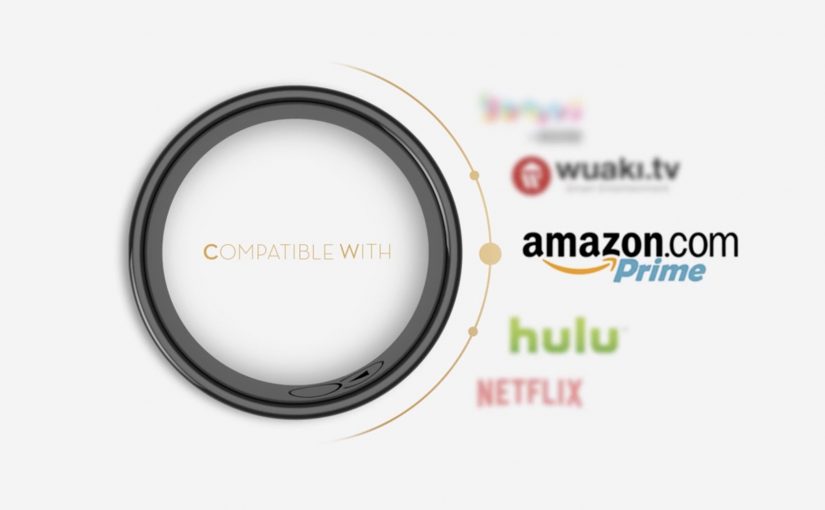
To “fix” the problem, Cornetto creates Commitment Rings. A pair of smart wearable rings designed to block access to agreed shows unless both partners are watching together.

How the rings enforce “we watch together”

The mechanism is NFC proximity plus a companion app. The rings connect to a smartphone over NFC. In the app, users register the shows they want to watch as a couple. From that point on, the next episode only plays if both people are present and their Commitment Rings are nearby, effectively locking the series unless the pair is together.

In subscription streaming culture, shared series have become a relationship ritual, so small “watching ahead” moments can carry real emotional weight.

Why it lands

This idea works because it treats a modern micro-conflict as if it deserves a formal solution, and that exaggeration is the joke. The rings also make the conflict visible and measurable. Either both are present or the episode does not start, which turns a vague promise into a concrete rule. It is a product-shaped punchline that still maps cleanly to a real behavior.

Extractable takeaway: When a cultural habit creates a recurring “tiny betrayal”, build a playful constraint that makes the rule unmistakable, then let the product itself carry the story in one sentence.

What Cornetto is really buying

This is not about launching a scalable wearable business. It is a brand move that places Cornetto inside a current cultural conversation, binge-watching, couples, and the social etiquette of streaming. The rings function like a physical metaphor for commitment, then redirect that metaphor back to the brand’s role in shared moments.

The real question is whether a brand can turn a small relationship rule into a product-shaped cultural story people want to share.

At the moment there aren’t any pricing details or release dates for this particular wearable, so you’ll have to keep checking the Series Commitment website for more details about it, or register with the site to receive more information about the product.

What to borrow from the idea

  • Start from a recognizable behavior. The audience must immediately know the “problem” from their own life.
  • Make the solution overly literal. The comedy comes from treating a small issue with disproportionate tech seriousness.
  • Build a crisp constraint. A simple rule is more shareable than a clever explanation.
  • Create a proofable mechanic. NFC proximity is easy to understand and easy to demonstrate on camera.

A few fast answers before you act

What are Cornetto’s Commitment Rings?

A pair of NFC-enabled rings designed to prevent “watching ahead” by only unlocking selected shows when both partners and their rings are nearby.

How does the locking actually work?

Users register the shows in an app. When someone tries to play a new episode, the app checks whether both rings are in close proximity, then blocks or allows playback.

What problem is the campaign targeting?

So-called “binge-cheating”. Watching episodes alone, out of sync with a partner, then hiding it or re-watching to cover it up.

Is this positioned as a real product or a campaign stunt?

It is presented as a product concept tied to a campaign, with sign-up messaging and no clear pricing or release timing in the original write-up.

What is the key lesson for marketers?

If you can translate a current cultural tension into a simple, demonstrable rule, the rule becomes the shareable story, and the brand becomes part of the conversation.
WhatsApp Taxi

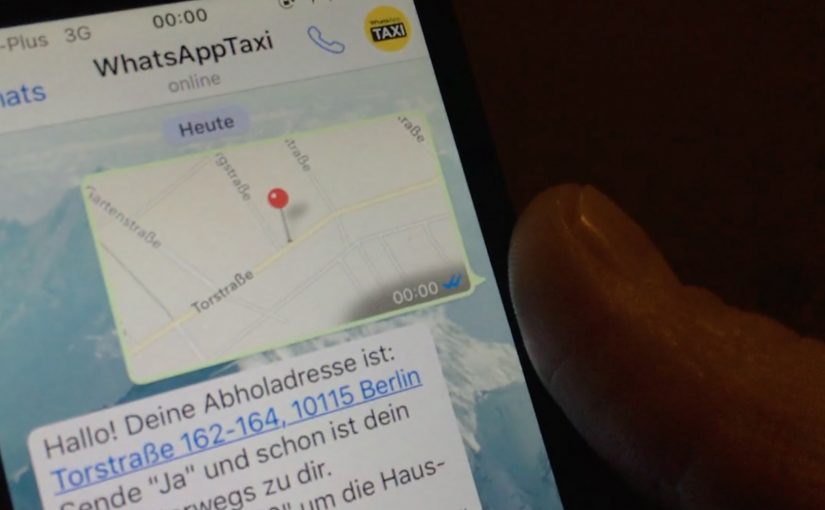
You need a taxi. Instead of calling or using a dedicated app, you open WhatsApp, share your location, and place the order by message. Taxi Deutschland positions “WhatsApp Taxi” as a simple way to request a cab in major German cities using the behavior people already know. Messaging.

Why this shows up now

After years of public sharing and transparency on social media, people gravitate toward more intimate, private, and even anonymous ways to communicate. That shift boosts the popularity of messaging apps and ephemeral messaging. Chat apps become hubs for social networks, games, e-commerce, and more.

The service. Taxi ordering by location message

Taxi Deutschland launches a new service called “WhatsApp Taxi” that allows users in major German cities to order a taxi by simply sharing their location via a WhatsApp message. The interaction is reduced to one core input. Your location.

The pattern. Messaging becomes an interface

Just last week I wrote about how KLM was starting to use Facebook Messenger for customer service related queries and tasks. WhatsApp Taxi sits in the same movement. Utility shifts into the messaging layer, which means the chat app becomes the place where the service starts, is confirmed, and is updated. The chat thread becomes the service surface.

In service categories where the audience already coordinates through chat, the smarter move is often to reduce entry friction rather than build another interface.

Why this lands for service adoption

This is a stronger service design move than another branded utility app because one familiar message and one high-confidence input make the service easier to try, which is why the interaction feels lighter and more repeatable.

Extractable takeaway: When the job to be done can be triggered with one trusted input inside a familiar chat flow, messaging can outperform a dedicated interface on adoption because it removes setup and learning cost.

The real question is whether your service needs a dedicated interface at all when messaging can already handle the request, confirmation, and follow-up. For Taxi Deutschland, the business intent is to reduce ordering friction and capture demand inside an existing behavior instead of forcing a new app habit.

What service brands can lift from WhatsApp Taxi

  • Ship in the behaviour people already have: If your audience already lives in messaging, put the service where the habit already exists.
  • Reduce the request to one high-confidence input: Location-first is a clean pattern when the service is fundamentally “come to me”.
  • Make chat the interface: Treat the thread as the order surface. Request, confirmation, updates, and support stay in one place.
  • Keep the interaction minimal: If one message can start the service, adoption is easier than “install app, register, learn UI”.
  • Design for repeat use: The same simple flow should work the second time without needing new learning or setup.

A few fast answers before you act

What is WhatsApp Taxi?

A Taxi Deutschland service that lets users order a taxi via WhatsApp by sharing their location in a message.

Where does it work?

Taxi Deutschland positions the service for use in major German cities.

What is the core user action?

Send your location via WhatsApp message to initiate the taxi order.

Why is this a marketing and product signal?

It shows how messaging apps evolve from communication tools into utility layers where services can be initiated and managed.

What is the transferable lesson for brands?

If your service can be reduced to a small set of high-confidence inputs, messaging can become a low-friction interface that people already understand.

Theraflu: Thermoscanner

With the start of flu season, Theraflu in Poland wants to create a tool that lets passersby check if they have a fever without interrupting their daily commute.

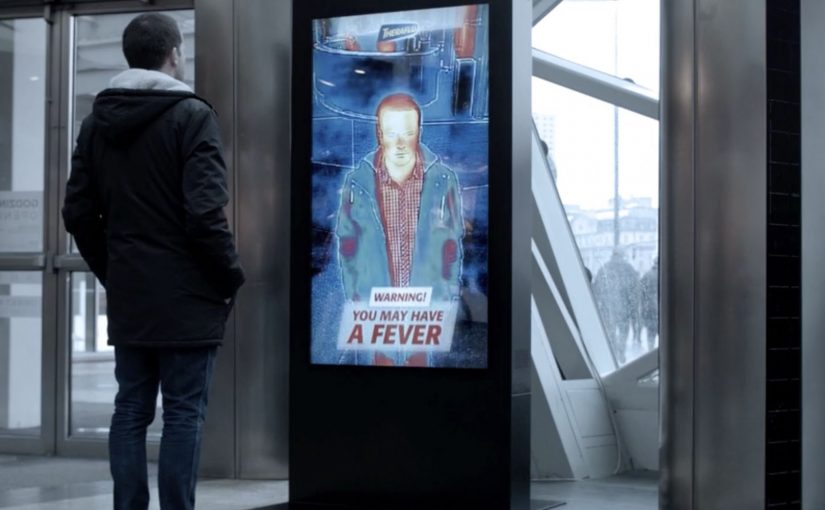
So Saatchi & Saatchi develops what is billed as the world’s first outdoor ad with a live thermo-scanner camera, able to check the body temperature of the person standing next to it in real time.

The thermo-ad also lets people take a thermo-selfie, which here means a thermal-style image of themselves, download it via a microsite or QR code, and share it using the hashtag #TherafluThermoscanner, or send it by email to their boss as an explanation for absence.

Turning a symptom into an instant public check

The mechanism is a simple swap. Thermal cameras are usually associated with controlled environments like airports or clinics. Here, that same visual language is put into a familiar citylight so the “should I worry?” moment can happen on the street, in seconds. That shift matters because it turns a clinical signal into a low-friction commuter interaction, which is why the idea feels immediately useful instead of purely theatrical.

In European commuter cities, out-of-home works best when it adds utility without forcing people to break stride.

Why it lands

This works because it respects the reality of flu season behavior. Many people keep moving even when they feel off. The installation meets them where they already are, makes the result legible at a glance, and gives them an immediately shareable artifact that doubles as social proof and practical communication.

Extractable takeaway: If your message is health-related and time-sensitive, design a public utility that produces a clear personal output. Then make that output easy to reuse in the next real decision the person has to make.

What Theraflu is really buying

Beyond awareness, the ad builds a reason to act early. It reframes “flu medicine” from a product you remember later into a category you prepare for now, while the viewer is still in the mindset of assessing symptoms and deciding what to do next. The real question is how to make symptom checking feel immediate enough to trigger action before people default to pushing through the day. The stronger play here is utility-led brand framing, not spectacle for its own sake.

What to steal from the Thermoscanner

  • Embed the benefit inside the medium. If the media unit demonstrates the promise, the claim needs less persuasion.
  • Make the result portable. A shareable scan turns one interaction into many impressions.
  • Design for the commute. Fast, glanceable, and low-effort beats “immersive” when people are in motion.
  • Give sharing a job. Social posting is optional. Emailing a boss is a real utility hook.

A few fast answers before you act

What is the Theraflu Thermoscanner?

It is an interactive outdoor ad that uses a live thermal camera to estimate body temperature in real time and indicate whether a passerby may have a fever.

Why put a thermo-scanner in an outdoor ad?

It makes fever detection feel instant and accessible during daily routines, and it turns a brand message into a practical tool.

What is a thermo-selfie here?

It is a thermal-style image generated from the scan that people can download and share, or send as a message to explain they may be unwell.

What makes this more than a gimmick?

It is tied to a real, time-sensitive decision. “Do I have a fever?” and it delivers an output that can be reused immediately.

How can other brands apply the pattern?

Find a high-friction question people avoid answering, then build a quick public utility that returns a clear personal result and a shareable artifact.