
Porsche: Interactive Hologram Print Ad

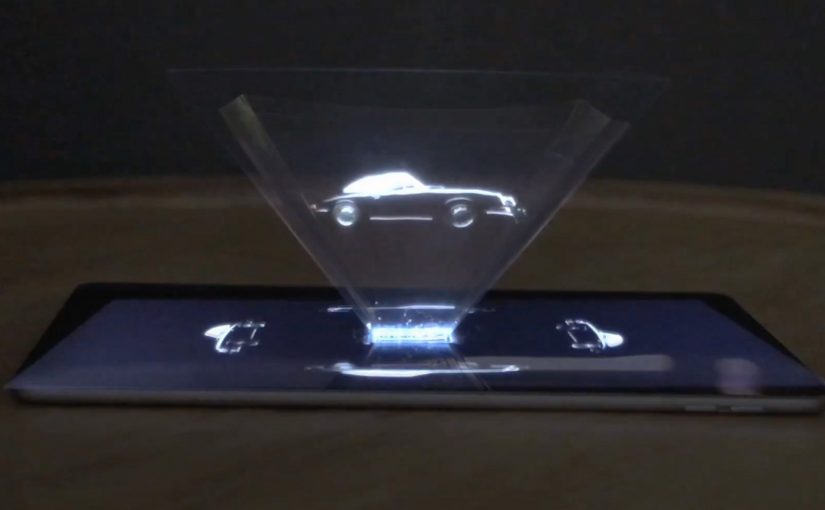
To launch its latest 911, Porsche created a print ad that behaves like a device. Working with agency Cramer-Krasselt, Porsche placed a small acetate sheet into Fast Company’s April issue, turning a magazine spread into a build-it-yourself prism and an interactive “hologram” experience. In this context, “hologram” refers to a prism illusion created from tablet-screen content.

The execution ran as a four-page spread inserted into around 50,000 copies, complete with assembly directions. Porsche billed it as the world’s first interactive hologram print ad.

When a magazine page turns into a viewing tool

The mechanic is the whole point. You fold the acetate into a small prism, place it on top of a tablet, then use the screen content to create the floating 3D-style illusion inside the prism. Print does not “show” the car. Print enables the car to appear.

That shift matters. Instead of asking a reader to imagine innovation, the ad makes them assemble it, which turns curiosity into action.

In premium automotive marketing, making print behave like a device is a fast way to earn attention from audiences who think they have seen every format.

Why the prism matters more than the hologram

The hologram effect is a spectacle, but the prism is the message. It signals precision, engineering, and fascination through the act of building. It also gives the reader a reason to keep the insert, show someone else, and replay the experience, which is exactly what print needs when attention is scarce. The real question is whether the build step makes “innovation” feel earned rather than claimed.

Extractable takeaway: If you want a print unit to signal modernity, make it an enabling tool the viewer assembles, so the interaction itself becomes the proof.

What Porsche is really buying

The business intent is to make a high-end model launch feel as advanced as the product story. A conventional print page can carry features and beauty. This format carries a proof point. Porsche can credibly say, “We pushed the medium,” and that halo transfers to “we pushed the car.”

This is a smart launch move because it turns medium innovation into a product halo without adding more copy.

Steal this print-as-device pattern

  • Make the reader do one small action. Folding beats scanning when you want ritual, not convenience.
  • Let print enable the experience. The page becomes the trigger, not the canvas.
  • Keep the rules idiot-proof. If assembly fails, the entire idea fails.
  • Use scarcity and selectivity. A targeted drop can feel more premium than mass coverage.

A few fast answers before you act

What is an “interactive hologram print ad”?

It is a print ad that includes a physical component, in this case an acetate prism, that turns a tablet screen into a hologram-style viewing effect. The print unit is the enabling tool.

How does the prism create the hologram effect?

The prism reflects and refracts imagery from the screen into a floating illusion. The viewer sees the content “inside” the prism rather than flat on the tablet.

Why put this in a business magazine like Fast Company?

Because the audience expects innovation and is more likely to try a format experiment. It also gives the stunt credibility as “design and tech”, not just “advertising.”

What is the biggest execution risk?

Friction. If instructions are unclear, materials are flimsy, or setup takes too long, people drop the experience before the payoff.

What should you measure for a print-to-device activation?

Completion rate of the build, repeat views, sharing behavior, and brand recall lift versus a standard print placement. The real KPI is whether the mechanic gets retold accurately.
KLM Messenger: Travel Updates in Chat

Facebook wants to transform their Messenger platform into an all-encompassing utility, where people will be able to conduct virtually any interaction, from buying products to paying bills to various other customer service related queries and tasks.

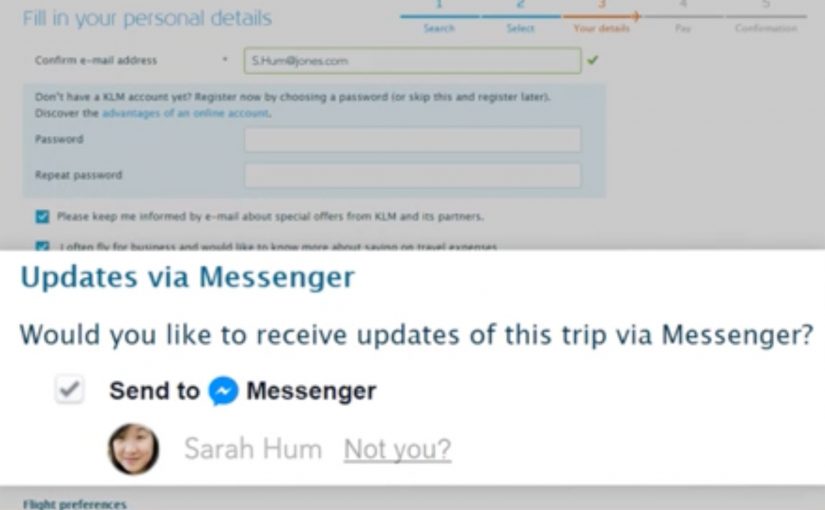
So together with KLM they have launched a new Messenger service. Travellers who book their flight on klm.com can now choose to receive booking confirmation, check-in notification, boarding pass and flight status updates all via Facebook Messenger.

For further questions they can also contact KLM directly through the Messenger, 24/7.

Why this is a meaningful shift in airline service

In service-heavy journeys like air travel, messaging becomes valuable when it carries the essential trip artifacts and keeps help in the same thread. This takes airline communication out of the inbox and into a channel people already use all day. The value is not novelty. The value is reduced friction, because the boarding pass and status updates stay findable inside one conversation.

Extractable takeaway: Move high-frequency journey updates into one persistent thread customers already use, so the essential artifacts stay retrievable at the moment of need.

  • Proactive updates. Confirmation, check-in prompts, and status changes arrive automatically.
  • One thread per trip. The travel journey stays readable in a single conversation.
  • Service in context. Questions can be asked and answered where the information already lives.

Messenger as a utility layer

If Messenger becomes a place where you can transact, track, and solve problems, then brands that show up with real utility earn repeat usage. Here, “utility layer” means the messaging channel carries the task flow and the core artifacts, not just promotional messages. In this case, KLM turns Messenger into a travel companion, not a marketing channel.

The real question is whether your messaging channel can hold the full journey without pushing customers back into apps, email, and account logins.

The more predictable the updates, the more likely customers are to opt in, and the more valuable the channel becomes for both sides.

What to take from Messenger-first travel updates

  1. Meet customers where they already are. Messaging reduces the cognitive load of managing travel.
  2. Design for opt-in value. People accept notifications when they are clearly helpful and timely.
  3. Keep the thread “service-first”. Utility collapses if the channel gets flooded with promotion.
  4. Support matters. Proactive notifications plus 24/7 human help (or well-designed escalation) is what makes it credible.

A few fast answers before you act

What did KLM launch on Facebook Messenger?

A Messenger service that delivers booking confirmation, check-in notifications, boarding passes, and flight status updates for travellers who book on klm.com, with the option to contact KLM through Messenger 24/7.

Why use Messenger for travel updates?

Because it reduces friction. Customers receive timely information in a channel they already use, without searching email or opening an airline app repeatedly.

Is this a chatbot initiative or customer service?

At its core it is customer service and trip management delivered through messaging. The key value is proactive updates plus the ability to ask questions in the same thread.

What is the main CX benefit?

One continuous conversation that contains the essential trip artifacts. Confirmation, reminders, boarding pass, and live updates in a single place.

What is the transferable lesson for other brands?

If you can deliver high-frequency, high-value updates through a messaging channel with clear opt-in, you can increase satisfaction by making the journey easier to manage.

McDonald’s Sweden: Happy Goggles

Today’s kids are growing up with smartphones and tablets as everyday objects, so for the 30th anniversary of the Happy Meal in Sweden, McDonald’s decides to move with the times without making radical changes.

With a bit of ripping, folding, and sliding, the Happy Meal box becomes Happy Goggles. A simple VR viewer made from the box itself, designed to work with a smartphone.

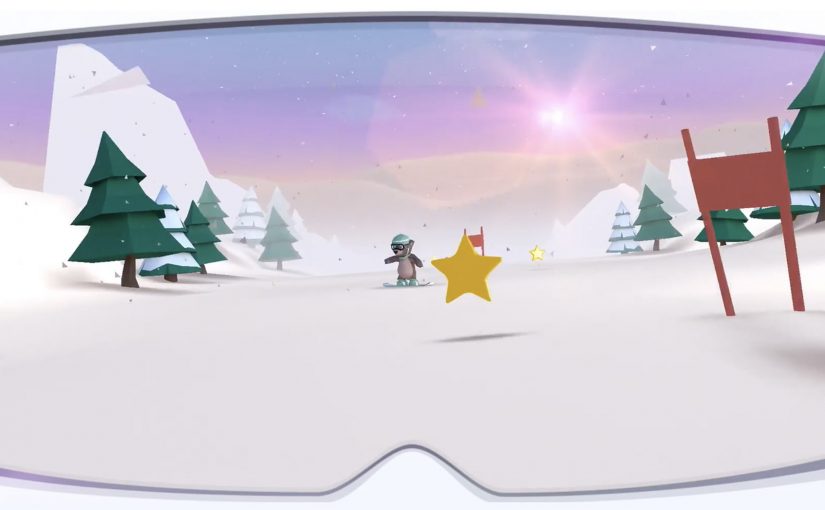
The limited edition Happy Goggles are available from March 5th along with a virtual reality skiing game called “Slope Stars.” The game is positioned as a 360° ski experience that aims to blend fantasy and fun with basic slope-safety learning.

A physical build step that makes the tech feel like play

The mechanism is the point. Kids do not just receive a headset. They assemble it from something familiar, which turns the product into an activity and makes the “VR moment” feel earned rather than handed out.

In family-focused quick-service restaurants, packaging is one of the few branded touchpoints kids hold long enough to become a lasting brand memory.

The real question is whether a kids-facing tech idea can feel like play for children while still feeling bounded and acceptable for parents.

Why it lands with parents as well as kids

The idea works because it keeps the novelty lightweight and frames it as a bounded experience. A simple viewer, a themed game, and a message that leans toward safe behaviour on ski slopes rather than pure screen time. This is a smart family-facing tech layer because it adds interactivity without asking parents to accept an open-ended new device ritual.

Extractable takeaway: If you want families to accept a new tech layer inside a kids product, make the first interaction tactile and time-boxed, then tie the content to a clear parent-friendly benefit.

What the brand is really doing here

This is packaging as media, and packaging as product. By “packaging as media,” I mean the box itself becomes the channel that carries the experience. McDonald’s turns the most iconic part of the Happy Meal into the delivery vehicle for a digital experience, while keeping the core ritual intact.

What to borrow from Happy Goggles

  • Make the build part of the value: A small assembly step turns the moment into an activity, not just a handoff.
  • Use an owned touchpoint as the “device”: When the packaging is already in-hand, it can do distribution and storytelling at the same time.
  • Time-box the novelty with a parent-friendly frame: Keep the experience simple, themed, and clearly bounded so it feels acceptable, not addictive.

A few fast answers before you act

What are Happy Goggles?

Happy Goggles are a VR viewer made by folding the Happy Meal box into a headset-style form, designed to hold a smartphone for a simple virtual reality experience.

What is Slope Stars?

Slope Stars is a ski-themed VR game released alongside Happy Goggles, positioned as a 360° experience that mixes play with basic slope-safety messaging.

Why make the viewer out of the box instead of adding a toy?

Using the box removes distribution friction because every Happy Meal already includes it. Turning the box into the device also makes the experience feel like a clever transformation rather than an extra plastic object.

What makes this kind of packaging innovation shareable?

Happy Goggles are instantly legible because the build step and the reveal are the story. The transformation can be demonstrated in a single photo or short clip.

What is the transferable principle behind this idea?

The transferable principle is to make the first interaction tactile and contained, so the digital layer feels earned. A simple physical step can convert “new tech” into “play,” while a clear boundary makes it easier for parents to accept.