
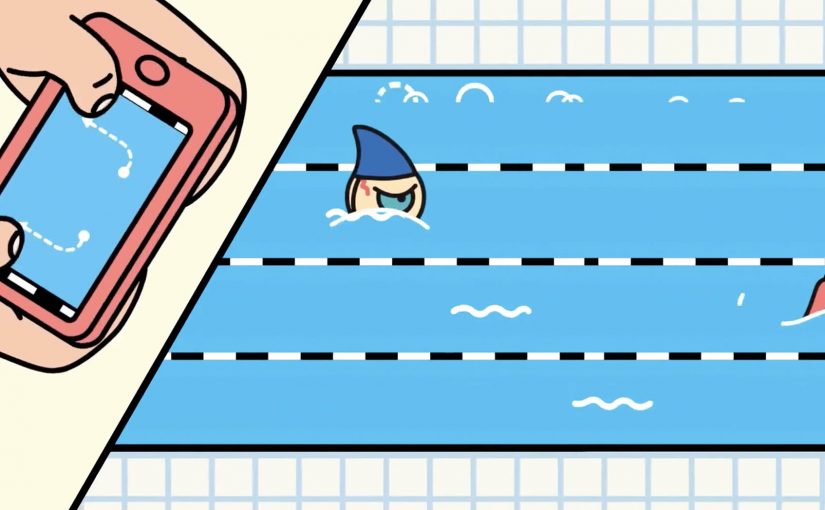
Chrome: Super Sync Sports

Google has recently released their latest Chrome Experiment called “Super Sync Sports” which allows players to convert their mobile phones and tablets into a remote control for their desktop browser.

To give it a spin visit www.chrome.com/supersyncsports/, choose a game i.e. running, swimming or cycling and then follow the instructions to sync your mobile phone. Once the sync is complete you can then play your way to victory, while the game plays out on your desktop.

What “super sync” really means in practice

The core mechanic is simple. Your desktop browser becomes the shared “big screen” for the race, while each phone or tablet becomes a personal input surface. Instead of mirroring the desktop, the mobile device acts like a controller and streams gestures to the browser in real time.

This is a classic second-screen pattern. A shared display for feedback, plus personal devices for control. It is a small idea with a lot of leverage when the onboarding is frictionless.

In digital marketing and product teams, multi-device web interactions are a repeatable way to turn passive screens into participatory experiences.

Why it lands (even when it is “just a game”)

It also makes a quiet point about distribution. The browser is the platform, so the “controller” is something people already have in-hand. That matters if you are designing for living rooms, events, retail floors, or any moment where downloads and logins kill momentum.

Extractable takeaway: When you want participation, put the rich visual feedback on a shared screen and keep input on personal devices. This lowers setup friction, supports groups naturally, and makes interaction feel immediate without specialized hardware.

The tech stack is the message

What will be interesting to see is how this type of interaction and technology is finally leveraged. The experience is described as being built on HTML5-era capabilities such as WebSockets for live synchronization, plus Canvas and CSS3 for rendering and motion. For brands, the value here is the interaction model, not the sports theme. The real lesson is not the specific APIs. It is the end-to-end pattern of low-latency input, shared feedback, and lightweight pairing.

The real question is whether you are building a one-off demo or a repeatable interaction model that people can join with the device already in their hand.

What to steal for brand experiences

  • Pairing flow: Use a short, forgiving pairing step (code on the big screen, quick join on the phone) and get to interaction fast.
  • Shared spectacle, private control: Keep the crowd watching one shared output, while each participant has a private “control lane” on their device.
  • Competition as UI: A leaderboard (even a lightweight one) can turn a demo into a repeatable loop.
  • Design for latency: Prefer simple, discrete gestures that still “feel” athletic even with imperfect connectivity.
  • Make it modular: The same controller concept can drive product configurators, quizzes, sampling stations, or event installations.

A few fast answers before you act

What is Super Sync Sports?

It is a Chrome Experiment that lets you run a sports game on a desktop browser while using a phone or tablet as the controller.

Why use a phone as the controller instead of the desktop keyboard?

It reduces the learning curve, supports multiplayer easily, and makes the interaction feel more physical. Touch gestures can map naturally to “run”, “swim”, and “cycle” without extra hardware.

What makes this pattern useful beyond games?

The same multi-device approach can turn any shared screen into a participatory surface. Think demos, audience voting, retail activations, guided experiences, or interactive storytelling where people control outcomes from their own device.

Which technologies are doing the heavy lifting?

The experience is described as using WebSockets for real-time synchronization, and Canvas and CSS3 for visuals and animation, all running in the browser.

What is the biggest risk if a brand tries this pattern?

Onboarding and latency. If pairing takes too long or input feels delayed, the magic disappears. The best executions keep the join flow short and the interaction vocabulary simple.

Sony: Headphone Music Festival AR posters

People in Tokyo who wear headphones, or simply want to try new ones, were treated to an augmented reality music festival from Sony Japan. Four popular local rock groups were turned into original AR performances, then “played” through band tour posters placed in busy locations. Sony-branded headphone trial stations were set up nearby so anyone could join in.

The loop is clean. Spot the poster. Scan it. Get a performance that feels like it is happening in your surroundings. Then step over and compare that moment on Sony headphones.

What makes this feel like a festival, not a tech demo

The execution is essentially a pop-up concert system distributed across the city. The posters act as stages. The phone acts as the ticket. The headphone stand acts as the product trial. That chain of touchpoints is why the experience reads as “festival” rather than “app feature.”

The mechanism: posters as portals

Instead of forcing people into a microsite or a branded app maze, Sony uses a familiar object. The tour poster. The poster becomes the launch surface for AR content. That matters because it removes the biggest friction in mobile AR. The “what do I point my camera at” question.

In supporting materials, the technology is described as Sony’s SmartAR and a smartphone app that recognises the posters and overlays 3D performance content into the live camera view. The mechanics stay invisible to the audience. They just see the band appear.

In dense urban retail markets, AR works best when it turns everyday street media into an immediate try-before-you-buy demo.

The real question is whether your AR trigger reduces friction enough that product trial becomes the next obvious step.

Why it lands for headphone marketing

Headphones are hard to sell with words. Most people cannot translate driver specs into feeling. This activation sells through a direct comparison. You hear a performance, then you hear it again through the product the brand wants you to try.

Extractable takeaway: A retail AR activation lands when the trigger is already in public view, the payoff is instant, and the path from wow-moment to product trial is one physical step away.

It also frames Sony as the host of the music moment, not just the logo next to it. That is a stronger association than “better sound.” It is “better access to the thing you love.”

The business intent behind the street setup

The intent is not just awareness. It is footfall and trial. The AR content pulls people in, but the trial stations convert curiosity into a product experience. If you can get someone to listen for 30 seconds, you can start building preference.

Steal this for poster-triggered AR trials

  • Anchor AR to a physical trigger people already understand. Posters, packaging, signage, tickets.
  • Make the payoff immediate. The first five seconds decide whether AR feels magical or annoying.
  • Keep the bridge to trial short. If you sell hardware, put the demo within sightline of the trigger.
  • Use content that earns replays. Music clips, reveals, limited drops, rotating “sets” work better than static overlays.
  • Design for scanning in real conditions. Glare, crowds, bad signal, rushed users. Make recognition forgiving.

A few fast answers before you act

What is the Sony “Headphone Music Festival” idea?

It is a street-based AR activation where tour posters trigger AR music performances on a phone. Sony pairs that content with nearby headphone trial stations so people can immediately test the product while they are engaged.

Why use posters instead of geofencing or QR codes?

Posters provide a clear camera target and an obvious reason to scan. They also carry cultural meaning. A tour poster already signals music and discovery, so the AR layer feels natural.

What makes AR effective for selling headphones?

It creates a controlled listening moment in an uncontrolled environment. The activation gives you a reason to put headphones on right now and compare the experience immediately.

What is the biggest pitfall in poster-triggered AR campaigns?

Recognition friction. If the scan fails or the experience takes too long to load, people abandon it. The trigger must be reliable and the content must appear quickly.

How do you measure success for this kind of activation?

Track scans per poster location, completion rates for the AR experience, and trial-station interactions. If possible, connect trial interactions to store visits or product interest signals.

Hyundai i30: Light Drive Test Drive Game

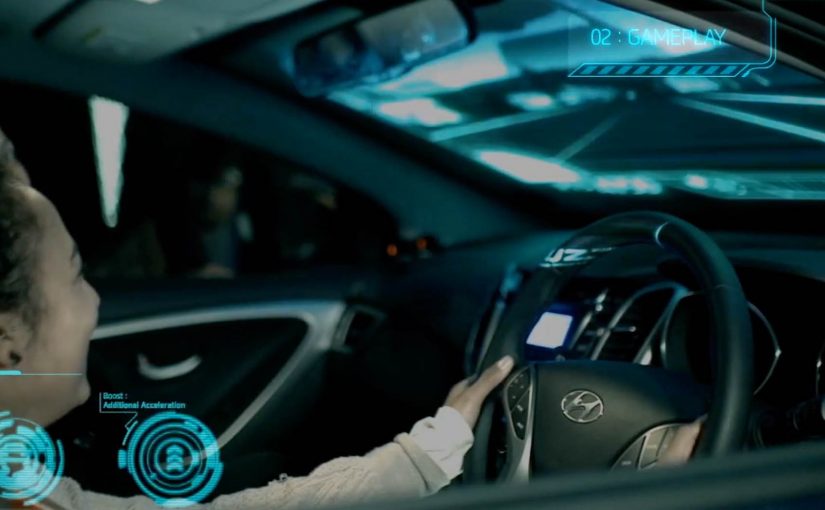
To launch the new generation i30 in South Africa, Hyundai reinvented the test drive with the Hyundai i30 Light Drive. It is a virtual racing game projected onto the i30’s front windscreen, played from inside the car.

Instead of waiting for people to visit a dealership, Hyundai took the experience to South Africa’s hottest nightspots in Johannesburg, Durban and Cape Town. Anyone, at any time, could step in, experience the car’s slick dynamic features, and compete for the top spot on the leader board.

A test drive that behaves like entertainment

The mechanism is smart because the “drive” is no longer a polite sales ritual. It is a game with stakes, progress, and a score. Two-man teams work together on the track to collect icons. Each icon represents an i30 specification, and collecting them powers up the car and boosts the team’s score.

That turns feature education into gameplay. Specs are not listed. They are earned. The i30’s story is embedded in the rules of the experience.

In experiential automotive launches, product education lands best when features are translated into gameplay mechanics that people can learn by doing.

The real question is whether your product education can be designed as a loop people want to repeat in public.

Why it lands in a nightlife setting

Nightspots are where people are already in a social, competitive mood. A leader board gives instant status. A queue becomes part of the atmosphere rather than a frustration, because everyone can watch and anticipate their turn. Hyundai amplified that social energy with HD cameras streaming the live test drive to a large screen outside the car. The crowd can watch the teams compete in real time, which makes the experience feel bigger than the physical footprint of the vehicle.

Extractable takeaway: In social environments, make learning visible. Use a score people can chase and a spectator view people can watch, so the product story spreads while the line forms.

Facebook Connect turns players into publishers

Hyundai linked the i30 Light Drive to Facebook Connect, turning participation into a shareable identity moment. Photos of the teams are posted instantly onto their timelines, extending the experience beyond the venue and turning “I played” into “I was seen playing”.

Even the waiting time is engineered. People queuing to play are educated and entertained with a touch screen brochure on the i30’s rear windscreen. It is product information, but delivered in an interactive format that matches the energy of the activation.

The intent: make the i30 feel modern before anyone compares price

The business intent is clear. Hyundai wants the i30 to feel like the next generation. Not just in features, but in attitude. By turning a test drive into an interactive spectacle, the brand signals innovation, tech confidence, and social relevance. The car becomes an event.

Moves to borrow from Hyundai i30 Light Drive

  • Move the experience to the audience. Take the product out of the showroom and into high-traffic social contexts.
  • Teach through interaction. Turn product features into game mechanics so learning is part of play.
  • Design for spectators. Live screens and streaming make the activation bigger than the footprint.
  • Make sharing native. Identity-based posting works best when it is built into the flow, not bolted on later.
  • Use the queue. If people are waiting, give them interactive content that reinforces the product story.

A few fast answers before you act

What is Hyundai i30 Light Drive?

It is an in-car virtual racing game projected onto the i30’s windscreen, designed to turn a test drive into an interactive competition.

How does it communicate the i30’s features?

Teams collect icons on the track that represent i30 specifications. Those icons act as power-ups, so the specs become part of the game’s reward loop.

Why target nightspots instead of dealerships?

Nightlife venues provide a ready-made social crowd. Competition and spectacle fit the context, and the experience spreads through observation and sharing.

What role does live streaming play in the activation?

HD cameras stream the gameplay to a large screen outside, turning players into performers and the crowd into an audience, which increases participation and energy.

What is the key takeaway for experiential launches?

Design an experience that people want to play and watch. When product education is embedded inside a compelling interaction loop, attention follows naturally.