
Augmented Reality Calendar by Audi

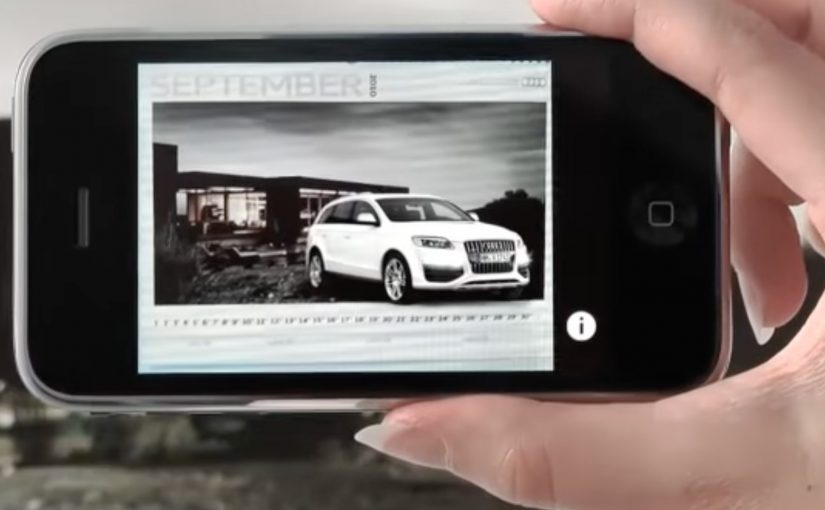
An Audi calendar arrives and it looks almost wrong. Each month is a beautiful landscape, with a deliberate empty space and no car in sight. You open Audi’s iPhone app, point the camera at the page, and the missing piece appears. An Audi A1 fills the blank area in augmented reality, sitting inside the printed scene as if it belongs there.

The idea. A car calendar without cars

Audi takes a familiar format. The premium calendar. Then it removes the expected hero asset. The car. The calendar becomes an invitation to discover, not a static brand object.

How it works. Print as trigger, iPhone as lens

  • The printed calendar pages feature landscapes and intentional negative space.
  • People download and open the dedicated Audi iPhone app.
  • They point the phone’s camera at the calendar page.
  • The app overlays a car into the empty area, turning the page into a live scene.

The interaction is simple, but the effect is surprising because it uses a physical artifact as the interface. The calendar is not just content. It is the marker that activates the experience.

Why this works. A tangible product that earns a second look

This is not augmented reality for the sake of augmented reality. It is a clean integration of print and mobile that rewards curiosity. The calendar builds anticipation with absence, and the app completes the story in the moment you engage.

What to take from it. Designing the reveal

  • Use restraint to create intrigue. Removing the obvious element can be more powerful than showcasing it.
  • Make the physical object the trigger. When the real-world asset is the interface, the digital layer feels earned.
  • Keep the action obvious. Point camera. See result. Low friction beats complex onboarding.
  • Build around a single wow moment. One crisp reveal is often enough to make the experience memorable.

This idea is developed by Neue Digitale / Razorfish Berlin and executed for Audi.


A few fast answers before you act

What is Audi’s augmented reality calendar?
A printed Audi calendar designed to work with an iPhone app, where pointing the phone camera at a page reveals a car in augmented reality.

What is the core creative twist?
It is a car calendar without cars. The car appears only when you view the page through the app.

What role does the calendar page play?
It acts as the trigger. The printed layout and empty space are intentionally designed to be “completed” by the AR overlay.

What makes it effective as a brand experience?
It turns a passive object into an interactive reveal, linking print, mobile, and product desire in one simple action.

What is the transferable pattern for other brands?
Design a physical artifact that creates curiosity, then use mobile to deliver a single high-impact reveal with minimal friction.

Volkswagen Amarok Live Test Drive

October seems to be a month of innovative test drive campaigns. In this campaign, ad agency AlmapBBDO Brazil has created a neat interactive meets experiential campaign.

The idea was to create a virtual test drive for Volkswagen’s new Amarok that people could experience live from their home or office. So a huge outdoor test track was setup, along with an automated car that takes your virtual test drive directions over the phone while you watch it live on your computer.

The campaign had 327 live test drives, 500,000+ unique site visitors and generated 7,392 online purchase intentions during the campaign period.

Why this “virtual test drive” feels real

The smart move is that the interaction is not simulated on a screen. The driving happens in the real world, on a physical track, with a real vehicle. Your input is remote, but the outcome is tangible and visible live. That combination makes the experience feel more like participation than advertising.

What makes it a strong test drive pattern

  • Real-time control. Phone directions turn passive viewing into active steering.
  • Live proof. Watching the vehicle respond on a real track builds trust fast.
  • Measurable intent. “Online purchase intentions” connects the spectacle to business outcomes.

A few fast answers before you act

What is the Volkswagen Amarok Live Test Drive?
A virtual test drive experience where people remotely guided an automated Amarok on a real outdoor track via phone instructions while watching live online.

Who created the campaign?
AlmapBBDO Brazil.

What made it different from a normal online test drive?
Instead of a digital simulation, a real vehicle drove a real track live, responding to the user’s directions.

What results were reported?
327 live test drives, 500,000+ unique site visitors, and 7,392 online purchase intentions during the campaign period.

What’s the transferable lesson?
If you can combine remote control with live, physical proof, you can turn “watching” into “doing” and generate measurable intent.

MINI: Getaway Stockholm 2010

After their recent Talent Poaching via Facebook Places campaign, Jung von Matt is back with the MINI Getaway Stockholm 2010 campaign.

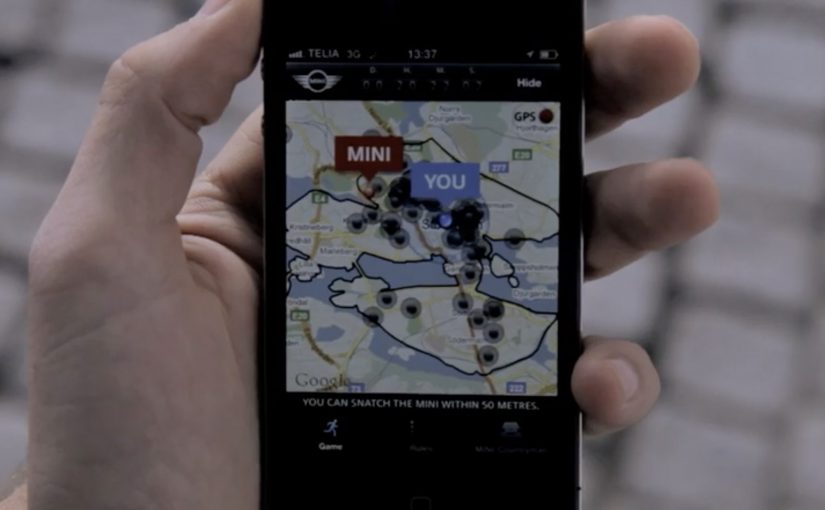
The premise is a reality game that challenges you to do the impossible: stay at least 50 metres away from everybody else in Stockholm city between October 31st and November 7th 2010. If you succeed, you win the new MINI Countryman.

A city-wide game disguised as a launch

This is not a typical “watch and forget” film. It is a product introduction that behaves like a week-long public challenge, using the city as the playing field and social friction as the difficulty setting.

The mechanic that makes it feel impossible

Mechanically, the campaign turns distance into drama: the rule is simple, but enforcing it in a dense capital city is the whole point. Every street corner becomes a decision, and every near-miss becomes part of the story players tell afterwards.

In European automotive launches, turning a product message into a participatory public challenge is a reliable way to earn attention without leaning on price or specs.

Why this breaks through

Most launches compete on features. This one competes on behavior. It gives people a clear goal, a clear constraint, and a clear reward, then lets the public generate the content through their attempts to win. The brand becomes the reason the game exists, not the interruption inside the game.

The business intent behind the play

The obvious headline is the prize, but the deeper intent is talk value and repeated engagement over a full week. A launch that unfolds day by day creates more chances for people to hear about it, join late, or simply follow along as a spectator.

What to steal for your own launches

  • Build one rule people can repeat. If the mechanic fits in a single sentence, it spreads faster.
  • Use a constraint, not just a reward. Difficulty creates stories. Stories create sharing.
  • Make the environment part of the experience. When the city is the stage, the campaign feels larger than the media.
  • Stretch the reveal over days. A week-long cadence beats a one-day spike if you want sustained attention.

A few fast answers before you act

What is MINI Getaway Stockholm 2010 in one line?

A week-long reality game in Stockholm with one simple rule and a real prize: stay 50 metres away from everyone else and win a MINI Countryman.

Why does the “50 metres” rule matter?

It turns a basic challenge into something socially and logistically hard in a busy city, which creates tension, stories, and spectator interest.

What makes this feel less like advertising?

The campaign centers on participation and behavior. People engage with the challenge first, and the brand benefits as the enabler of the experience.

What is the transferable lesson for other brands?

If you want attention without shouting, turn your launch into a simple public game with a constraint that generates stories over time.