
Bradesco Seguros: The Fake iPad Ad

Bradesco Seguros: The Fake iPad Ad

A fake ad that behaves like a real crash

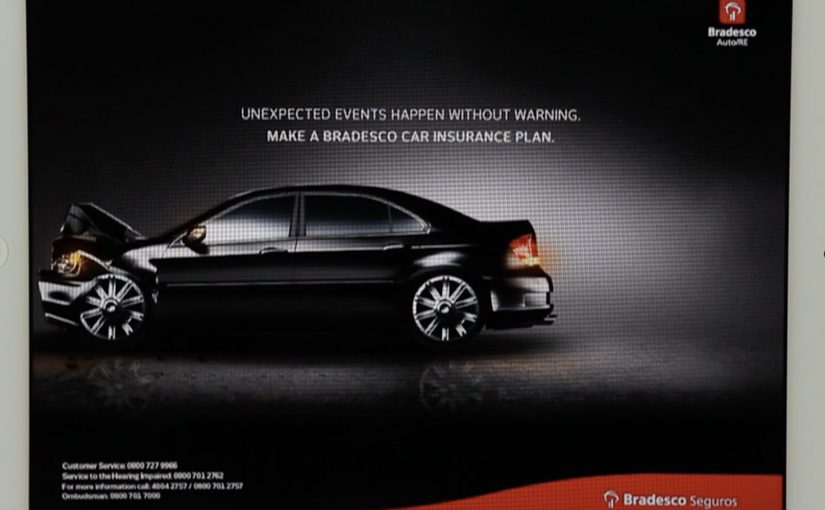
Bradesco Seguros created a cheeky ad in the iPad version of Quatro Rodas, a Brazilian car magazine. When readers swipe the “page,” the car in the ad follows the direction of the gesture and crashes into the side of the screen, unveiling the message: “Unexpected events happen without warning. Make an insurance plan.”

The mechanic: one native gesture, one irreversible consequence

The entire idea is built on the most common tablet behavior: swiping to move on. Instead of letting the user escape the ad, the ad “obeys” the swipe and turns it into the cause of an accident. The crash is the reveal. It is also the proof that the format is touch-native, not a print layout copied onto glass. Here, touch-native means the idea only works because the swipe directly causes the outcome on the screen.

In touch-first publishing, a single gesture-driven interaction can turn an ad into a micro-experience that earns attention the way content does.

Why it lands

It creates a moment of surprise without requiring explanation. The user thinks they are performing a routine action, then the ad responds in a way that feels physical and slightly alarming. Because the message is revealed by the crash itself, the brand does not need to overclaim. The interaction makes the point. The real question is whether the gesture itself makes the risk message feel immediate, inevitable, and brand-relevant. This is a strong use of tablet media because the interaction and the message are inseparable.

Extractable takeaway: If your message is about risk or unpredictability, make the audience cause a small, safe “unexpected event” through a familiar action, then reveal the message as the consequence.

What touch-first ad teams should steal

  • Exploit a default gesture. Build on what people already do, not what you wish they would do.
  • Make the payoff immediate. The interaction must resolve within a second or two, or it feels like a gimmick.
  • Let the mechanic carry the copy. If the interaction proves the point, the line can stay simple and memorable.
  • Keep it brand-safe. Use surprise, not fear. The crash is symbolic, not distressing.

A few fast answers before you act

What is Bradesco Seguros’ “Fake Ad” in Quatro Rodas?

It is an interactive iPad magazine ad where a swiping gesture makes the car in the ad move and crash into the screen, revealing the insurance message about unexpected events.

What is the core creative mechanic?

Gesture mirroring. The ad responds to the swipe like content would, then turns that response into a surprising consequence that delivers the message.

Why is this better than a standard banner or full-page ad?

It uses the tablet’s native behavior, so the attention is earned through interaction, not demanded through interruption.

What is the key lesson for touch-first advertising?

Design around one familiar gesture and make the output feel inevitable and meaningful, not decorative.

What is the most common way this approach fails?

When the interaction is slow, unclear, or unrelated to the message. The mechanic must be the argument.
Görtz: Virtual Shoe Fitting

Görtz: Virtual Shoe Fitting

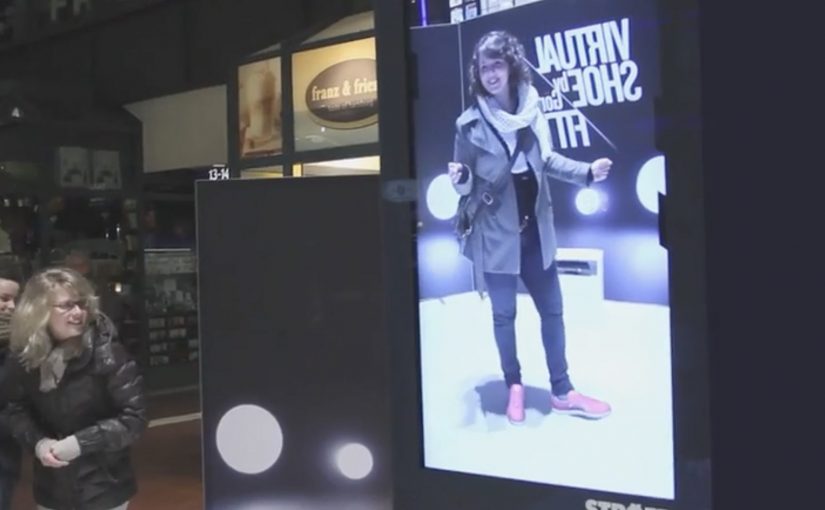
In September last year I had written about a Nike Sneaker Customization concept from Miami Ad School. Since then, ad agency kempertrautmann, along with German shoe retailer Görtz, creates the same virtual shoe store at Hamburg Central Station and transforms a digital billboard into a point of sale for shoes.

A station billboard that behaves like a shop window

Using Microsoft Kinect gesture controls, the shopper’s feet are scanned and reproduced on the screen. A selection of shoes is then presented to try on and compare virtually. A social component lets shoppers share a snapshot of themselves with the shoes on Facebook. Those who decide to buy receive a QR code that leads to a mobile checkout, with next-day delivery.

Virtual shoe fitting is an interactive retail experience that overlays a chosen shoe style onto a live on-screen view of your feet, so you can judge look and proportion before purchasing.

In European retail environments where commuters split time between offline browsing and mobile checkout, the strongest executions connect fast “try” moments to a low-friction purchase path.

Why it lands: it compresses the path from curiosity to checkout

The idea removes the biggest barrier in out-of-home retail, which is the gap between “that looks interesting” and “I can actually get it”. The Kinect scan creates a personal moment, the virtual try-on creates confidence, and the QR code turns intent into an immediate transaction rather than a promise to remember later. That matters because each step reduces the drop-off that usually happens between public interest and private purchase.

Extractable takeaway: If you want digital out-of-home to sell, not just impress, design the experience so the last step is not “find us later”. Make the last step “buy now”, with the minimum possible handoff friction.

What the campaign is really proving

The real question is whether a public screen can do enough selling work in the moment to replace the need for a later retail visit.

It is less about tech novelty and more about role change. The billboard stops being a broadcast surface and starts behaving like a staffed shop assistant. It recognizes you, helps you evaluate options, and hands you a clear next step to purchase.

This works best when the technology serves the buying decision, not when it becomes the point of the experience.

What this retail screen gets right

  • Personalize instantly: a scan, a fit, a quick moment that feels made for the passer-by.
  • Keep choices bounded: a curated range beats a full catalog when people are in a hurry.
  • Build a shareable artifact: snapshots extend the experience beyond the station.
  • Make the handoff obvious: QR-to-checkout should feel like the natural next click, not a separate journey.
  • Promise something operationally real: next-day delivery turns “stunt” into “service”.

A few fast answers before you act

What is the core idea?

A digital billboard in a train station becomes a virtual shoe store. Shoppers try on shoes using gesture control, then complete purchase on mobile via a QR code.

Why use Kinect in a public space?

Because it enables hands-free interaction and creates a personal “fit” moment without requiring an app download or typing in a rushed environment.

What makes this different from a normal QR poster?

The poster does not only link out. It provides evaluation first. The virtual try-on is the persuasion layer, and the QR code is the conversion layer.

What is the biggest execution risk?

Latency and calibration. If the scan feels inaccurate or the overlay looks wrong, the experience loses trust and the checkout step will not happen.

What should you measure?

Interaction starts, completed try-ons, QR scans, checkout completion rate, and next-day delivery satisfaction. Those metrics show whether the billboard is acting as a true point of sale.

Dungville: Klara the Cow Betting Game

Dungville: Klara the Cow Betting Game

Natwerk was asked to create something playful for the online-minded visitors of The Next Web Conference 2012. So they built an analogue prediction game featuring a real cow, then layered it with an online extension.

Klara, a grid, and a one-day “village”

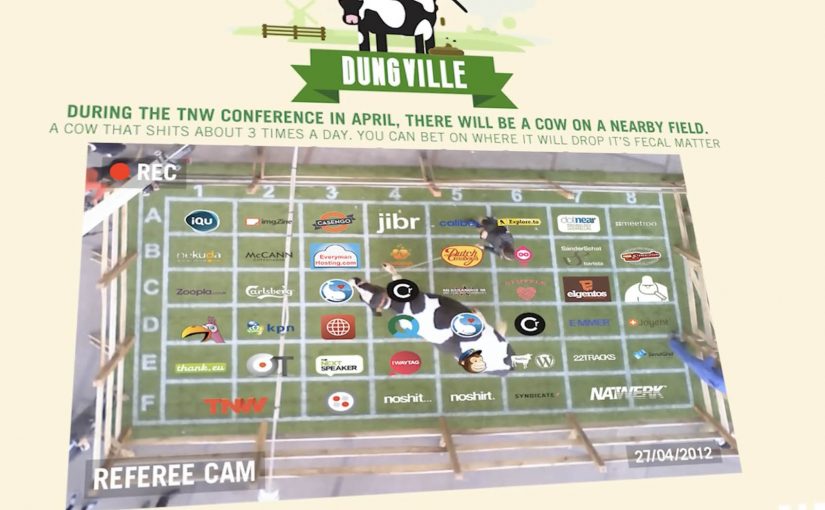
The installation was framed as a tiny pop-up “village” at the conference venue. One real farmer. One real cow named Klara. A field laid out as a grid. Visitors could place bets on where she would drop her dung.

Mechanism: a physical event drives a digital game

As shown in the case film, Klara was expected to do her business several times a day, and the audience wagered on where it would happen. The web layer turns that unpredictability into a simple loop. Pick squares. Wait. Validate. Win or lose.

That mechanism works because one visible but unresolved physical outcome gives everyone the same reason to watch, talk, and check back.

In event marketing, the strongest activations turn a shared physical moment into a lightweight digital ritual people can join and talk about instantly.

Why it lands

The idea is memorable because it is absurdly literal. A real-world randomizer. A clear grid. A clear outcome. It also fits the conference crowd. People who live online love mechanics that are easy to explain, easy to screenshot, and easy to debate in real time.

Extractable takeaway: If you can attach your digital interaction to an offline moment that nobody can fully predict, you get tension for free, and tension is what keeps people checking back.

What this kind of activation is good for

The real question is whether the game gives people a simple reason to keep returning to the shared moment.

This is not about deep persuasion. It is about creating a shared story at the venue and giving the event a “small legend” people repeat after they leave. It works best when your goal is attention, conversation, and community participation rather than detailed product education.

Steal the event-game pattern

  • Use a single, visible game board. A grid makes rules self-explanatory and outcomes easy to verify.
  • Keep the loop simple. Pick. Wait. Result. Repeat. Complexity kills participation at events.
  • Make the offline moment the engine. When the physical world provides the variability, the digital layer can stay minimal.
  • Design for group talk. The best event games create debate and banter, not solo play.
  • Be deliberate about tone. Toilet-humour mechanics are polarising. If you use them, commit fully and keep it light rather than crude.

A few fast answers before you act

What is Dungville in one sentence?

It is a conference activation where a real cow on a gridded field powers a web game, letting visitors predict where she will drop dung.

Why does a real-world “random” trigger work so well?

Because it creates genuine uncertainty. People keep watching and checking because nobody can fully control the outcome.

What makes this an “online extension” rather than just a stunt?

The web layer turns the physical moment into a repeatable interaction loop, giving people a way to participate, compare picks, and track results.

What is the biggest execution risk?

Drop-off due to waiting. If results take too long, interest fades. The format needs clear timing and frequent enough outcomes to sustain attention.

What should you measure for a similar event game?

Participation rate, repeat participation, time-on-experience, social mentions during the event window, and whether attendees recall the activation as part of the event story.