
Durex: Baby App

Durex: Baby App

Making the consequence tangible, not the lecture louder

In consumer health marketing, the hardest problems are rarely about information. They are about motivation in the moment. This Durex idea is a clean example of turning a behavior barrier into an experience.

Condoms can feel like a downer. So how do you convince guys to put one on, and make Durex the favored choice?

This is the right move when information is not the problem. Make the consequence tangible, not the lecture louder.

Using the iPhone, Nicolai Villads, Peter Ammentorp and Raul Montenegro created what is called the Durex Baby application for the iPhone.

How the Durex Baby app worked as a behavioral nudge

The mechanism was simple. If the barrier is that protection feels like a mood killer, shift attention to what happens without it.

The app simulated the realities of having a baby, using the phone as a constant companion device. It turned an abstract risk into a persistent, personal experience that could be felt rather than explained. Because the phone stays close, the simulation can interrupt everyday moments, which is why it lands as a nudge instead of a lecture.

In consumer health marketing, consequence simulation works best when the audience already knows the facts but needs a visceral prompt.

The real question is how you make “responsible” feel like the easiest choice in the moment.

Why simulation can change decisions faster than persuasion

Most messaging about safe sex competes with optimism bias, the tendency to assume consequences happen to someone else. A simulation reduces that distance by making “later” feel like “now,” reframing the trade-off from short-term inconvenience to long-term responsibility.

Extractable takeaway: When persuasion stalls, build a simulation that collapses time and personal distance so the audience feels the outcome and re-evaluates the trade-off on their own.

The intent behind building it for Future Lions

The app was created for the Future Lions 2010 competition organized by digital agency AKQA and the Cannes Lions Advertising festival.

The business intent is clear. Use mobile to translate a sensitive topic into a playful but pointed interaction that can travel socially and be discussed without heavy moralizing, while keeping the brand associated with the responsible choice.

What to borrow from Durex Baby

  • Turn abstract risk into felt experience. Simulation can outperform warnings when the audience tunes out lectures.
  • Use the device people always carry. Mobile is effective when the behavior change depends on everyday moments.
  • Reframe the trade-off. Move attention from short-term friction to long-term consequence in a way people can grasp instantly.
  • Make it discussable. Playful interaction can open conversation on topics people avoid in direct language.

A few fast answers before you act

What is the Durex Baby app?

An iPhone app concept that simulates the realities of having a baby to encourage safer choices and reduce resistance to using condoms.

What was the core mechanism?

Behavioral reframing through simulation. The phone delivers an ongoing experience that makes the consequence of not using protection feel immediate.

Why does this approach work better than a warning for some audiences?

Because it reduces optimism bias. People are more likely to change behavior when the consequence feels personal and present, not distant and theoretical.

What business goal does it serve for Durex?

Positioning the brand as the responsible default choice by shifting the decision from mood-based resistance to consequence-based clarity.

What is the main takeaway for marketers?

If persuasion is failing, design an experience that makes the outcome feel real, then let the audience reach the conclusion themselves.
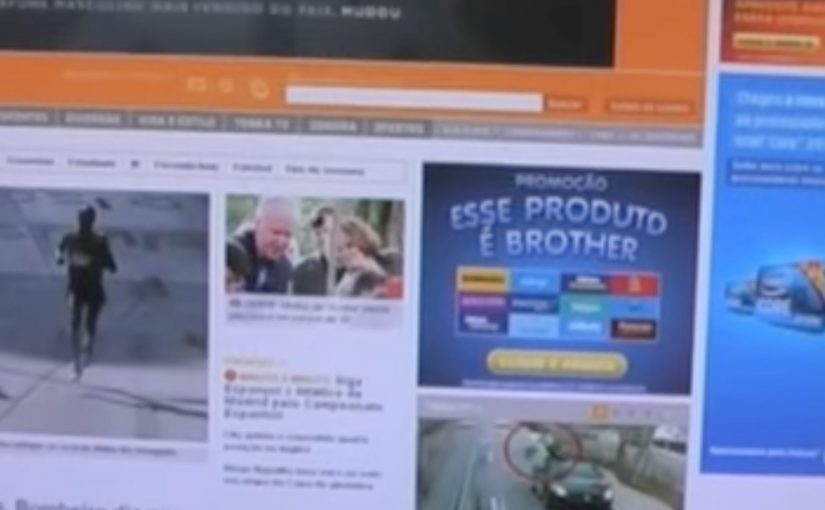
Kaiak: The Online Banner You Could Smell

Kaiak: The Online Banner You Could Smell

A banner that refuses to stay “just digital”

Everyone loves cool ad executions, but some are clearly advertising for advertising people. This one shows up at exactly the right time. Award-show season.

The work comes out of Brazil for Kaiak, Natura’s men’s fragrance. Kaiak has been reformulated, and the brief is simple but brutal. How do you sell a new scent online when the one thing people want to do is smell it?

Click the banner. Get the scent.

ID/TBWA solves it by building the missing sense into the media placement itself. Custom hardware is attached to computers in lan houses (cyber cafés) across Brazil. A special banner appears on the browser start page and reads, “The best selling men’s fragrance in the country just changed. Want to try it? Click this banner. It’s scented.”

When someone clicks, a scented strip physically emerges from the attached device. The digital impression turns into a real sample in the moment where “try” normally breaks down online.

In Brazilian urban markets where lan houses function as high-traffic digital hubs, turning a cyber café PC into a sampling machine creates mass trial without needing retail testers.

Why it lands: the medium becomes the product experience

The reason it works is not novelty alone. It removes the biggest barrier in fragrance e-commerce. Confidence. The real question is how you create purchase confidence for a sensory product when the screen cannot deliver the sensation. By turning the click into immediate sampling, the campaign makes the claim verifiable in the moment of intent, which is why it converts curiosity into trial. For sensory categories, the best digital work engineers a real trial moment, even if that means adding physical infrastructure. The click is not a promise. It is the delivery mechanism.

Extractable takeaway: If a product’s value depends on a sense the screen cannot deliver, redesign the media so “try” happens at the click, not after it.

The business intent: accelerate trial for a reformulated bestseller

This is a trial engine dressed as a banner. The goal is to reduce hesitation around change, create fresh talk value around “it’s different now”, and push people toward purchase with a sensory proof point that normal digital formats cannot provide.

How to make digital do something physical

  • Identify the missing sense. If the product relies on touch, smell, or taste, do not pretend pixels can replace it.
  • Build a credible “try now” moment. Sampling only works when the action and the reward are tightly coupled.
  • Choose distribution points with dwell time. Cyber cafés, waiting rooms, and shared devices can behave like miniature retail networks.
  • Keep the instruction brutally simple. The banner copy does not explain the tech. It explains the outcome.

A few fast answers before you act

What is the “scented banner” for Kaiak?

An online banner placed on cyber café computers that dispenses a physical scented strip when the viewer clicks, enabled by custom hardware attached to the PC.

Why build hardware for a banner campaign?

Because fragrance requires sampling. The hardware turns a digital click into immediate product trial, removing the biggest barrier to buying scent online.

What is the core mechanism?

“Try now” is built into the media unit. The banner instruction is simple, and the click triggers a physical delivery moment that proves the claim.

What does this teach about selling “sensory” products digitally?

If touch, smell, or taste drives purchase confidence, you need a credible bridge to real-world experience, not just better copy or imagery.

What is the most transferable takeaway?

Identify the missing sense, then engineer a sampling moment where action and reward are tightly coupled and instantly legible.

McDonald’s: Adult Playland in Sydney

McDonald’s: Adult Playland in Sydney

A Playland built for adults, not kids

In order to awaken the inner child in McDonald’s adult consumers, McDonald’s and DDB Sydney built an adult sized Playland in the middle of Sydney.

Supersizing the familiar to make it feel new again

The mechanism is physical and immediate. Take an icon people associate with childhood, then rebuild it at adult scale and put it directly in the path of commuters. It is not a message about fun. It is fun, placed in public, with no explanation required.

In Australian CBD (central business district) commuter culture, a surprising public installation can interrupt routine and create instant permission to behave differently for a moment.

The real question is whether you can give adults permission to participate without making them feel childish.

Why it lands: it removes the awkwardness of “acting like a kid”

Adults do not need to be convinced that play is enjoyable. They need permission. By making the Playland explicitly adult-sized and placing it in the city centre, the brand turns nostalgia into a socially acceptable break from routine.

Extractable takeaway: When adults hesitate, design the environment so participation feels socially legitimate, not self-conscious.

The business intent: rebuild emotional closeness through participation

This is a reconnection play, meaning it is designed to rebuild emotional closeness through participation rather than persuasion. This is the better move than a nostalgia message when you need adults to act in public. Instead of asking adults to remember McDonald’s, it gives them a shared experience they can literally step into, then ties that memory back to the brand.

Since the time of the launch in March, McDonald’s reported that more than 300 people have taken advantage of this playground on a daily basis and engaged with McDonald’s in a way they had not for years.

Design moves that get adults to play in public

  • Use a recognisable icon. Familiarity lowers the barrier to participation.
  • Change scale to change behaviour. Adult-sizing makes the experience feel legitimate, not childish.
  • Place it where routine is strongest. The contrast is what creates attention and talk value.
  • Make the experience the proof. Participation creates memory faster than any claim can.

A few fast answers before you act

What did McDonald’s build here?

An adult-sized Playland installation in central Sydney, designed to let adults play in a familiar McDonald’s-style playground environment.

What is the core mechanism?

Rebuild a childhood icon at adult scale and place it directly in the path of commuters. The experience is the message, with no explanation required.

Why does it work psychologically?

Adults do not need to be convinced that play is fun. They need permission. Adult-sizing plus public placement makes participation socially acceptable.

What business intent does it serve?

Rebuild emotional closeness through participation. A shared, physical experience creates memory and talk value that a standard campaign claim cannot.

What is the most transferable takeaway?

If you want real engagement, put a recognisable, low-friction action in a high-routine place, and let participation do the persuasion.