Molson Canadian: The Beer Fridge

Molson Canadian: The Beer Fridge

First various brands created campaigns with red buttons, then came one with a pink phone, and now Molson, a Canadian beer brand, revolves a whole campaign around bright red refrigerators.

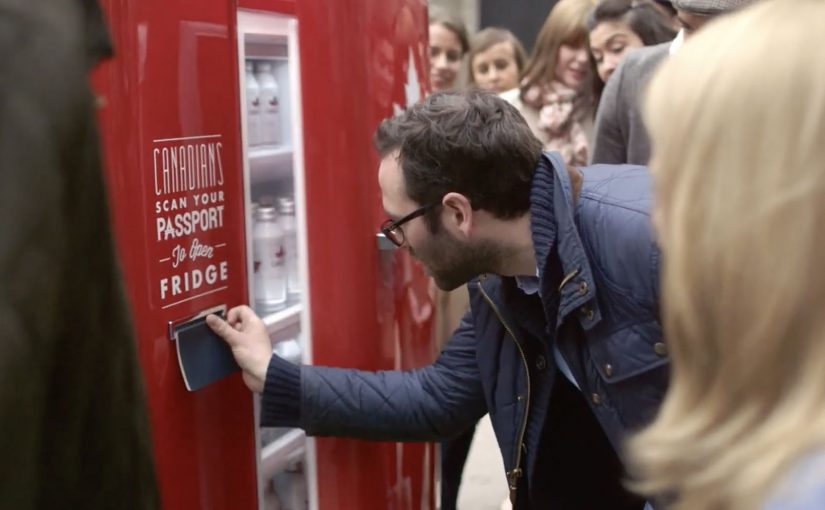
These eye-catching fridges were filled with Molson Canadian beer and strategically placed across a variety of European locations to attract crowds. The catch is simple. The fridge can be opened only by scanning a Canadian passport.

The campaign was created by Rethink Canada to bring back the classic tagline, “I Am Canadian.” The footage collected from the different locations was then cut into a longer online film and a shorter TV ad, described as running during the Stanley Cup Finals.

A gate that turns identity into a moment

The mechanism is a physical “access rule” everyone understands. Here, the access rule is simple: only a scanned Canadian passport opens the fridge. A fridge full of free beer is a magnet. The passport scan turns that magnet into a social filter, because the only way anyone drinks is if a Canadian is present and willing to open it. In one move, the crowd goes from spectators to collaborators.

In multinational brand building, national identity can easily become abstract. This makes it concrete in public, in seconds, with a prop people instinctively gather around.

Why it lands

It works because the restriction creates a mini-drama with a friendly payoff. People try. People fail. Then the “right” person arrives, the door opens, and the whole crowd benefits. The brand gets an emotional signature without needing to over-explain heritage, or wave flags on screen.

Extractable takeaway: If you want a brand idea to travel, design a simple rule that forces strangers to interact. Make the rule easy to understand, visibly enforced, and rewarding for everyone, not only the “qualified” participant.

What Molson is really reviving

The fridge is the stunt, but the strategic job is memory refresh. “I Am Canadian” is not a new line. The activation re-earns the right to say it by staging a situation where being Canadian is the key that unlocks a shared experience.

The real question is whether a legacy national tagline can earn fresh relevance without sounding like a rerun. Molson gets this right because the stunt turns identity from a slogan into a shared public reward.

What brand teams can take from it

  • Use a physical object as a social trigger. Fridges, doors, vending machines, and switches pull people in because they promise an outcome.
  • Let the rule do the storytelling. One constraint can communicate positioning faster than a paragraph of copy.
  • Make the payoff collective. If only one person wins, the crowd turns cynical. If everyone wins, the crowd turns into distribution.
  • Film what the rule creates. The best “campaign video” is documentation of real behavior the mechanic generates.

A few fast answers before you act

What is Molson Canadian’s “Beer Fridge” campaign?

It is an activation built around bright red fridges placed in public locations. The fridge opens only when a Canadian passport is scanned, turning identity into the key that unlocks free beer.

Why require a Canadian passport?

The passport requirement creates instant tension and a clear story. It forces a social moment where Canadians become the enablers, and everyone around them shares the reward.

What does this have to do with “I Am Canadian”?

The mechanic makes “Canadian-ness” functional rather than symbolic. The tagline lands as a conclusion the crowd just witnessed, not a claim the ad simply states.

Why place the fridges in Europe?

Because it creates contrast and visibility. A Canadian-only key in a non-Canadian setting produces curiosity, crowds, and a stronger “identity unlocks access” narrative.

How can another brand apply this pattern?

Choose one brand truth, translate it into an access rule, and attach a collective payoff. Then design the experience so the resulting human interactions are worth filming.

Back to Vinyl: The Office Turntable

Back to Vinyl: The Office Turntable

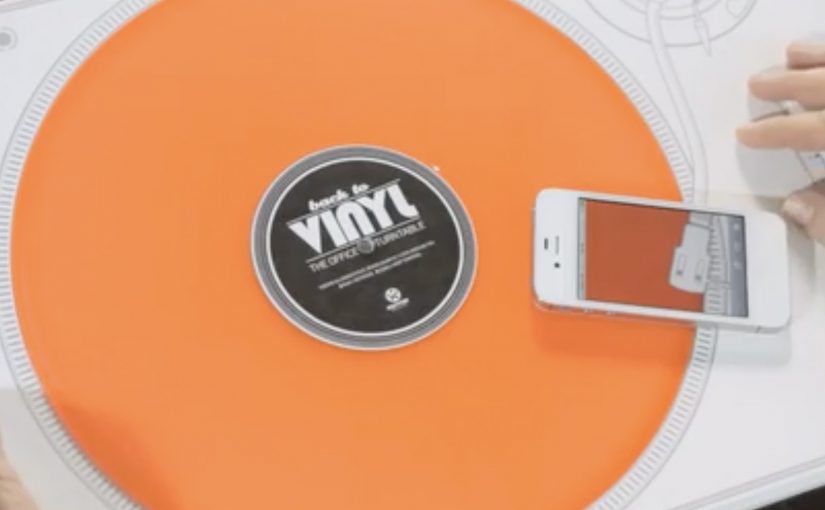
Demo CDs created by music labels are often treated like spam. So to promote a new track from DJ Boris Dlugosch, Kontor Records decided to send out a bright orange vinyl along with a 2D turntable as part of a direct mailing.

The people who received the mailing activated the turntable by scanning the QR code on it. That simple action enabled the missing piece of the turntable on the user’s smartphone, which then allowed them to play the music by placing the phone over the “deck”.

Making the mailer do the work

The mechanism is a tight little trick. The envelope becomes the turntable. The QR code becomes the start button. The smartphone becomes the “needle”. It is analogue theatre powered by a digital unlock, meaning the physical format itself becomes a short performance the recipient has to complete, and it forces the recipient to complete the experience instead of ignoring it.

In B2B marketing where your audience is drowning in promos, the fastest way to earn attention is to turn the first interaction into a short, satisfying action that cannot be skipped.

Why it lands

This works because it turns listening into participation. You do not just receive a track. You assemble the moment, and the novelty is directly tied to the product. The design also flatters the target. It treats creative directors like DJs. People with taste and a fondness for well-made objects. Because the recipient has to scan, place, and play, the mechanic turns passive exposure into participation, which makes the track harder to ignore and easier to remember.

Extractable takeaway: If your content is easy to ignore, do not beg for attention with more messaging. Engineer a simple physical or digital action that unlocks the content, and make that action feel like a reward rather than a chore.

The real question is how you make the format itself impossible to ignore before the message even starts. This is a stronger approach than sending another promo that asks for attention without earning it.

The numbers are the proof

According to campaign case-study reporting, 71% of 900 mailings were activated via the QR code. The same reporting notes that 42% of recipients also visited the Kontor site. For a target group known for deleting promos on sight, that is the clearest signal that the mechanic did its job.

How to make direct mail behave like a product

  • Build a “first step” that is irresistible. If the first step is fun, the rest of the funnel happens almost accidentally.
  • Fuse the medium and the message. Here, the packaging is the product experience, not just a container.
  • Use phones as functional components. Not as a second-screen gimmick, but as a literal missing part.
  • Target the ego carefully. Positioning recipients as tastemakers, not “buyers”, increases the odds they will engage.

A few fast answers before you act

What is “The Office Turntable”?

It is a direct mail piece for Kontor Records where the envelope folds into a paper turntable, and a smartphone activated via QR code completes the player so the recipient can listen to a vinyl release.

Why use vinyl instead of a promo CD?

Because vinyl is a status object and a curiosity trigger. It signals “this is different” before any copy is read.

What role does the QR code play?

It is the activation switch. Scanning it unlocks the mobile component that makes the paper turntable usable.

What results were reported?

Case-study reporting cites 71% activation across 900 mailings, and 42% of recipients visiting the Kontor site.

How do you apply this pattern without copying it?

Turn your distribution format into a usable object, then make one simple action unlock the content. The best versions feel like a clever tool, not a stunt.