
AXA: Crazy Driver

AXA: Crazy Driver

A market-day shock that makes the point instantly

The fastest way to explain risk is to make people feel the cost of it. AXA’s stunt is a clean example of that principle.

To raise people’s awareness and make them realize that nobody wants to pay for bad drivers, AXA decided to play a trick on people with the help of a little old lady.

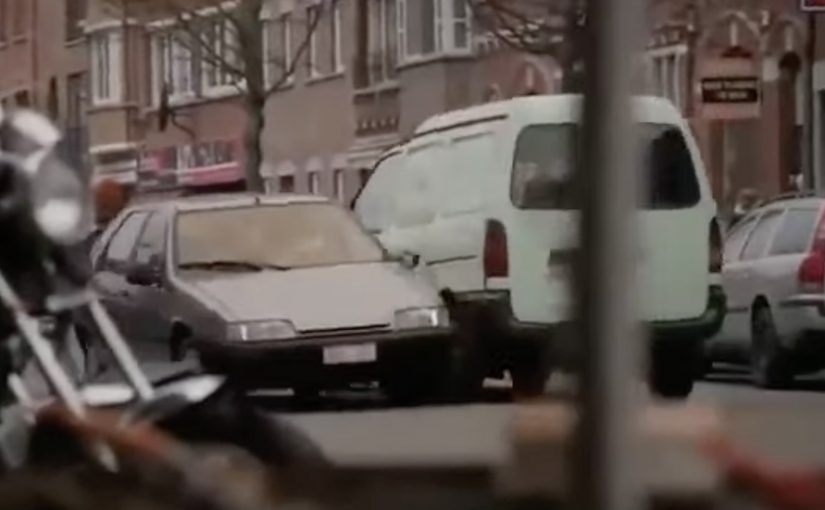
On an ordinary market day in a small, tranquil French town, an old lady was seen getting out of her parking space. In the process she knocked almost everything in her way before crashing into a line of market stalls. With the reveal being that it was staged to make the point.

How the “bad driver” setup delivers the message

The mechanism is staged reality in a real environment. By staged reality, AXA controls the trigger and the reveal, while the setting and bystander reactions stay real.

AXA uses a familiar public setting and a believable trigger. A driver leaving a parking space. Then it escalates into visible damage that bystanders can immediately judge as “this is what we do not want on the road.” The trick creates attention first, then makes space for the reveal and the point. Because the incident unfolds in public, the fairness judgment forms before anyone asks for an explanation.

In European insurance categories, public-safety messages land faster when consequences are visible and socially agreed, not only described.

Why it lands in the moment

It works because it activates two instincts at once. Concern and fairness. Nobody wants to see people hurt or property damaged, and once people witness reckless behavior, the idea of everyone else paying for it feels wrong.

Extractable takeaway: If you can make the cost of a behavior feel public and unfair in under ten seconds, you do not need to over-explain the risk.

The business intent behind the stunt

The intent is to turn an abstract insurance argument into a shared social judgment.

The real question is whether your message can become a shared verdict before people have time to tune out.

Bad driving creates costs. The campaign pushes viewers and bystanders toward the same conclusion. Pricing and consequences should reflect behavior. By making that conclusion feel obvious, AXA strengthens its positioning around responsibility and risk.

Steal this structure for risk awareness activations

  • Start with a situation everyone understands. A simple parking maneuver needs no context.
  • Make the consequence visible. People react to outcomes they can see, not statistics they cannot.
  • Use escalation to earn attention. Build from normal to shocking so the message arrives when focus is highest.
  • Let the audience reach the conclusion. The most persuasive line is the one people say to themselves first.

A few fast answers before you act

What was AXA’s “Crazy Driver” trying to change?

It aims to reduce risky driving by confronting people with an exaggerated version of everyday bad driving, making “normal” shortcuts feel unacceptable in the moment.

What is the core mechanic?

Stage a believable incident in a real public setting, then escalate visible consequences fast so bystanders form an immediate social judgment before the reveal.

What is the emotional sequence the stunt triggers?

Concern first, then fairness. Once people witness reckless behavior, the idea that everyone else pays for it starts to feel wrong, which makes the message stick.

What business intent does this serve for an insurer?

It turns an insurance argument into a shared conclusion. Risky behavior creates costs, and consequences should reflect behavior. The stunt makes that conclusion feel obvious.

What should brands steal from this approach?

Make the behavior the content. Start with a situation everyone understands, show consequences people can see, and let the audience reach the conclusion themselves.

What is the key risk with prank-style public activations?

If it feels unsafe, humiliating, or too punitive, attention can flip into distrust. The line is whether the reveal resolves tension quickly and respectfully.
Chevy: Hacking the Super Bowl

Chevy: Hacking the Super Bowl

Super Bowl Sunday is the biggest TV advertising day in the US. With 50+ advertisers competing for attention, “standing out” is usually code for shouting louder.

Chevrolet takes a different route. With “Chevy Game Time”, it turns the ad break into a live second-screen game. Viewers watch the commercial on TV, then immediately replay it with purpose on their phones.

A second screen that reacts to the broadcast

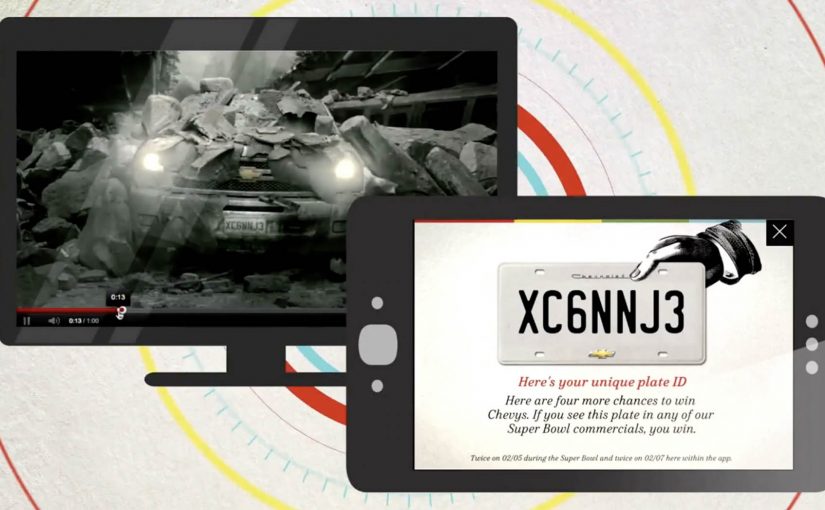
A “second-screen” experience is a mobile layer that runs alongside a live broadcast and responds to what’s on TV in near real time. Chevy Game Time prompts viewers the moment a Chevy spot airs, asking trivia about what they just saw and rewarding fast, correct answers with points and prizes.

It also adds a high-stakes twist. Every user receives a personal license plate. If you spot your plate inside a Chevy commercial, the car is yours.

The mechanic: turning commercials into a repeatable loop

The loop is simple and effective:

  • Trigger: a Chevy ad hits the broadcast.
  • Action: the app pushes a trivia question about that specific ad.
  • Social effect: Super Bowl parties start “rewatching” the spot together, first on TV, then on the phone, and often again online.
  • Jackpot moment: the personal license plate appears. Somebody wins a car.

That structure doesn’t fight the reality of distracted viewing. It harnesses it.

That works because the trigger arrives while memory is still hot and the reward gives the rewatch a reason.

In mass-audience tentpole broadcasts, second-screen interactivity is often the fastest way to turn passive ad viewing into measurable participation.

Why it lands: it makes attention feel like play

Most second-screen ideas fail because they ask for extra effort with unclear payoff. Chevy Game Time flips that. The reward is obvious, the timing is immediate, and the questions make the room collectively care about the ad’s details.

Extractable takeaway: If you want people to pay attention to a message they did not ask for, make the attention itself the game. Use a tight loop (trigger, action, reward) that starts exactly when the message appears, not five minutes later.

The license-plate mechanic is the accelerant. It converts “maybe I’ll play” into “I’d better look up”, because missing your own plate feels like leaving money on the table.

The business intent: convert reach into proof

Instead of treating TV as pure reach, this approach turns a broadcast into an engagement funnel. Case studies around Chevy Game Time describe scale in the hundreds of thousands of participants, plus high real-time concurrency during the game, and meaningful App Store chart performance during the event window.

It also earns industry credibility. The work is credited to Chevrolet with Goodby, Silverstein & Partners and Detroit Labs, and it is associated with major recognition in mobile and multiscreen categories.

The real question is whether a brand can turn one expensive burst of reach into repeated, measurable acts of attention.

And the strategic win is clean. While other brands fight for a single impression, Chevy creates repeated, measurable touchpoints tied directly to its own creative.

What to steal for your next “everyone’s watching” moment

  • Design for rewatching: build a mechanic that naturally makes people replay the ad or replay the key message.
  • Sync to the broadcast: the question must arrive when the spot runs, not when the user remembers later.
  • Make the reward legible: users should understand the payoff in one sentence.
  • Give the group a reason to coordinate: party dynamics multiply attention when the action is communal.
  • Measure beyond downloads: track concurrent players, response rate per trigger, and “ad recall proxies” like question accuracy.

A few fast answers before you act

What is second-screen marketing?

Second-screen marketing is a companion mobile experience designed to run alongside a live broadcast, prompting actions that connect what’s on TV to what’s on a phone, usually in real time.

What made Chevy Game Time different from a normal companion app?

It tied interaction to the exact moment a specific commercial aired, then rewarded attention to that commercial through trivia and a personal “license plate” prize mechanic.

Why does the personal license plate idea matter?

Because it creates urgency and personal stakes. Viewers feel they could miss “their” moment, so they watch more closely and often rewatch immediately to confirm what they saw.

What should you measure in a live second-screen activation?

Track concurrent active users during triggers, response rate per trigger, time-to-answer, repeat participation across multiple ad breaks, and the uplift in brand recall or message comprehension tied to the trivia content.

Can this approach work outside the Super Bowl?

Yes, if you have a predictable live moment (finale, product launch stream, sports match) and you can synchronize prompts to it. The key is timing precision and a reward loop that feels worth the effort.

TBWA Lisbon: Windows become Twitter billboard

TBWA Lisbon: Windows become Twitter billboard

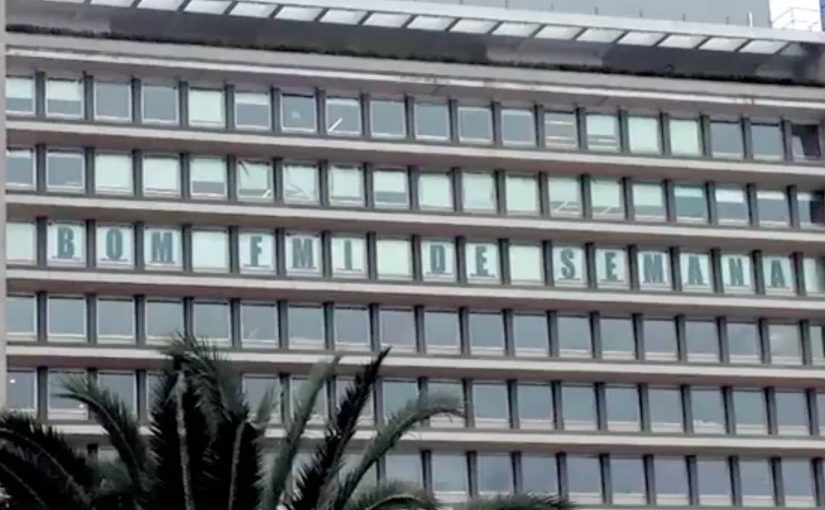
TBWA was the last agency to move to Lisbon’s advertising district. With their top competitors already there, they decided to showcase their creativity by turning 19 windows of their office into a 36m long Twitter billboard.

The stunt is simple in concept and bold in execution. The office becomes the medium. Instead of hiding behind a reception desk and a logo, the agency uses its own facade as a live publishing surface for the public street.

Turning an address into a live channel

The mechanism is real-time social content made physical. Tweets appear across the windows, transforming an office building into a public conversation layer. It is not “social amplification” in the usual sense. It is a direct translation from a digital feed into a street-level display.

In dense urban environments, public-facing digital surfaces work best when they make participation visible, immediate, and shared by everyone on the street.

The real question is whether your brand can turn participation into a public signal, not just another message people scroll past.

The video does not explain exactly how people were encouraged to send in their tweets, but it does show the breadth of what people shared. Tweets touch politics, taxes, Europe, Merkel’s visit, and more. That range matters because it signals that the billboard is not a branded script. It behaves like a live civic wall, meaning an open public message board where anyone can add a line and everyone on the street sees it.

Why it lands in an ad district full of competitors

When agencies cluster, sameness is the enemy. This activation works because it creates a visible signature at the point of competition. People do not have to be invited inside to experience TBWA. The building itself is performing in public, and the audience can participate without crossing a threshold.

Extractable takeaway: In a competitive cluster, your best differentiator is a street-level interface that makes participation visible to everyone nearby.

It also carries a little risk. Real-time public messages can be messy. That tension is part of the attention engine. It feels alive because it is not perfectly controlled.

The intent: differentiate through public participation

The business intent is positioning. TBWA is signalling modernity, openness, and confidence in real-time ideas. The agency is also using the street as a distribution channel to generate talk, foot traffic, and press interest.

A live, participatory facade is a stronger differentiator here than another logo on glass, because people can experience the idea without being invited in.

And it worked. In the end, all the window tweeting created quite a stir in the local media.

Practical moves from the Twitter window billboard

  • Use your own real estate. If you have a facade, treat it as media, not architecture.
  • Make digital physical. The jump from screen to street creates instant novelty.
  • Design for participation. People engage more when they can see themselves appear in public space.
  • Accept a little mess. Real-time content feels credible because it is not overly polished.
  • Build for earned media. A visible public installation gives journalists something to film, not just to quote.

A few fast answers before you act

What is the TBWA Lisbon Twitter billboard?

It is a facade activation that turned 19 office windows into a 36m long display showing tweets in public, effectively making the building a live billboard.

Why does turning tweets into a window display work?

Because it makes online conversation visible in a shared physical space, which creates surprise, participation, and social proof.

How did it create attention beyond the street?

The visibility and real-time nature made it easy for people and local media to capture and share, turning a building into a story.

Is this more about branding or engagement?

Both. The engagement mechanic is participation, but the branding outcome is differentiation and positioning in a competitive district.

What is the key takeaway for agencies and brands?

If you want to stand out locally, build a public interface that lets people contribute and be seen. It creates talk faster than self-promotion.