
AR in 2013: Three Retail-Ready Examples

AR in 2013: Three Retail-Ready Examples

Augmented Reality in 2013: when the real world becomes the interface

With smartphones and tablets becoming part of our everyday life, we also see more augmented reality apps mixing the virtual and the real world in 2013. Here are some examples from ARworks that recently caught my eye.

Audi Singapore Showroom app

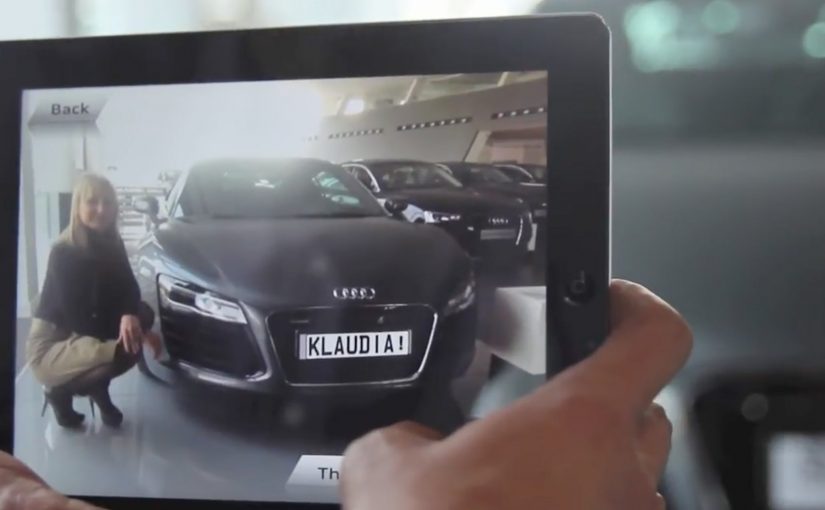
For the opening of their biggest showroom in South-East Asia, Audi created AR experiences that allowed visitors to fly around the showroom building without actually boarding a plane, or drive the Audi R18 race car around Singapore at full speed without the risk of getting a ticket. What’s more, they even allowed visitors to personalize their individual license plates and then take photos with the car.

Dakar race in a shopping mall

A real Dakar desert racecourse was built for the new Opel Mokka on a 4mtrs long table that was placed in a shopping mall. Visitors could use the provided iPads to race against time and each other. The results were then shared on Facebook, and the weekly and overall winners received various prizes.

Christmas Ornament Sling

Deutsche Telekom, for their Christmas promotion, developed an iPad app where visitors could throw virtual Christmas ornaments containing their personal message onto a huge Christmas tree erected in a mall. A successful hit to one of the real ornaments on the tree lit it up through an integrated server application.

The pattern across all three: AR turns “watching” into doing

None of these examples treat AR as a gimmick. Each one uses the device as a bridge between curiosity and action. You explore a building. You race a course. You aim a message at a real tree. The screen stops being a place to consume. It becomes a tool to participate.

In retail and shopper environments, augmented reality works best when it turns a physical setup into a simple, repeatable action loop for the visitor.

The real question is whether your AR layer gives the visitor a simple verb and a payoff worth repeating.

Why retail is the natural habitat for AR

Retail already has the ingredients. Footfall, dwell time, and physical objects that can anchor the experience. AR simply adds a layer of viewer control. The visitor decides where to look, what to try, and what to share. This works because the physical anchor keeps the choice set small, so the device can turn curiosity into a low-friction action with an immediate outcome.

Extractable takeaway: AR earns its keep when the physical setup stays simple and the device turns it into a repeatable action that produces a visible outcome worth sharing.

What’s really being built here

These are not “apps.” They are engagement machines, meaning they turn a physical setup into an interaction loop with a reward and an easy share path. Each one creates a clear reason to interact, a clear reward for completing the action, and a clear path to share or repeat. That is how you turn novelty into behavior.

Four retail-ready AR mechanics to copy

  • Anchor it physically. Anchor the experience to a physical object people can gather around. A showroom, a tabletop course, a tree.
  • Give the visitor a simple verb. Fly, drive, race, sling. Actions beat features.
  • Design a tangible payoff. A photo, a score, a lit ornament. Make the outcome tangible.
  • Make sharing a by-product. Make sharing a natural by-product of the activity, not a forced button at the end.

A few fast answers before you act

What makes these 2013 AR examples feel “ready” for real audiences?

They are built around clear actions and clear rewards. The device is used to do something in the physical environment, not just view an overlay.

Which devices are central to these activations?

Tablets and phones are the delivery mechanism. The examples explicitly reference iPads and handheld devices for the AR interaction.

What role does sharing play in these concepts?

Sharing is tied to the activity. Photos with the car, results shared on Facebook, and personal messages sent as virtual ornaments.

What is the common mechanic across the three examples?

The camera-enabled device acts like a controller that links a real-world setup to a virtual experience, giving the viewer control over exploration and interaction.

How do you keep AR from feeling like a gimmick?

Make the overlay serve a real action and a visible outcome. If the visitor can do something concrete and see a result that is worth showing, the experience stops being novelty and starts being behavior.

TNT: A Dramatic Surprise on an Ice-Cold Day

TNT: A Dramatic Surprise on an Ice-Cold Day

In the quiet town of Dordrecht, a familiar red button sits waiting. When innocent passers-by dare to push it, pure TNT drama unfolds, with a slightly new twist: close participation from the public.

In April last year TNT launched their digital channel in Belgium with a big red push button in a quiet Flemish square.

Now, to launch their movie channel in the Netherlands, they created a new dramatic piece of the now-famous red button, this time pulling bystanders closer into the action.

The mechanic that makes the button irresistible

The mechanism is a simple dare plus instant escalation. A single, universal instruction invites a tiny act of curiosity. The moment someone commits, the environment “answers” with a choreographed sequence that feels bigger than the setting. The new twist is the proximity: the public is not only watching the drama, the public is forced to navigate it.

By “close participation”, the stunt means the action breaks the invisible line between performer and audience, so bystanders become part of the scene rather than spectators at a safe distance.

In channel launches and entertainment branding, public stunts that turn bystanders into participants are a shortcut to earned attention.

Why it lands

This works because it transforms a brand promise into a physical consequence. “We know drama” is not a slogan you politely agree with. It becomes something you experience in real time, in a place that looked ordinary seconds earlier. The tension comes from the button. The payoff comes from the world changing around the person who pushed it. That works because one visible action creates instant narrative clarity: everyone can see the cause, the consequence, and the brand promise in one beat. The real question is whether the escalation makes TNT’s promise legible in seconds, not whether people will press the button. This is a strong launch format because the button is only the trigger, while the readable escalation is what sells the channel.

Extractable takeaway: If you can convert a brand line into a simple action and an immediate, escalating response, you create a story people retell accurately. That accuracy is what makes the idea travel.

Design moves worth borrowing

  • One action, one trigger: make the entry point obvious and almost impossible to resist.
  • Escalation with clarity: raise the intensity quickly, but keep the through-line readable for anyone who arrives mid-scene.
  • Let the environment do the branding: the best stunts feel like the place itself has changed, not like a pop-up was installed.
  • Design for the crowd: build moments that work for the person in it and for everyone filming from the edges.
  • Keep the “twist” singular: here it is proximity. One twist is enough when the production is big.

A few fast answers before you act

What is “A Dramatic Surprise on an Ice-Cold Day”?

It is a TNT red button sequel staged in Dordrecht, where pushing the button triggers a choreographed chain of dramatic events that pulls bystanders into the action.

What’s different versus the earlier “quiet square” button?

The key twist is the closeness of participation: the drama happens nearer to the public, and the public is more directly swept into the scene.

Why does a single button work so well?

Because it creates instant viewer control. One obvious action produces an immediate consequence, which makes the story easy to understand and easy to share.

What’s the core marketing job this format does?

It turns a positioning line into a lived moment, then uses the crowd’s reactions and recordings as distribution.

What’s the biggest execution risk?

If the escalation feels confusing or unsafe, the narrative flips. The format depends on clear choreography and the audience feeling surprised, not threatened.

Track My Macca’s: Supply Chain Transparency

Track My Macca’s: Supply Chain Transparency

McDonald’s in Australia decided to use technology to tackle one of its biggest problems, the disbelief that its ingredients are fresh, locally sourced and of decent quality. So with image recognition, GPS, augmented reality and some serious integration with its supply chain, they put together a full story behind every ingredient people came across while buying food at McDonald’s.

The real challenge: trust, not awareness

This is not a campaign built to shout louder. It is built to answer the skeptical question that sits in the customer’s head at the moment of choice: “Is this actually fresh, and where did it come from?”

The real question is: how do you turn a trust objection into verifiable context at the point of purchase?

Instead of responding with claims, it responds with traceable context. Ingredient by ingredient.

Why the tech stack matters only if it is integrated

Image recognition, GPS, and augmented reality are the attention layer. The credibility layer is the supply chain integration. Here, “supply chain integration” means the experience is pulling from the same operational sourcing and logistics records the business runs on. Without that, the experience would be a glossy story. With it, the experience becomes proof.

If the experience is not tied to operational data, it becomes transparency theater rather than trust building.

  • Image recognition. Identify what the customer is looking at or buying.
  • GPS. Connect the experience to location and local sourcing claims.
  • Augmented reality. Make information feel immediate and tangible in the buying moment.
  • Supply chain integration. Ensure the “story” maps to real sourcing and logistics data.

In high-volume consumer businesses, credibility is won or lost in the buying moment, not on an “about our ingredients” page.

What makes this a strong model for brand transparency

Transparency only works when it is easy. People will not dig through PDFs or corporate sustainability pages while they are ordering lunch.

Extractable takeaway: When trust is the barrier, bring proof to the point of choice and back it with operational data that can stand up to scrutiny.

What to take from this if you run CX, MarTech, or operations

  1. Start with the objection. The customer’s doubt defines the experience.
  2. Proof beats promise. If you want trust, show traceability, not slogans.
  3. Integrate the system of record. Experiences that depend on trust must connect to operational data.
  4. Design for the moment of choice. The best transparency is delivered exactly when people need it.

Here, “system of record” means the operational data sources that govern sourcing and logistics, not a marketing layer that can drift from reality.


A few fast answers before you act

What is “Track My Macca’s”?

It is a McDonald’s Australia initiative that uses mobile technology to show a story behind ingredients, aiming to build trust in freshness, local sourcing, and quality.

Which technologies were used?

Image recognition, GPS, augmented reality, and strong integration with McDonald’s supply chain to connect the experience to real sourcing and logistics.

Why is supply chain integration the critical piece?

Because the experience depends on credibility. Without operational data behind it, the story would feel like marketing. With it, it can function as proof.

What customer problem does this solve?

It addresses disbelief about ingredient freshness and quality by making provenance and context visible at the point of purchase.

What is the transferable lesson for other brands?

If trust is your barrier, design transparency into the customer journey and connect it to your systems of record, so the experience can stand up to scrutiny.