
Radio Geister: When the Crash Site Talks Back

Radio Geister: When the Crash Site Talks Back

When you drive past a crash site, the warning follows you

One of the most chilling awareness ideas in recent memory does not start on a screen. It starts at the roadside.

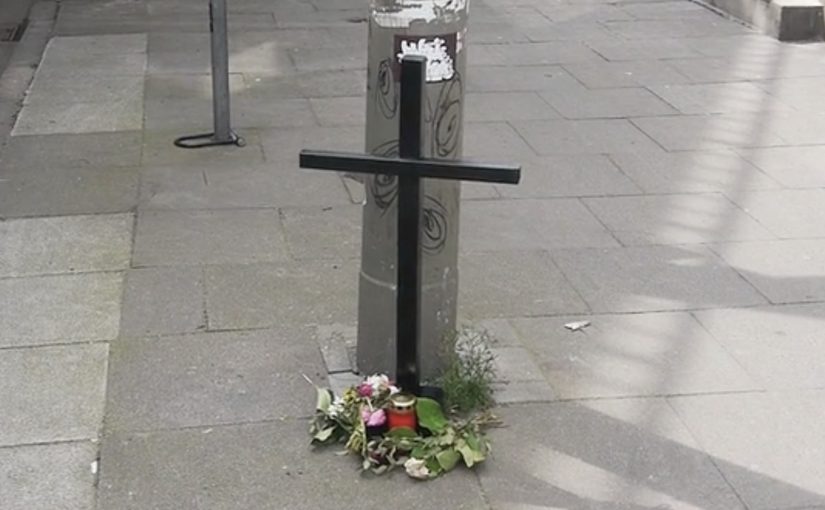
For “Radio Geister” (Radio Ghosts), small radio stations in the shape of wooden death crosses are placed around Hamburg at sites where alcohol-related car accidents had happened. As young drivers approach, these mini transmitters interrupt the signal of popular radio stations. In place of music, the driver hears a radio spot voiced from the perspective of someone who died in a drunk-driving crash.

The mechanic: audio interruption tied to the exact location

The project combines two moves. First, it uses physical markers that already mean something in the real world. The roadside cross. Second, it turns radio into a proximity medium by briefly overriding a station’s signal at the moment a driver is physically passing the place where something irreversible happened.

The radio spots themselves are written as first-person accounts from fatal accident victims, which makes the interruption feel less like an ad and more like a presence.

In European road-safety communication, the fastest way to break through denial is to connect a real place, a real habit, and a real consequence into one unavoidable moment.

Why it lands

This is a stronger road-safety intervention than a conventional awareness spot because it weaponizes context. The message does not arrive while someone is “in awareness mode.” It arrives while they are driving, listening to the stations they actually use, in a location that proves the stakes. The interruption is also proportionate. It is brief, but it is intrusive enough to create a jolt, which is exactly what complacency needs.

Extractable takeaway: If you need to change risky behavior, deliver the warning inside the behavior, not around it. Tie it to a specific place and a familiar channel, and the mind cannot file it away as generic advice.

What the campaign is trying to change

The framing used in campaign write-ups is stark. “One out of eleven deaths caused by car accidents has to do with drinking and driving.” Whether or not you accept the exact ratio, the creative intent is clear. Replace abstract statistics with a felt experience that young drivers will remember the next time they consider driving after drinking.

The real question is not whether young drivers know the rule, but whether the warning can reach them inside the exact driving moment when denial still feels safer than restraint.

What road-safety campaigns can steal from this

  • Use the environment as proof. A crash site is a more credible media placement than any billboard.
  • Interrupt the comfort loop. If the risky habit is paired with entertainment, break the entertainment briefly.
  • Write from a human perspective. First-person voice makes consequences feel immediate, not theoretical.
  • Keep it simple, keep it sharp. One moment of shock can beat a long lecture.

A few fast answers before you act

What is “Radio Geister” (Radio Ghosts)?

It is a road-safety awareness project that places cross-shaped mini transmitters at crash sites to interrupt popular radio stations with warnings voiced from the perspective of drunk-driving victims.

What is the core mechanic?

Location-triggered audio interruption. As drivers pass the crash site, their radio station is briefly overridden by the campaign message.

Why use radio for this instead of posters or video?

Because radio is already in the car, already on, and already trusted as a companion. The message arrives in the exact medium the driver is using in the moment that matters.

Why is the crash-site placement so important?

The location turns the warning into evidence. It signals that this happened here, to someone real, not in a hypothetical scenario.

What is the transferable lesson for behavior-change campaigns?

Do not ask people to imagine consequences later. Insert consequences into the live context where the decision is being made.
Red Stripe Musical Extravaganza

Red Stripe Musical Extravaganza

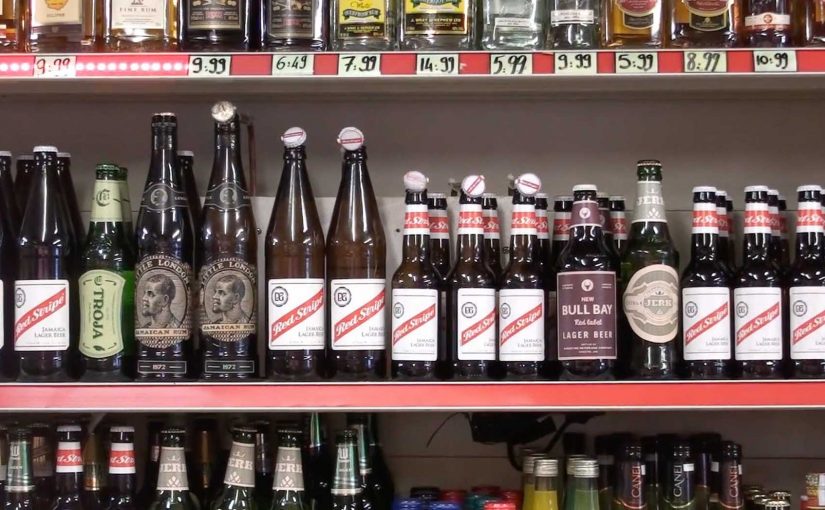
Red Stripe, a Jamaican lager brand, transforms an ordinary-looking East London corner shop into a singing, dancing musical extravaganza. Products across the shop turn into instruments that burst into a melody when a customer selects a Red Stripe. Noodle pots become maracas. Bottles turn into trumpets. Cans become xylophones.

To capture the surprise, 10 hidden cameras record customer reactions as the shop “comes alive.”

The real question is how you turn a routine purchase into a moment people want to retell and share.

This kind of retail theatre works best when the shopper triggers the show through a product choice, and the documentation is designed to scale the moment beyond the store.

The shop becomes the media

This is not a poster on a wall. It is the environment itself performing. The moment of selection triggers the show. The shelf becomes the stage.

That shift matters because it makes the brand moment inseparable from the act of buying. It is shopper marketing that feels like entertainment, not persuasion. Here, shopper marketing means designing the buying environment so the act of choosing the product creates the brand experience.

The trigger is the product choice

The smartest part is the mechanic. Nothing happens until the customer chooses the product. That makes the experience feel personalised, even though it is engineered. Because the trigger is the shopper’s own choice, the surprise reads as a reward, not a push.

It also makes the story instantly explainable. “When you pick up a Red Stripe, the shop turns into a band.”

If you can explain the trigger in one sentence and show real reactions, the activation comes with built-in distribution.

In retail and FMCG environments, the point-of-sale moment is where intent becomes action, and where a brand can earn attention without interrupting it.

Why hidden cameras make the idea travel

The in-store performance is powerful, but it is local. The video is what scales it. Real reactions signal authenticity, and the format becomes shareable proof that the stunt actually happens.

Extractable takeaway: If you want the idea to travel, design the filmed proof as part of the concept. Authentic reactions do the credibility work that polished edits cannot.

Steal the point-of-sale trigger

  • Trigger at the shelf. Make the point-of-sale moment the trigger, not the end of the journey.
  • Instrument the environment. Convert ordinary objects into a surprising behaviour, so the setting becomes memorable.
  • Film for scale. Capture genuine reactions, then let the video do the distribution work.

A few fast answers before you act

What happens in the Red Stripe Musical Extravaganza?

An East London corner shop turns into a musical performance. Shop items become instruments that play when a customer selects a Red Stripe.

What turns into instruments?

Noodle pots become maracas. Bottles become trumpets. Cans become xylophones.

How is it captured?

Ten hidden cameras record customer reactions.

What is the core mechanic that makes it work?

The product selection triggers the performance, so the “brand moment” happens at the exact point of purchase.

Samsung Live Human Outdoor: Billboard caricature

Samsung Live Human Outdoor: Billboard caricature

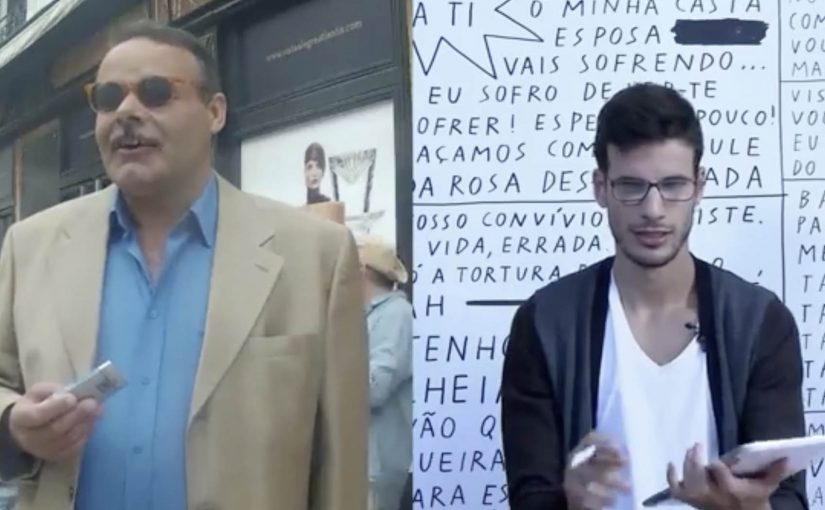
With the new Samsung Note 10.1, caricature artists can now go digital. To highlight this feature and raise awareness about the tablet, Samsung puts a real caricature artist “into” an outdoor billboard experience and has him draw live caricatures of passers-by. The finished drawings are then put on the Samsung Portugal Facebook page.

A live billboard that behaves like a street-portrait stand

The mechanism is simple. People stop. They watch themselves being drawn in real time. The artist works digitally using the Note 10.1, and the billboard becomes a public canvas that makes the device’s creative promise visible from across the street.

In consumer electronics marketing, live demos in public spaces work when the product capability is undeniable without any explanation.

Why it lands: you do not “see a feature,” you experience it

This is not a spec sheet. The real question is whether your launch turns a capability into a moment people actively want, or just a message they tolerate. The device becomes the instrument of a familiar craft, and the outcome is something people actually want. A caricature is personal, fast, and inherently shareable, which makes the crowd effect, the people who stop to watch, do the distribution work.

Extractable takeaway: If your live demo produces a personal artifact on the spot, proof travels further because people share the outcome, not your claims.

What Samsung is really achieving

  • Proof at full scale. A drawing tool is hard to dramatize in a 30-second spot. On a billboard, the proof is the show.
  • A reason to stop. The promise is not “look at our tablet.” The promise is “get drawn.”
  • A built-in content pipeline. The Facebook posting turns a one-off street moment into a browsable gallery.

What to steal for your next live product demonstration

  • Choose an outcome people value. A personal artifact beats a generic demo every time.
  • Make the capability visible from distance. If it only works up close, most of the street never understands it.
  • Close the loop digitally. Give people a clear place to find “their” result after the moment ends.
  • Let the crowd be the media. A live, public performance naturally draws more viewers than static outdoor.

A few fast answers before you act

What is Samsung Live Human Outdoor?

It is an outdoor activation where a caricature artist draws passers-by live using the Samsung Note 10.1, with finished sketches published to Samsung Portugal’s Facebook gallery.

What product feature is being demonstrated?

The ability to create digital drawings naturally and quickly on a tablet, associated with pen-based input and creative apps.

Why use caricatures instead of a standard product demo?

Because the outcome is personal and entertaining, which makes people stop, watch, and share, while the product capability is being demonstrated in plain sight.

What makes this “live communication” rather than outdoor advertising?

The billboard is not only a display. It is a real-time performance and interaction, with the public influencing the content through participation.

What is the main lesson for experiential product launches?

Turn a feature into a moment people want. If the experience creates a valued takeaway, attention becomes voluntary and sustained.