
Ben & Jerry’s #CaptureEuphoria: Instagram OOH

Ben & Jerry’s #CaptureEuphoria: Instagram OOH

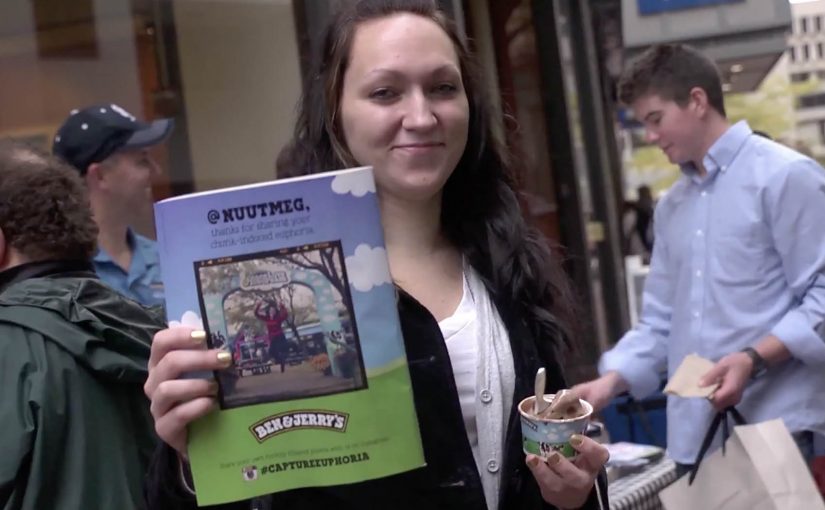
Ben & Jerry’s jumps onto the Instagram wave with a photo contest that challenges fans to capture their “euphoria” towards the brand. Winners from around the world are then featured in special Ben & Jerry’s advertising, including local print, bus station placements and billboards that appear near their homes.

The mechanic: a hashtag that turns into local visibility

The idea is straightforward. Fans post Instagram photos that represent “euphoria” and tag them with #captureeuphoria. Ben & Jerry’s curates a set of winners, then brings those images into the real world by placing them as local advertising close to where the photographer lives.

This is hyperlocal out-of-home (OOH) as a reward. Instead of giving people a generic prize, the campaign gives recognition that is geographically personal.

Recognition-based rewards are the better default when the goal is to deepen community, not just spike entries.

The real question is whether your reward shows up in the participant’s physical world, not just their feed.

In global FMCG marketing, the strongest social contests create an offline payoff that feels personal, not promotional.

Why it lands: recognition beats “stuff”

Most contests promise products, vouchers, or a one-time win. This one promises status. Your photo becomes the ad. Your community becomes the audience. That flips the usual relationship between brand and fan, and it makes participation feel less like a transaction and more like belonging.

Extractable takeaway: A social contest gets more powerful when the payoff is not only online. It is something the participant can physically encounter in their own neighborhood.

What Ben & Jerry’s reinforces by calling it “euphoria”

By anchoring the idea to a feeling rather than a product shot, the campaign invites more creative submissions and a wider interpretation of what “Ben & Jerry’s moments” look like. The brand gets a stream of fan-made images that reflect joy and personality, and the best of it becomes media.

What to steal for your next community-first contest

  • Reward participation with identity, not only incentives. Public recognition can outperform discounts when the brand has true fans.
  • Make the submission format native. A hashtag plus a photo is a low-friction action people already understand.
  • Close the loop in the real world. If you can turn online creation into offline visibility, the story becomes more memorable.
  • Keep the brief emotionally clear. “Capture euphoria” is an instruction people can interpret without overthinking.

A few fast answers before you act

What is Ben & Jerry’s #CaptureEuphoria?

It is an Instagram photo contest where fans post images tagged #captureeuphoria, and selected winners have their photos featured in local advertising near where they live.

Why is the offline ad placement the key twist?

Because it turns participation into public recognition. The reward is visible, personal, and rooted in the winner’s own community.

What makes this different from a standard user-generated content (UGC) contest?

Instead of only reposting winners online, it converts fan content into out-of-home and print media, which raises the perceived value of being selected.

What should a brand be careful about with hashtag-based submissions?

Moderation and curation. If the hashtag stream is unfiltered, off-brand or disruptive content can hijack the gallery effect.

How do you measure success for a contest like this?

Track volume and quality of submissions, unique participants, sentiment, earned reach from reposting, and the lift in brand engagement during the campaign window.
The Live Tile Experiment: Oslo Live Tiles

The Live Tile Experiment: Oslo Live Tiles

Microsoft has been heavily advertising the new Windows 8, Surface RT and Windows Phone 8 along with their respective features. In Norway, Microsoft partners with Norwegian electro rock band Datarock to bring the experience of Windows 8 and Windows Phone 8 Live Tile functionality to unsuspecting residents of downtown Oslo. Live Tiles are interface elements that surface changing, real-time information before you click.

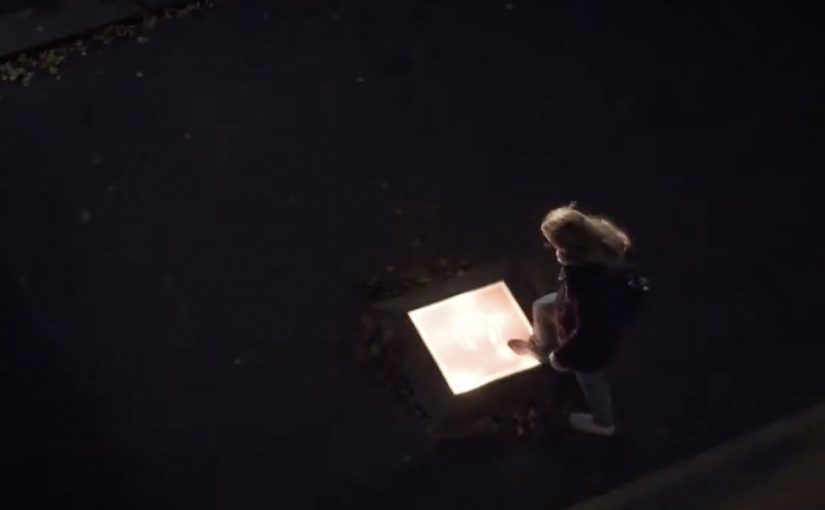
A giant lit-up “tile” appears on the street outside a seemingly closed-off venue. When a passer-by steps onto it, the wall drops and the hidden party spills into the street, with Datarock performing live. The result is an evening to remember.

What the stunt makes you understand about Live Tiles

Live Tiles are designed to feel active, not static. They are not just shortcuts to apps. They are meant to show “something is happening” before you even click. This activation dramatizes that promise by making the tile itself the trigger for real-world content. Because the tile is both preview and trigger, the promise of “something is happening” becomes instantly believable.

In European city-center launches, the most effective experiential stunts translate a UI idea into a single physical action people can trigger without instructions.

Why the surprise mechanic works

The build-up is visible. You hear music, you see a barrier, you notice something glowing at your feet. Curiosity does the recruiting. The moment of commitment is tiny, just stepping onto the tile, but the payoff is oversized, because the environment changes instantly around you.

Extractable takeaway: If you want people to understand a product behavior fast, design a tiny, obvious trigger that unlocks an outsized change in the environment.

What Microsoft is really selling here

Specs are not the message. The message is a feeling: Windows looks alive. By turning a UI element into a street-level “switch” that unleashes a live experience, the campaign makes the feature memorable even for people who never touch the product that night.

The real question is whether your feature can be felt through a simple trigger before it is explained.

This kind of launch is the right move when you want the feature’s behavior to become the story people repeat.

Trigger-based patterns for feature marketing

  • Convert the feature into a trigger. If the benefit is “real-time,” make the audience activate something in real time.
  • Make the payoff disproportionate. A small action should unlock a big reveal.
  • Stage it for bystanders too. The crowd reaction is part of the content.
  • Keep the story tellable. “I stepped on a tile and a concert exploded” is easy to repeat.

A few fast answers before you act

What is “The Live Tile Experiment”?

It is a street stunt in Oslo that turns the Live Tile concept into a physical trigger. Step on a giant tile and a hidden Datarock performance is revealed as the wall drops.

What product feature does it communicate?

Live Tiles, the Windows 8 and Windows Phone 8 interface element designed to display changing, real-time information and content.

Why use a concert reveal instead of a traditional demo?

A live reveal creates an emotional memory tied to the feature idea. It shows “alive and dynamic” faster than any explanation.

What makes the activation easy for the public to participate in?

The required action is obvious and low effort. People only need to step onto the tile to trigger the outcome.

What is the key lesson for feature launches?

Do not describe the benefit. Stage a moment that behaves like the benefit, so people feel it immediately.