
The intelligent car from Mercedes-Benz

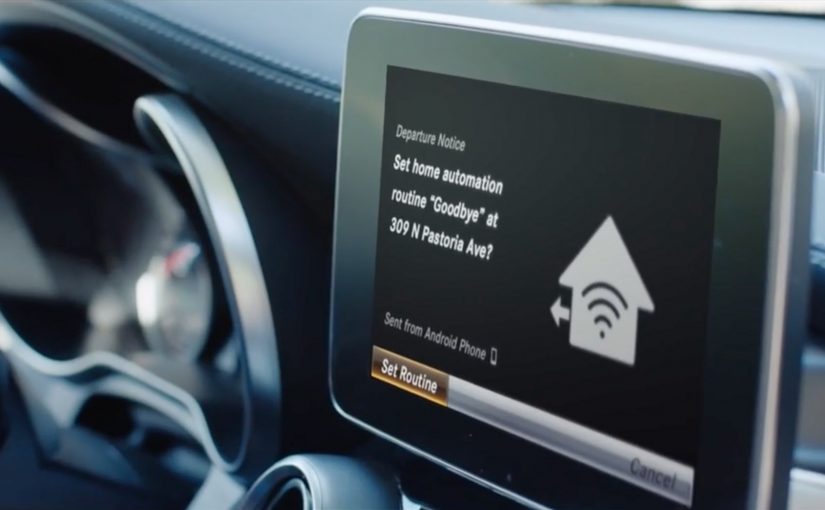
Mercedes-Benz announces that its 2016 and 2017 vehicles in the US can connect with Amazon Echo and Google Home. With that integration in place, owners can remotely start or lock their vehicle, and they can send an address from home straight into the car’s in-car navigation.

The real question is: how do we make connected features actually adopted and used repeatedly?

What makes this interesting is not the novelty of voice commands. It is the direction. The car starts behaving like a node in a wider home automation ecosystem, not a standalone product you only interact with once you sit behind the wheel. You speak to your assistant at home. The car responds. The boundary between “home experience” and “driving experience” gets thinner.

The ecosystem move, not a feature add-on

A single capability like “remote start” is useful. But the strategic move is building an intelligent ecosystem around the car, using third-party voice assistants people already trust and use daily. That lowers adoption friction and accelerates habit formation.

By “intelligent ecosystem”, I mean a set of authenticated, reliable, cross-device flows where a home assistant can trigger vehicle actions and pre-driving tasks via the car’s connected backend, not just a few isolated voice shortcuts.

Third-party assistant integrations should be treated as a habit and distribution layer for connected services, not as a feature checklist item.

In global automotive and mobility brands, the fastest adoption lever is piggybacking on the household’s existing voice-assistant routines, not inventing a new in-car habit.

This also shifts expectations. Once the car is connected into the household’s digital layer, people start wanting context-aware flows. Context-aware flows mean the action is triggered in the right moment in a larger routine, like “leaving home” or “planning a trip”, not as a standalone command. Because the assistant already sits inside daily routines, routing car actions through it reduces cognitive load and raises repetition. That is why this integration is more likely to stick than another “connected car” toggle buried in an app.

Why this actually gets used

Customers do not adopt “capabilities”. They adopt reliable routines. If the assistant is already the control surface for lights, heating, music, and reminders, adding the car becomes a low-effort extension of an established behavior. The psychological win is familiarity plus predictability. The product win is fewer new interaction patterns to teach.

Extractable takeaway: The adoption flywheel for connected products is not “more features”. It is “fewer new habits”. Attach your service to an existing routine and a trusted control surface, then make it work every single time.

Mercedes is not alone in spotting the pattern

Mercedes-Benz is not the first automaker to recognise the potential of third-party voice assistants. At CES earlier this year, Ford unveiled plans to roll out Alexa-equipped vehicles. Around the same time, Hyundai announced a partnership with Google to add voice control through Google Home.

The competitive question becomes simple. Who turns the car into a meaningful part of the customer’s everyday digital routines first, and who reduces the connected car to a checklist feature.

Steal this pattern for your roadmap

  • Pick one routine (leaving home, arriving home, trip planning) and design an end-to-end flow around it.
  • Design for trust by default: explicit permissioning, clear confirmation, and an audit trail for remote actions.
  • Make reliability a feature: treat uptime, latency, and failure-handling as first-class product work.
  • Start upstream: focus on “before you drive” moments like destination sending, pre-conditioning, and readiness checks.
  • Measure repetition, not activation: weekly active use of the routine beats “connected feature enabled”.
  • Keep the command surface consistent: do not fork the experience across assistant, app, and in-car UI without a clear ownership model.
  • Ship the smallest lovable flow, then expand: one routine, one set of permissions, one predictable outcome.

A few fast answers before you act

What does Mercedes-Benz enable through Alexa and Google Home?

Mercedes-Benz enables owners to remotely start or lock the vehicle and to send an address from home directly into the car’s navigation.

Why is this bigger than “voice control in the car”?

It connects the car to an existing smart home ecosystem, which makes the vehicle addressable before you drive and pushes value into planning and daily routines.

What is the “intelligent car” in one sentence in this context?

In this context, an “intelligent car” is a connected vehicle that can be addressed from outside the cockpit as part of authenticated, cross-device routines.

What should product, CX, and marketing teams watch closely?

Teams should watch which routines become habitual, how permissions and confirmations are handled, and whether end-to-end reliability is strong enough for repeat use.

What should you measure to prove value beyond “connected” activation?

You should measure repeat usage of the routine, task completion success rate, latency, failure recovery, and downstream outcomes like reduced support contacts or higher service attach.

What is the strategic takeaway in one line?

The “intelligent car” story is increasingly an ecosystem story, meaning the battle is about where the car lives inside the customer’s broader digital routines.

Ford: Max Motor Dreams Cot

It is the middle of the night. A baby will not settle. So a parent reaches for the only reliable hack. Strap in, start the engine, and drive until the motion and hum finally do their work.

Ford Spain’s Max Motor Dreams takes that behaviour and recreates it at home. The cot uses a smartphone app to record the characteristics of a specific journey, then reproduces them back in the crib. Gentle rocking to mimic the car’s movement. A soft engine rumble for background noise. A flowing glow to imitate street lighting passing by outside a window.

In family-focused European automotive brand marketing, the most believable innovation stories take a known behaviour and remove the pain from it without changing the outcome.

Max Motor Dreams is presented as a one-off pilot for now, built as a proof-of-concept rather than a mass product. Ford says that after receiving enquiries, it is considering what full-scale production could look like.

A car-ride simulating cot is a crib concept that captures the motion, sound, and ambient light patterns of driving, then replays them so parents can trigger the same soothing effect without leaving the house.

Why this lands with exhausted parents

The value is not novelty. It is relief. The idea does not ask parents to learn a new sleep philosophy. It simply automates a routine they already know works, then gives them their night back.

Extractable takeaway: If your “innovation” replaces a workaround people already trust, belief comes from preserving the outcome and removing the friction.

What makes the mechanism feel credible

The concept is grounded in a specific recording and replay loop, not a generic “white noise” gadget. Recording an actual route, then replaying that exact motion and sound profile, makes the experience feel personal and less like a toy.

What Ford is really signalling

This is not a sales brochure for a model line. It is a brand move that positions Ford as a company that applies mobility thinking to everyday life problems, and does it with a prototype you can understand in one sentence. That is a smart brand move even if the cot never ships.

The real question is whether you can make a complex capability feel like a bedtime story in one demo.

How to translate mobility tech into a human story

  • Start with a behaviour everyone recognises. Night drives for baby sleep are a universal parent anecdote.
  • Make the loop demonstrable. Record. Replay. Repeat. Simple beats build belief.
  • Show the “one-off” honestly. A pilot can still be powerful if it proves intent and capability.
  • Let the product idea carry the message. When the concept is clear, you do not need heavy copy.

A few fast answers before you act

What is Ford’s Max Motor Dreams?

It is an app-controlled cot concept from Ford Spain that recreates the soothing effects of a night-time car ride by replaying recorded motion, sound, and ambient lighting.

How does the cot know what to reproduce?

Parents use a smartphone app to record a specific journey, then the cot uses that data to reproduce the movement, engine-like sound, and streetlight-style glow.

Is Max Motor Dreams a real product you can buy?

Ford presents it as a one-off pilot concept. It is described as not being in full production, though Ford says it is considering options after enquiries.

Why does this work as a brand story for an automaker?

It reframes automotive expertise as problem-solving beyond the car. The idea borrows the credibility of mobility engineering and applies it to a relatable home problem.

What is the main risk with concepts like this?

If the mechanism looks like a gimmick or cannot be explained quickly, people dismiss it as PR. The concept has to feel technically plausible and emotionally necessary.

Tostitos Party Safe Bag

On Super Bowl Sunday 2017, Tostitos puts safety into the packaging. The limited-edition “Party Safe” bag can detect when you have been drinking, then helps you get home safely from the party.

How the Party Safe bag works

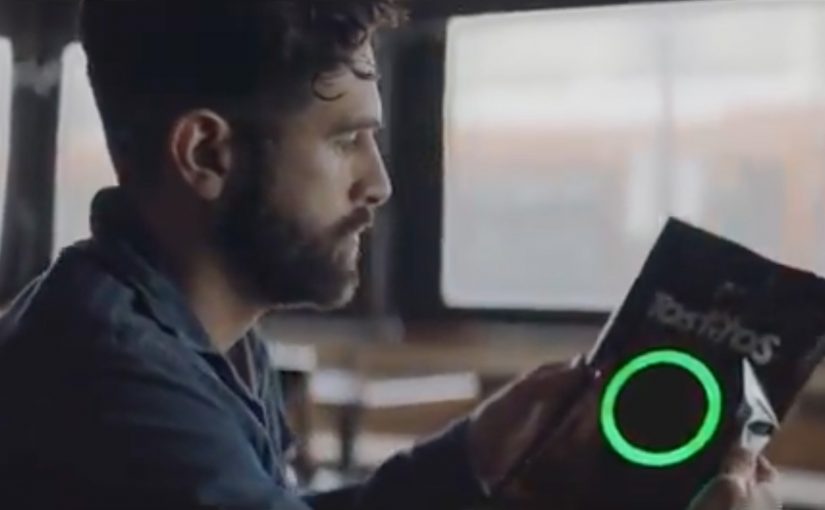
The trigger is built into the bag itself. The bag is created by Goodby Silverstein & Partners and comes equipped with a sensor connected to a microcontroller calibrated to detect traces of alcohol on a person’s breath. If alcohol is detected, the sensor turns red and forms the image of a steering wheel.

Then it turns that moment into action. The bag provides a $10 off Uber code along with a “Don’t drink and drive” message. If you have an NFC-enabled smartphone, you can also tap the bag to call an Uber.

In US mass-market brands, the smartest behaviour design often lives where the decision is made, not where the messaging lives.

Why Tostitos ties this to the Super Bowl

The campaign starts from a hard, uncomfortable statistic. According to the US National Highway Traffic Safety Administration, 45 people are killed in drunk-driving crashes on Super Bowl Sunday 2015, nearly half of all traffic fatalities that day.

Extractable takeaway: When risk peaks at a predictable moment, design the intervention to appear at that exact moment and make the safe choice the easiest next step.

So the “Party Safe” bag frames itself as a practical intervention on the one day when party behaviour and driving risk collide at scale.

This is IoT packaging with a clear behavioural goal

The packaging is not a gimmick for novelty’s sake. It is packaging that nudges a specific decision at the moment it matters most. Do not drive. Call a ride.

By IoT packaging, I mean packaging with sensing and a built-in trigger that can prompt an action without a separate app.

The real question is whether your connected experience can change one specific choice at the moment it is made.

This works because it is a behaviour-change intervention first, and a tech demo second.

The smart detail is the friction reduction. The message is immediate, the code is immediate, and the tap-to-request option removes even more steps. Because detection and the next action live on the bag, the distance from recognition to compliance is intentionally short.

The pattern worth stealing

If you work on connected experiences, the structure is reusable.

  • Put the sensor where the decision happens. Not in a separate app.
  • Translate detection into a single, obvious next action. Make the next step unmissable.
  • Pair the behavioural nudge with a concrete incentive. Give people a reason to comply faster.

A few fast answers before you act

What is the Tostitos Party Safe Bag?

A limited-edition Tostitos bag that detects alcohol on a person’s breath, then prompts a safer way to get home.

How does the bag detect drinking?

A sensor connected to a microcontroller is calibrated to detect traces of alcohol on the breath.

What happens when alcohol is detected?

The sensor turns red and forms a steering-wheel image. The bag provides a $10 off Uber code and a “Don’t drink and drive” message.

How does the Uber action work?

You can use the $10 off code, and NFC-enabled smartphones can tap the bag to call an Uber.