
GOL: Valentine’s Flight Seat Challenge

GOL: Valentine’s Flight Seat Challenge

Brazilian airline GOL ran a Facebook activation designed to grow its online community and raise brand awareness in a highly competitive airline market. The insight behind it was simple. A trip can be one of the most romantic Valentine’s gifts to receive.

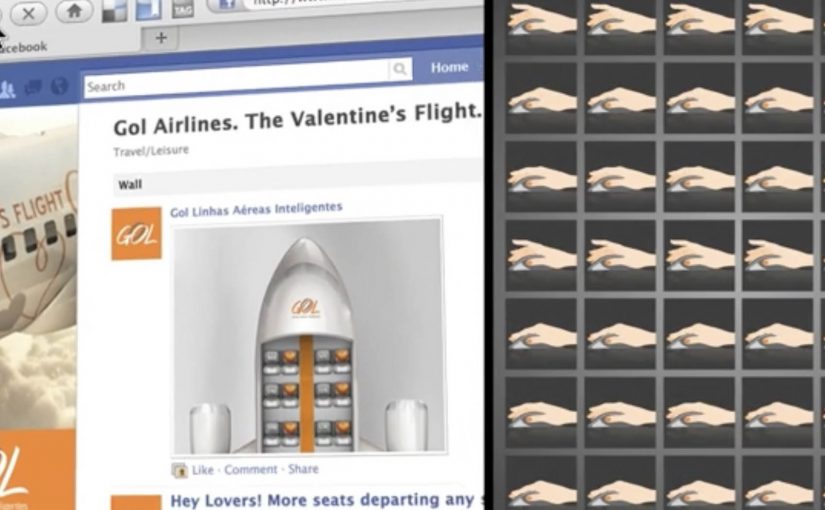
Over the Valentine’s weekend, GOL posted a series of images featuring empty airplane seats on its Facebook wall, without warning. The first people to see each image and comment the correct seat numbers won a pair of return tickets to any of GOL’s destinations.

The campaign was reported to have grown GOL’s Facebook community from 12,000 to over 200,000 in three days, making it number one in its category for the period.

A giveaway that rewards attention, not effort

The mechanism is a speed game disguised as a romantic prize. You do not fill out a form or write a story. You notice a post. You read a seat layout. You comment a number faster than everyone else.

In mass-market consumer categories, lightweight “attention rewards”, small prizes for noticing and reacting in the feed, can outperform complex promotions because they fit how people already behave in social feeds.

Why it lands

The execution stacks three accelerators. Surprise timing. A simple visual puzzle. A high-value reward that feels emotionally relevant to the weekend. That combination converts scrolling into urgency, and urgency fuels sharing and repeat checking, even among people who never win. The real question is whether your winner logic is instantly believable at feed speed.

Extractable takeaway: If you want rapid community growth, design a loop where the behaviour is already native to the platform, and the winner selection is instantly credible. Speed plus clarity beats creativity-plus-forms.

What the brand is really buying

Beyond awareness, this format buys habit. People learn that the page can drop value without notice, so they follow, refresh, and invite friends to watch too. The prize is the hook. The real outcome is an audience that has trained itself to pay attention at the brand’s tempo.

Steal this: Surprise-seat giveaway loop

  • Use a recognisable visual trigger. A seat map is instantly readable, even at feed speed.
  • Keep participation to one action. Commenting is frictionless. That matters more than polish.
  • Make the rules self-verifying. Everyone can see the seat numbers and understand who was first.
  • Lean on surprise scheduling. Unannounced drops drive repeat checking far better than a fixed timetable.
  • Match prize to context. A Valentine’s weekend mechanic wants a prize that feels like a shared experience.

A few fast answers before you act

What is the Valentine’s Flight Seat Challenge in one sentence?

It is a Facebook giveaway where GOL posted surprise images with empty seat layouts, and the first users to comment the correct seat numbers won return tickets.

Why does “first to comment” work so well on Facebook?

Because it rewards attention and speed, which are native behaviours in a feed. It also creates a visible, easy-to-trust winner logic.

What makes the seat map a strong creative device?

It is instantly legible, visually distinctive in the feed, and turns the brand’s core product into a simple game mechanic.

What is the biggest risk with this format?

Perceived fairness. If timing, moderation, or winner confirmation is unclear, the campaign can trigger backlash rather than growth.

What should you measure beyond follower count?

New follower retention after the weekend, engagement rate on subsequent posts, repeat participation behaviour, and whether awareness lift correlates with search and booking intent.
Mercedes-Benz: Tweet Fleet Parking on Twitter

Mercedes-Benz: Tweet Fleet Parking on Twitter

The “Active Parking Assist” from Mercedes-Benz recognizes empty parking spaces by simply passing them. That brought ad agency Jung von Matt/Neckar to the idea that if the car knows where the empty parking spaces are, then everybody could also be informed.

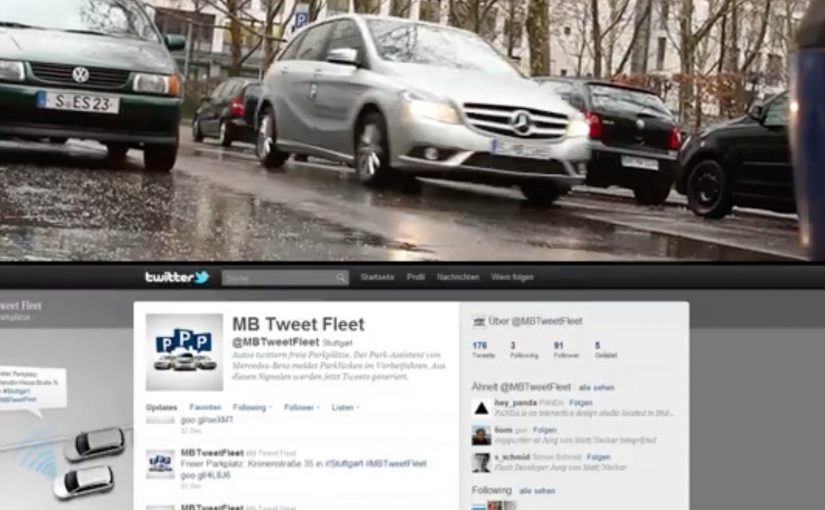
So just before Christmas when parking spaces were hard to find, they launched the Mercedes-Benz Tweet Fleet with its Active Parking Assist that tweeted empty parking spaces in downtown Stuttgart.

The MBTweetFleet cars (the Tweet Fleet vehicles running the setup) automatically generated the tweets with GPS data via Arduino an onboard electronic and a PHP Relay. People could then follow @MBTweetFleet to find empty parking spaces near them on Twitter and be navigated there by the linked Google map.

Why this idea is stronger than it looks

The cleverness is not “tweeting”. The cleverness is turning a capability that already exists inside the car into a public utility. That flips a product feature into a service people can use immediately, without buying anything first. The real question is how you turn a private product signal into a public utility people can act on in seconds.

Extractable takeaway: If you can expose a reliable product signal as a live feed in a channel people already use, you can create immediate utility that beats a feature demo.

  • Signal becomes service. The car detects something useful. The system shares it.
  • Real-time context. Parking availability is only valuable when it is current.
  • Distribution is native. Twitter is a lightweight channel for fast, location-based updates.

The technical stack is simple, but the integration is the point

GPS plus an onboard controller plus a relay layer is not the story. The story is that data moves from sensing to publishing with minimal friction. Because publishing is automatic and immediate, the service stays relevant long enough for someone to navigate to it. That is what makes it feel “live”.

  1. Detect. Active Parking Assist identifies an empty space while driving.
  2. Locate. GPS attaches coordinates.
  3. Publish. An automated tweet shares the spot publicly.
  4. Act. People navigate using the linked map.

In European city centers, connected experiences win when they reduce search friction in the moment, not when they add more messaging.

In urban mobility and smart-city moments, public utility beats brand messaging when the value is immediate, local, and easy to act on.

What to take from this if you build connected experiences

  1. Start with a real pain point. Holiday parking pressure is a perfect use case.
  2. Make the feature externally visible. Utility grows when it helps non-owners too.
  3. Choose a low-friction channel. Where people already are beats “download our app”.
  4. Design for immediacy. Real-time value requires real-time delivery.

A few fast answers before you act

What is Mercedes-Benz Tweet Fleet?

It is a campaign in Stuttgart where Mercedes-Benz used Active Parking Assist to detect empty parking spaces and automatically tweet their locations so people could find and navigate to them.

Why does Active Parking Assist enable this?

Because it can recognize empty parking spaces as the car passes them, creating a reliable signal that can be shared.

How were the tweets generated?

The cars generated tweets automatically using GPS data, an Arduino-based onboard electronic component, and a PHP relay.

How did people use the service?

They followed @MBTweetFleet on Twitter and used the linked map in tweets to navigate to nearby empty spaces.

What is the transferable lesson?

If a product can sense something valuable in the real world, you can turn that sensing into a public utility by publishing it in a channel people already use.

Simon Pierro: Exclusive Preview of iPad 3

Simon Pierro: Exclusive Preview of iPad 3

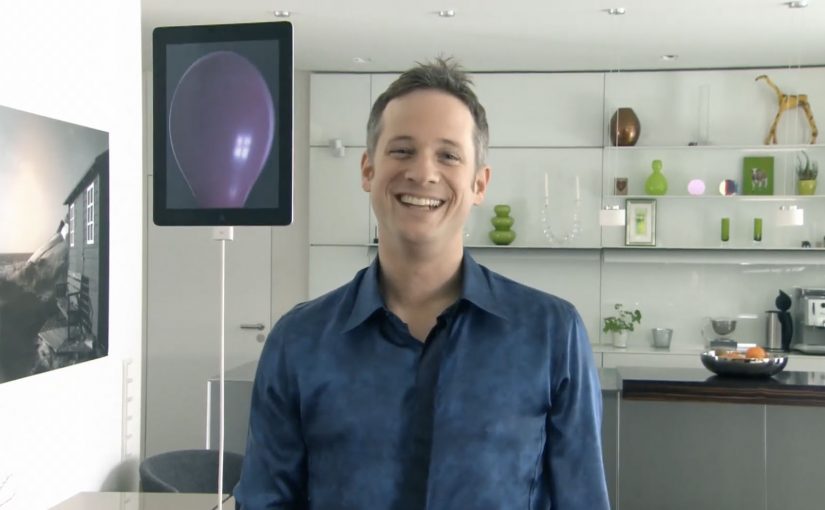
A magician holds up an unreleased device and “reviews” it by making features appear, disappear, and break the laws of a normal demo. It is a product tease delivered as a short performance.

Simon Pierro in his latest performance reviews the yet to be released iPad 3 in a magical way. Along the way he even jokes about “exclusive facts” like it being slightly thicker and heavier, then turns that into the next gag.

How the trick works as marketing

The mechanism is simple. Take the standard product review format and replace evidence with illusion. You still get a “feature tour”, but it is delivered as surprise and entertainment, which makes it far more shareable than a straight spec rundown. This is a strong move when your goal is shareable awareness, not full spec education.

In consumer technology launches, the fastest attention often comes from demos that feel like stories, not demos that feel like documentation.

Why it lands

It compresses curiosity into a tight loop. People watch because they want to see what the “new iPad” can do, then they keep watching because the performance keeps escalating. The device becomes a prop, and the prop becomes the headline. The real question is whether your launch moment gives people a story worth passing along.

Extractable takeaway: Wrap the message in a familiar format, then add one surprising twist so the format becomes the distribution engine.

A launch-demo pattern worth stealing

  • Turn the demo into a format. A review, an unboxing, a “first look”. Then bend it in a way people do not expect.
  • Give the audience one clean hook. “Exclusive preview” is enough. The rest is payoff.
  • Design for replay. Visual gags and quick reveals travel better than long explanations.
  • Let entertainment carry the message. The goal is not complete information. The goal is desire and talk value. Talk value here means a simple line people can repeat in their own words.

A few fast answers before you act

What is the core idea of this video?

A “review” of an unreleased iPad 3 delivered as iPad magic, where the performance replaces proof while still feeling like a product preview.

Why does a magical demo spread better than a normal demo?

Because it converts curiosity into surprise. Surprise is a stronger sharing trigger than information in most social feeds.

What is the transferable lesson for marketers?

If you can wrap a product message inside an entertaining format, the format becomes the distribution engine.

How do you apply this without a magician?

Use any “performance” constraint that creates visual surprise. A timed challenge, a one-take reveal, or an intentional format break can do the same job without literal magic.

When does this approach fail?

When the gimmick overwhelms the product, or when the audience feels misled rather than entertained.